

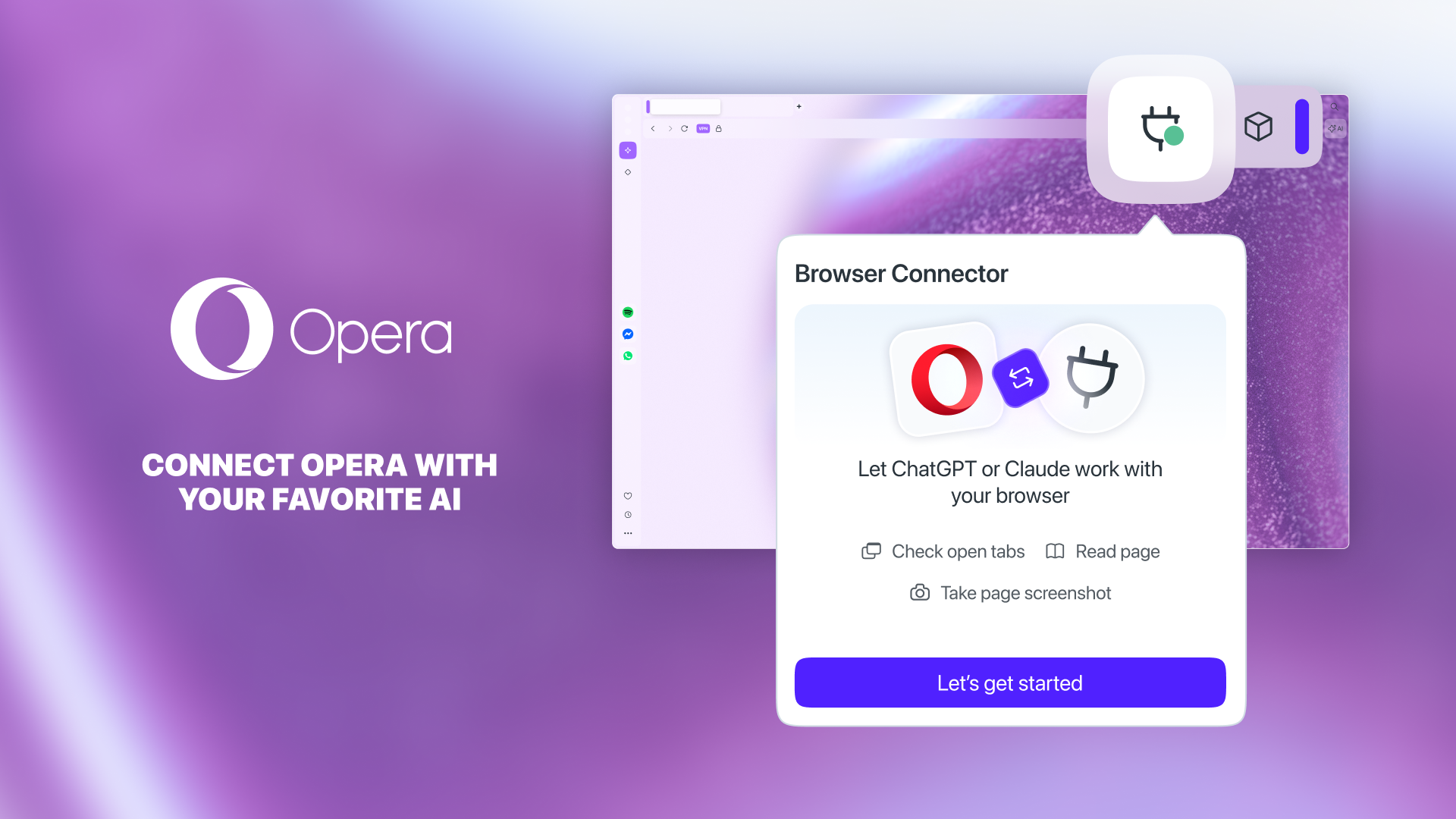
Opera rolled out Browser Connector for Opera One and Opera GX, a free Early Bird feature that links external AI services such as ChatGPT and Claude to the browser through Model Context Protocol. The release gives desktop users a way to pass live browsing context into an AI session, including open tabs, active page content, and screenshots, instead of manually moving text and links between windows.
The launch also widened a capability Opera first brought to Opera Neon on March 31. In Opera One and Opera GX, Browser Connector can read open tabs and tab content, take screenshots, and navigate to pages. Reading browsing history, opening tabs, and closing tabs are available as optional permissions, while webpage control such as clicking buttons or filling forms is not part of the feature. Users can enable it from Settings by searching for “AI Services” and installing Browser Connector.
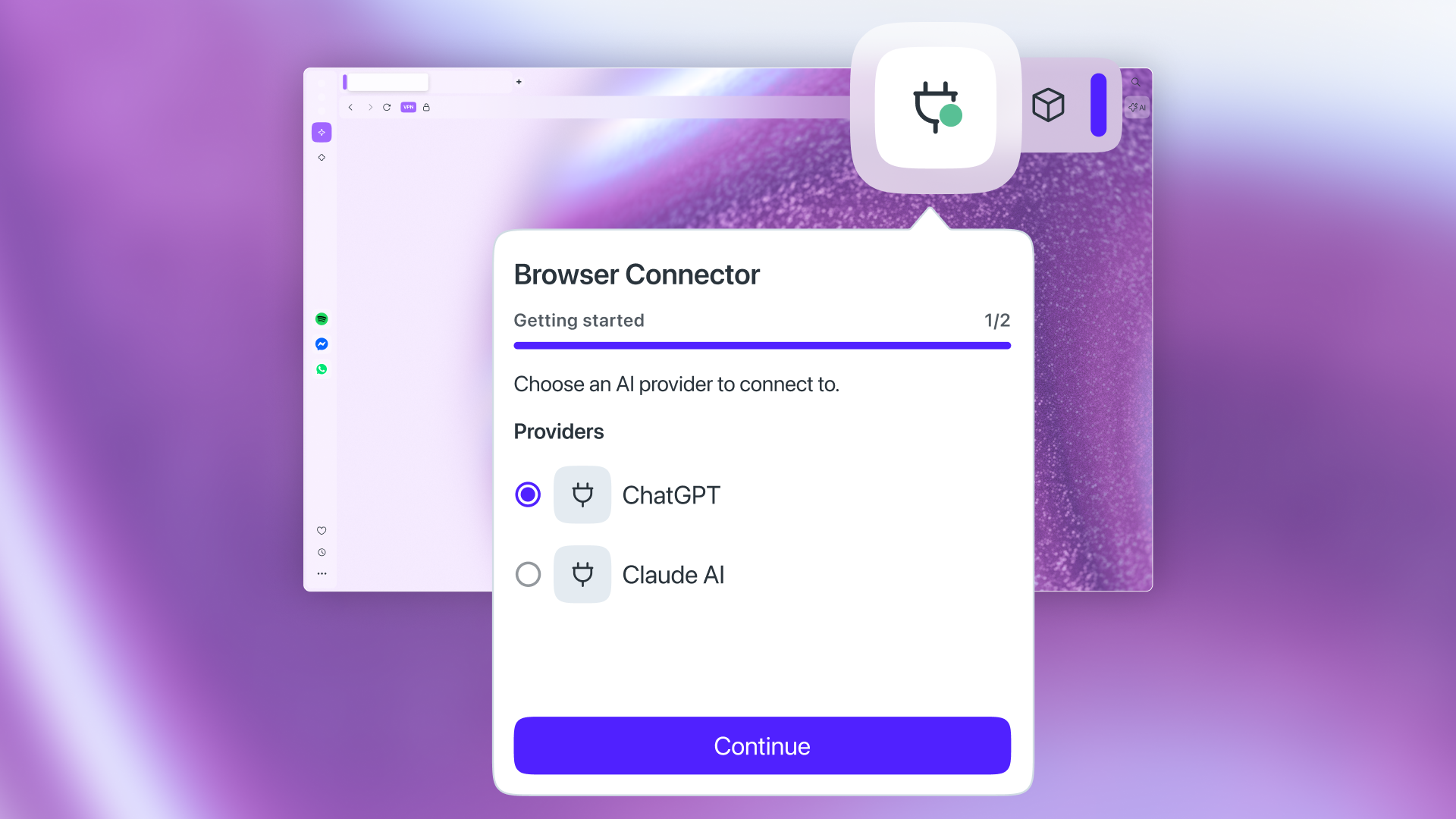
Opera framed the move as part of its open AI strategy rather than a push toward a single assistant. That fits the company’s recent browser roadmap: Opera introduced ChatGPT support in 2023, added its own Aria system, and in March brought Gemini into the Opera One sidebar. Browser Connector now targets people who already use outside AI tools for research, shopping comparisons, and other multi-tab desktop work.
The company behind the release is Opera, the Oslo-based browser maker founded in 1995 and listed on Nasdaq under OPRA. Opera reported 284 million average monthly active users in the fourth quarter of 2025, including 34 million for Opera GX, giving the company a sizable installed base for testing whether MCP-based browsing context becomes a normal part of desktop AI workflows.
Early outside coverage focused on the same point: Browser Connector reduces the copy-paste burden when using AI on the web, while also bringing a Neon-era capability into Opera’s mainstream desktop browsers. That makes this release less about adding another chatbot and more about turning the browser itself into a context layer for third-party AI tools.


