

Google appears to be lining up a batch of NotebookLM features that have been in the works for months, surfacing quietly in recent builds even as the team drops hints that an announcement may not be far off. Three additions stand out, and together they sketch a clear direction.
as is tradition, NotebookLM’s big update is not on IO day…
— Simon (@tokumin) May 24, 2026
Team has cooked.
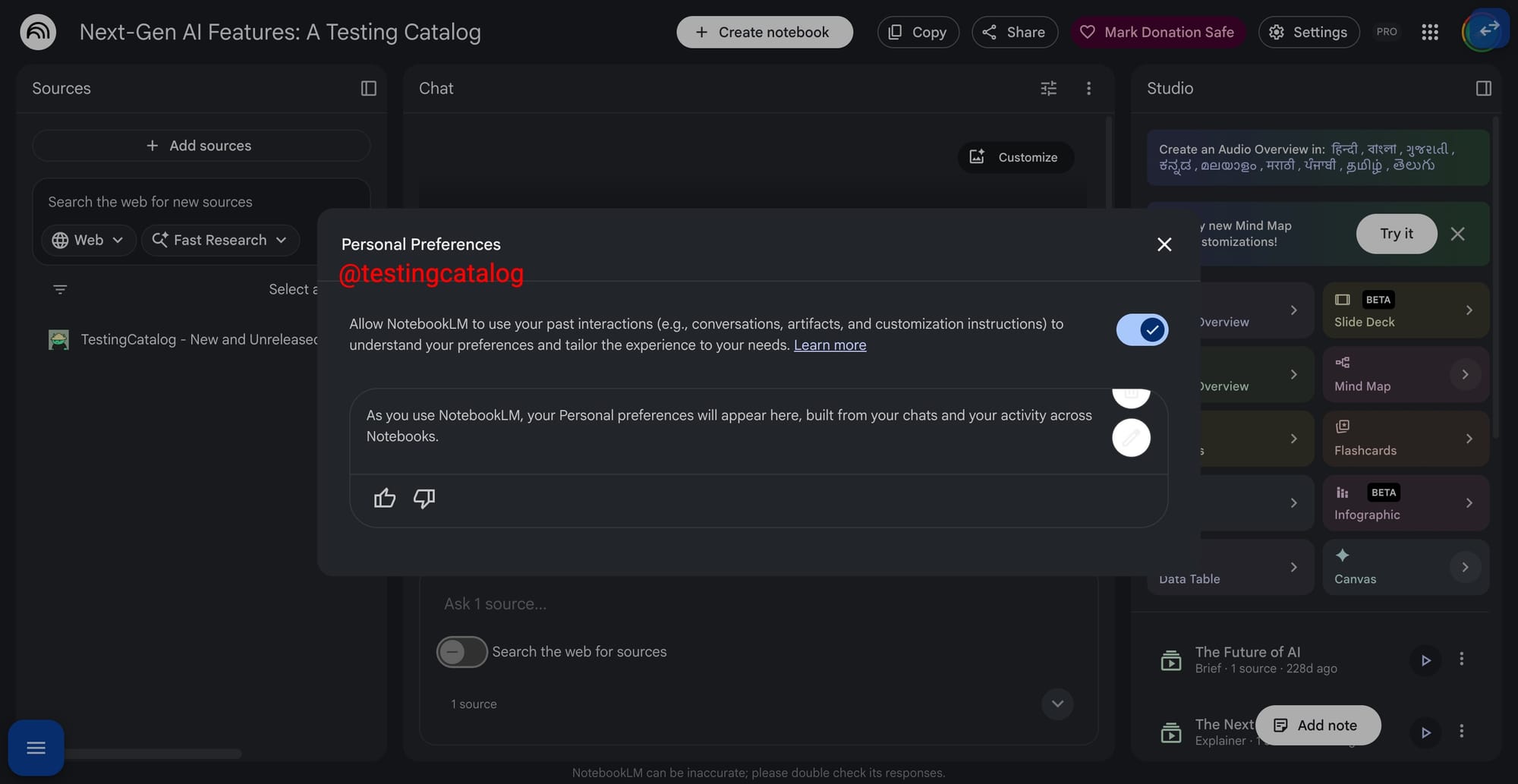
The first is Personal Preferences, which debuted in Gemini and is now set to reach NotebookLM. It would let the tool learn from your activity and build editable personas, adjusting tone and technical depth to how you work. While Gemini’s version reaches into Gmail, Drive, Photos, and Calendar, the NotebookLM signals so far lean toward in-app personalization drawn from your notebooks and chats, which is useful for anyone doing repeated, deep-context research.
Allow NotebookLM to use your past interactions (e.g., conversations, artifacts, and customization instructions) to understand your preferences and tailor the experience to your needs.
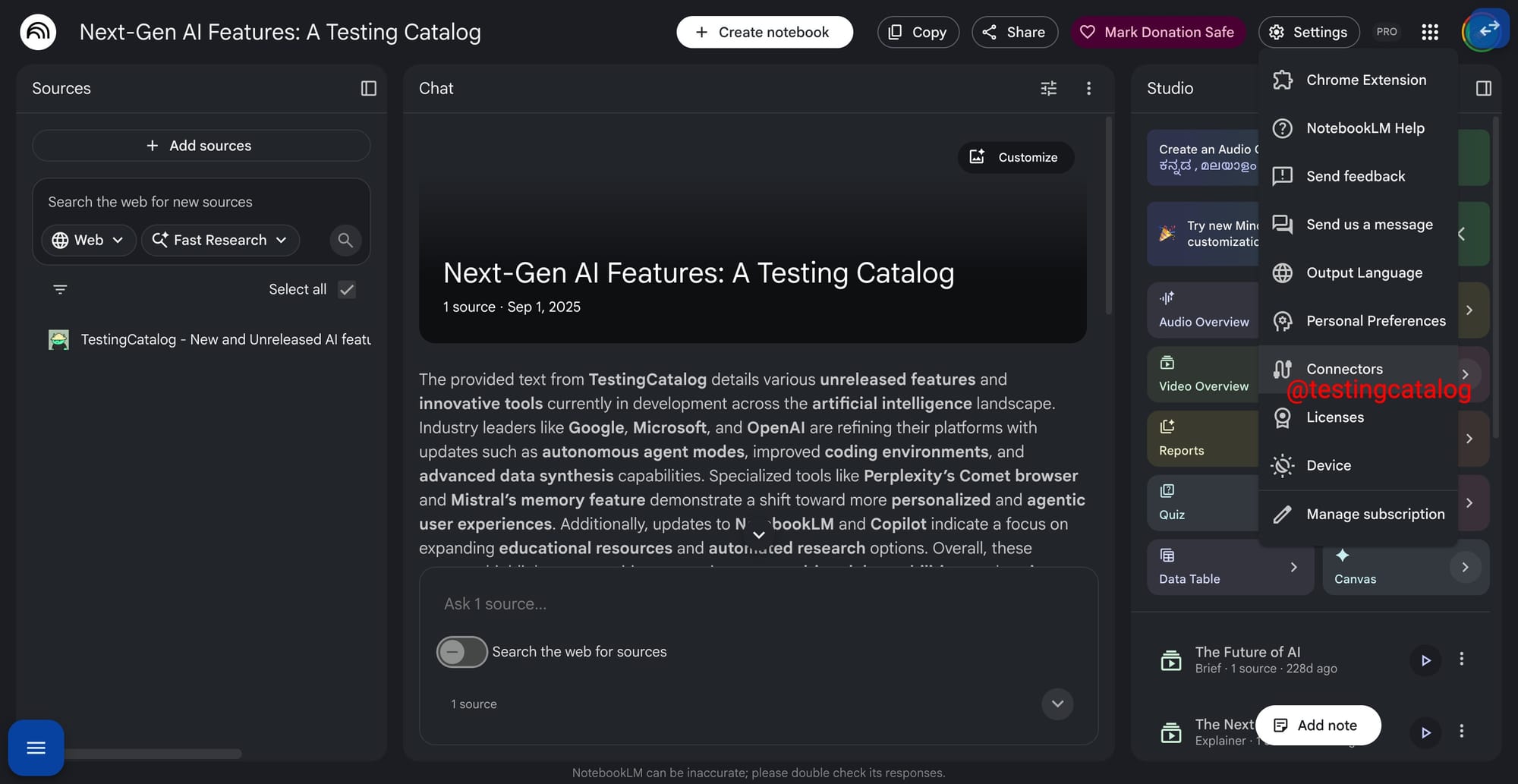
Connectors, sitting alongside it in settings, would close that gap. Working much like MCP, it would pull outside data into a notebook, most likely starting with Google’s own services such as Calendar, Gmail, and Drive. The piece is not yet operational, and the roster of supported sources remains open.
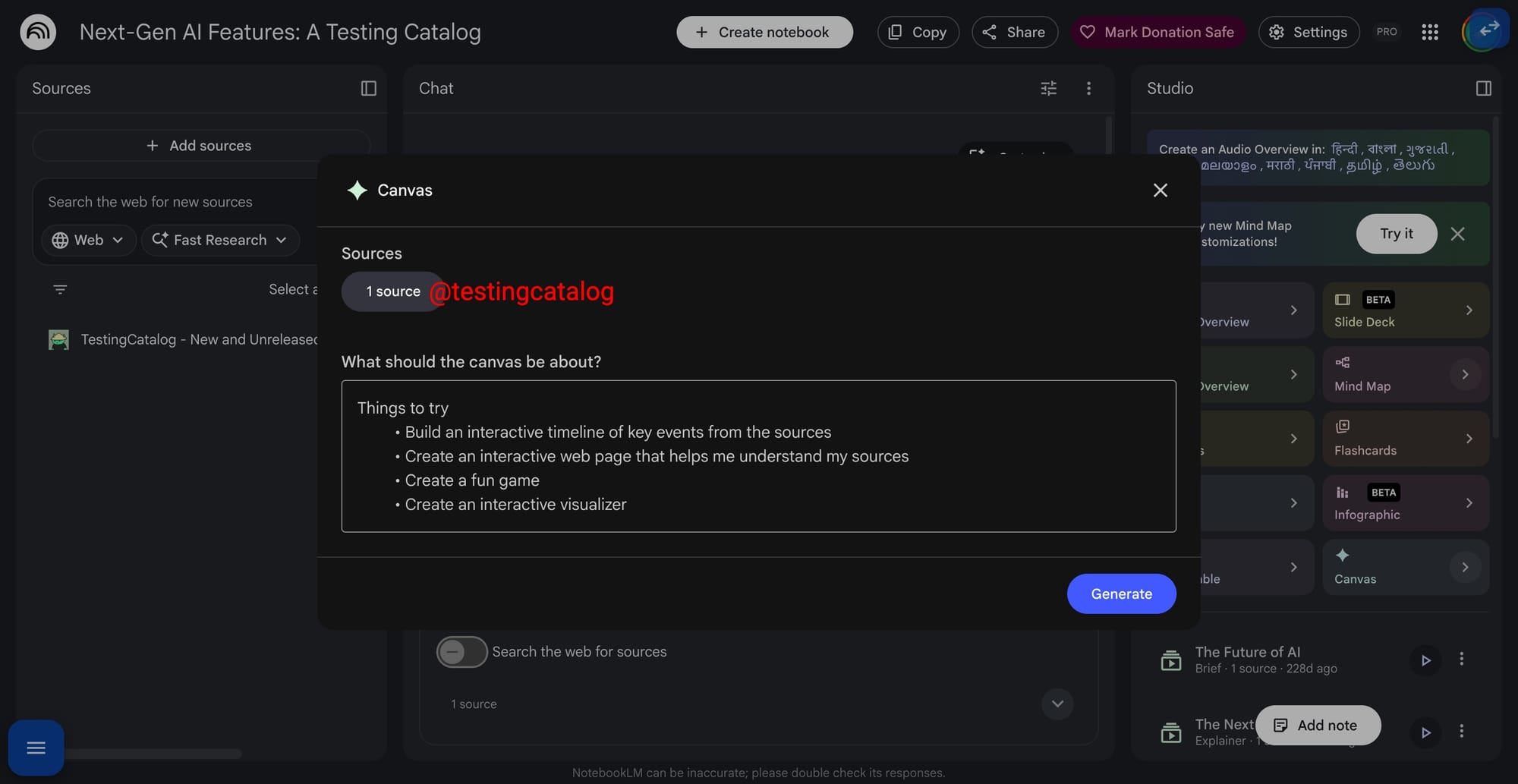
Canvas is arguably the headline. Found in the Studio panel, it would turn sources into a custom artifact — an interactive timeline, an explainer web page, a lightweight game, or a visualizer, guided by a prompt describing what you want and how. It extends the outputs that NotebookLM already offers, including infographics, slide decks, data tables, and mind maps.
The combination is where it gets compelling. With NotebookLM now living inside Gemini, the three would let people work across their sources without copying material between tools, matching Google’s push to turn a source-grounded reader into a workspace for building structured, visual experiences on top of documents.
On models, NotebookLM moved to Gemini 3 late last year; with Gemini 3.5 Flash now the global default after I/O 2026, the Flash branch of that family is the natural next base. A firm timeline is still missing, so the open question is when, not whether.


