
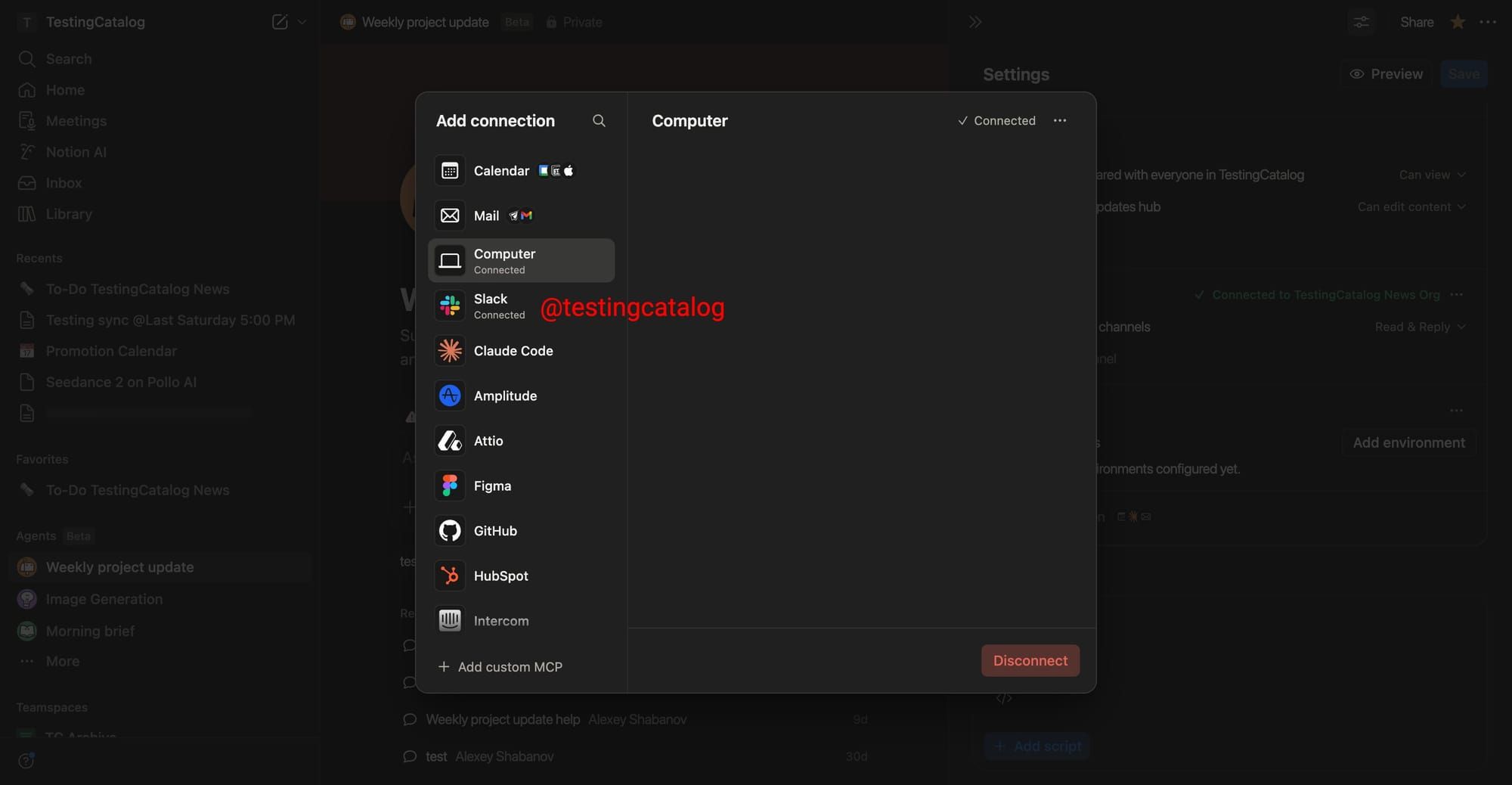
Notion is quietly pushing the boundaries of what its upcoming custom agents can do. In recent development builds, TestingCatalog spotted references to a computer use connector that would allow Notion's custom agents to operate a computer directly. This appears as a separate connector in the agent configuration, and users can set up managed environments where agents can perform complex tasks autonomously. This is a substantial leap from the current Notion 3.0 agent capabilities, which launched in September 2025 and can already perform up to 20 minutes of autonomous multi-step work across hundreds of pages.
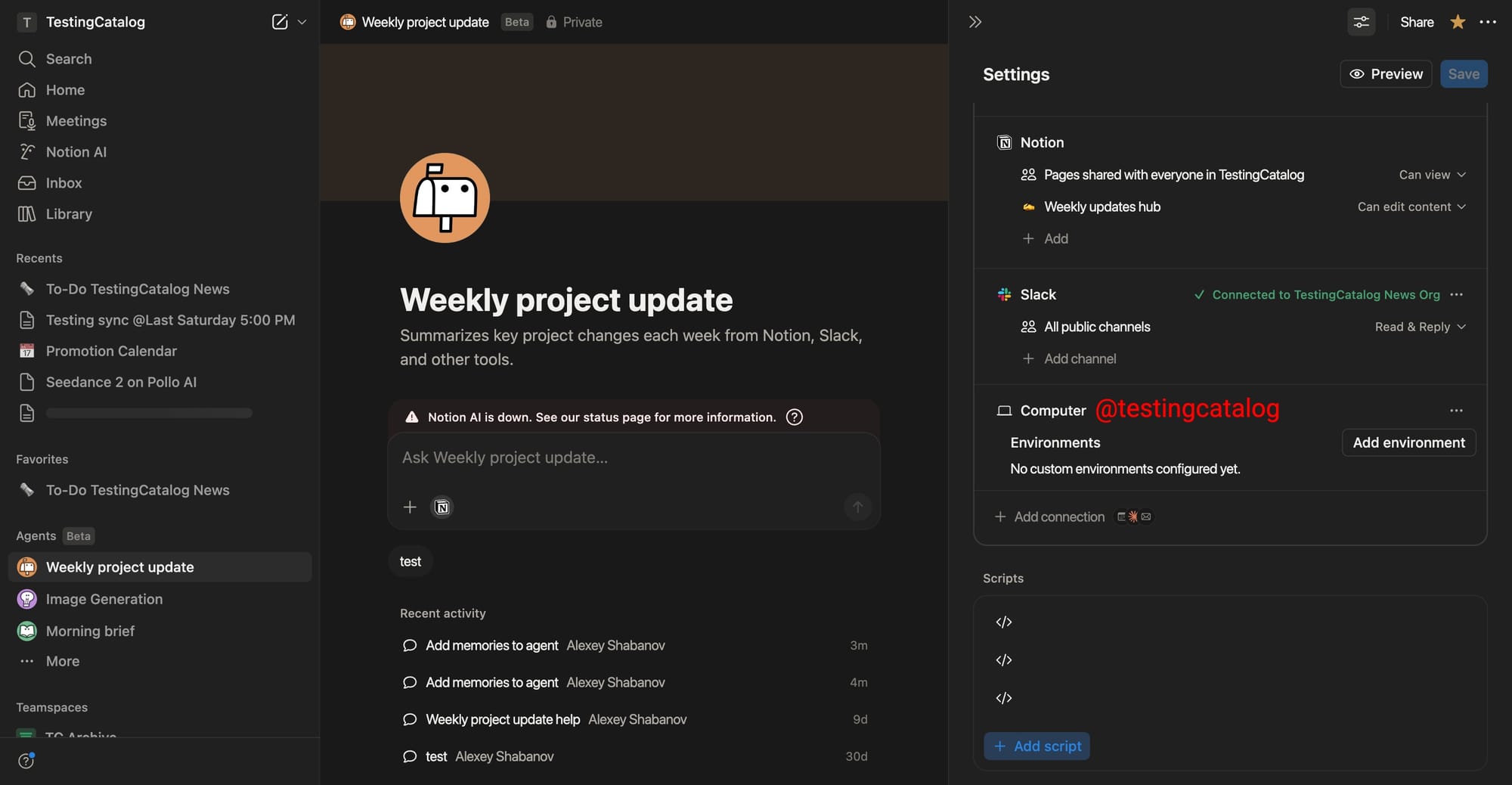
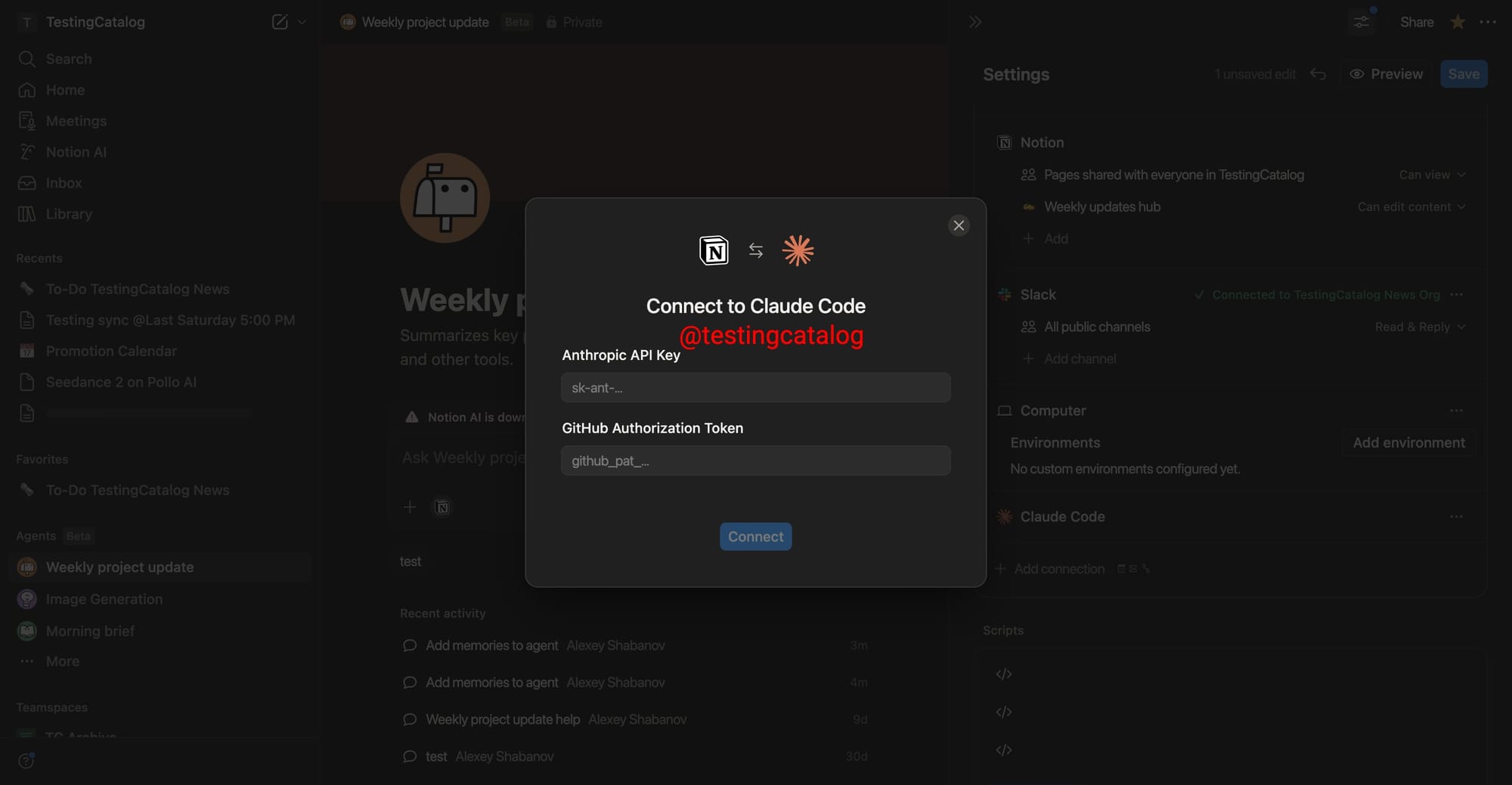
Perhaps more striking is the discovery of a Claude Code connector in the same connectors section. This would allow Notion's custom agents (Agents 2.0?) to spin up and operate Claude Code instances, Anthropic's command-line coding tool. Combined with computer access, these agents could install dependencies, execute code, and potentially even operate a browser, creating a full development and automation environment within Notion's managed infrastructure. While this doesn't directly mirror OpenAI's OpenClaw approach, Notion appears to be building its own solution for agentic computer operation, potentially at an organizational scale.
Notion, which already uses Claude as a core AI backbone and recently expanded model support to include GPT-5.2 and Gemini 3.1, has been positioning itself as the central hub for AI-powered organizations. Custom agents were announced alongside Notion 3.0 but remain unreleased, with the company describing them as autonomous agents that run on schedules or triggers and can be shared across teams. The addition of computer use and coding capabilities would make these agents far more versatile than typical workspace automation. Organizations would gain agents that can collaborate through Slack, assume different roles, and execute tasks collectively, all managed within Notion's platform. No release timeline has been confirmed, but the depth of implementation in current builds suggests active development is well underway.


