

Google appears to be preparing a notable expansion of Antigravity, its agent-first IDE launched in November 2025 alongside Gemini 3. So far, two experimental capabilities have surfaced in recent builds.
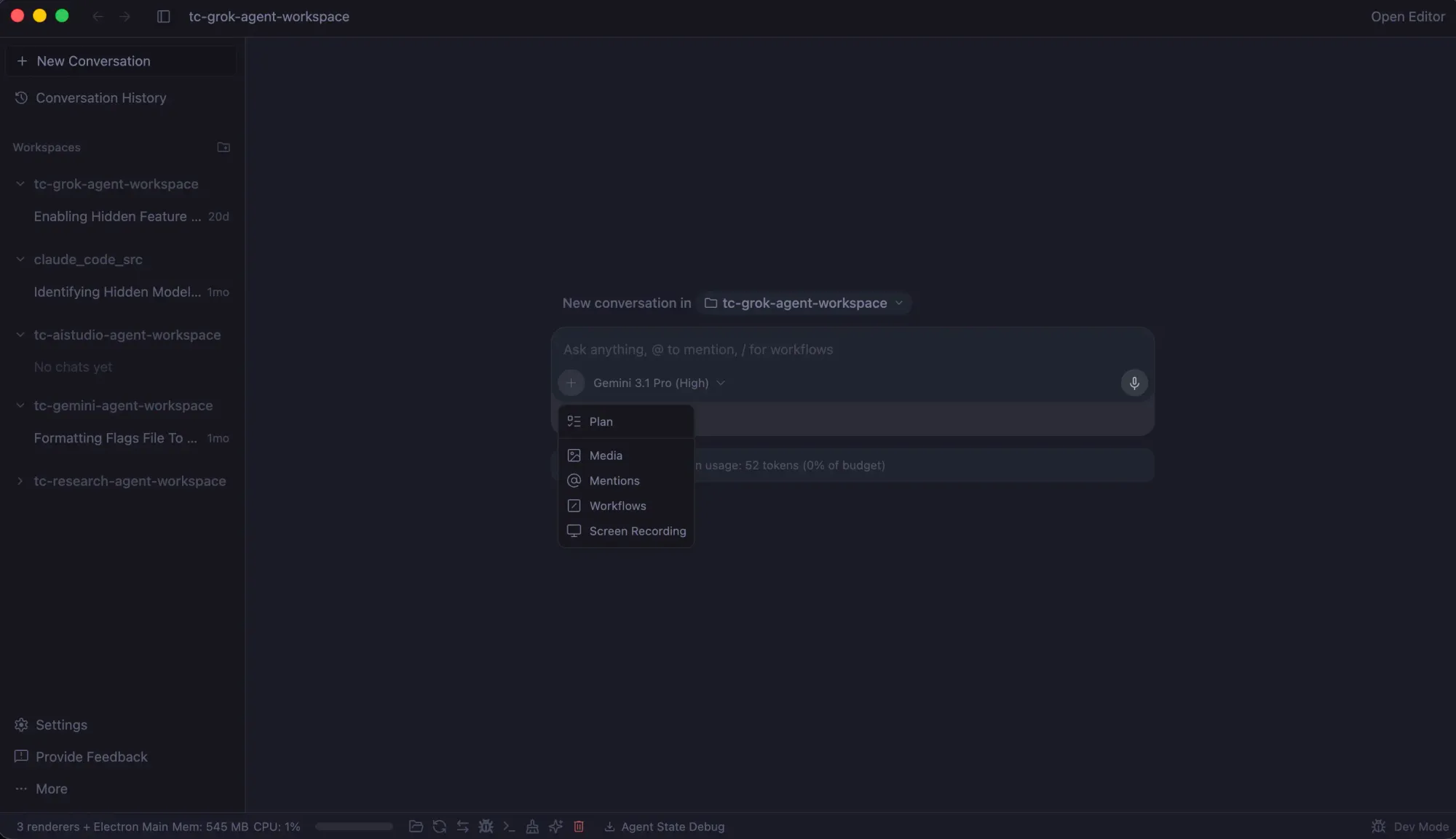
The first is a Screen Recording option living inside the Agent Mode prompt composer. Once activated, it lets developers stream their screen to the agent so Antigravity can observe what is happening outside the editor itself. The likely use cases skew toward mobile and desktop development, where an emulator or external runtime sits beyond the IDE's reach, and to live demos, where a developer wants to visually walk the agent through a bug or target behavior. The approach mirrors what Google already ships in AI Studio, where the Gemini real-time model accepts shared screens, and it complements Antigravity's existing browser recordings and screenshots, which until now have been agent-generated rather than developer-supplied.
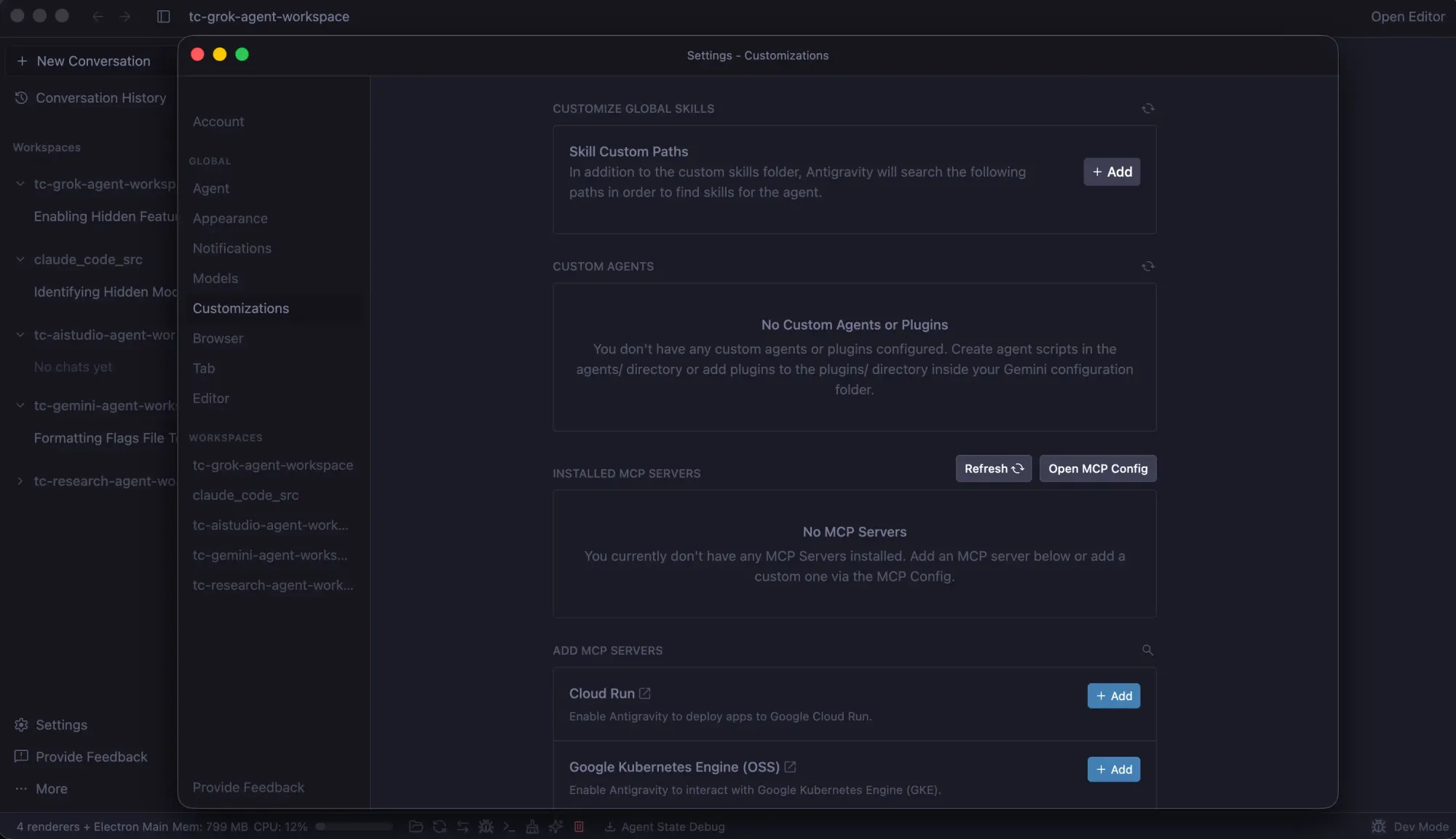
The second feature sits behind a flag in settings and unlocks Custom Agents and Plugins. Its description tells users to drop Agent Scripts into an Agents directory and place plugins in a plugins folder inside the Gemini configuration directory. In practice, this would let teams define multiple agent personalities or workflows and invoke them on demand for specific tasks, moving beyond the current Rules and Workflows model that has been a frequent point of feedback from developers migrating off VS Code and Copilot. The plugin format borrows heavily from the standard Anthropic introduced for Claude Code, hinting at cross-ecosystem compatibility that would lower the cost for plugin authors targeting both platforms.
Antigravity has been positioned as mission control for parallel agents, yet its customization surface has lagged behind competitors, and its agents have lacked direct visibility into work happening outside Chrome and the editor. Bringing screen sharing into the composer and opening the door to community-built agent scripts would close both gaps at once. No public timeline has been set, though the flagged state suggests something closer to rollout than to early prototyping.


