
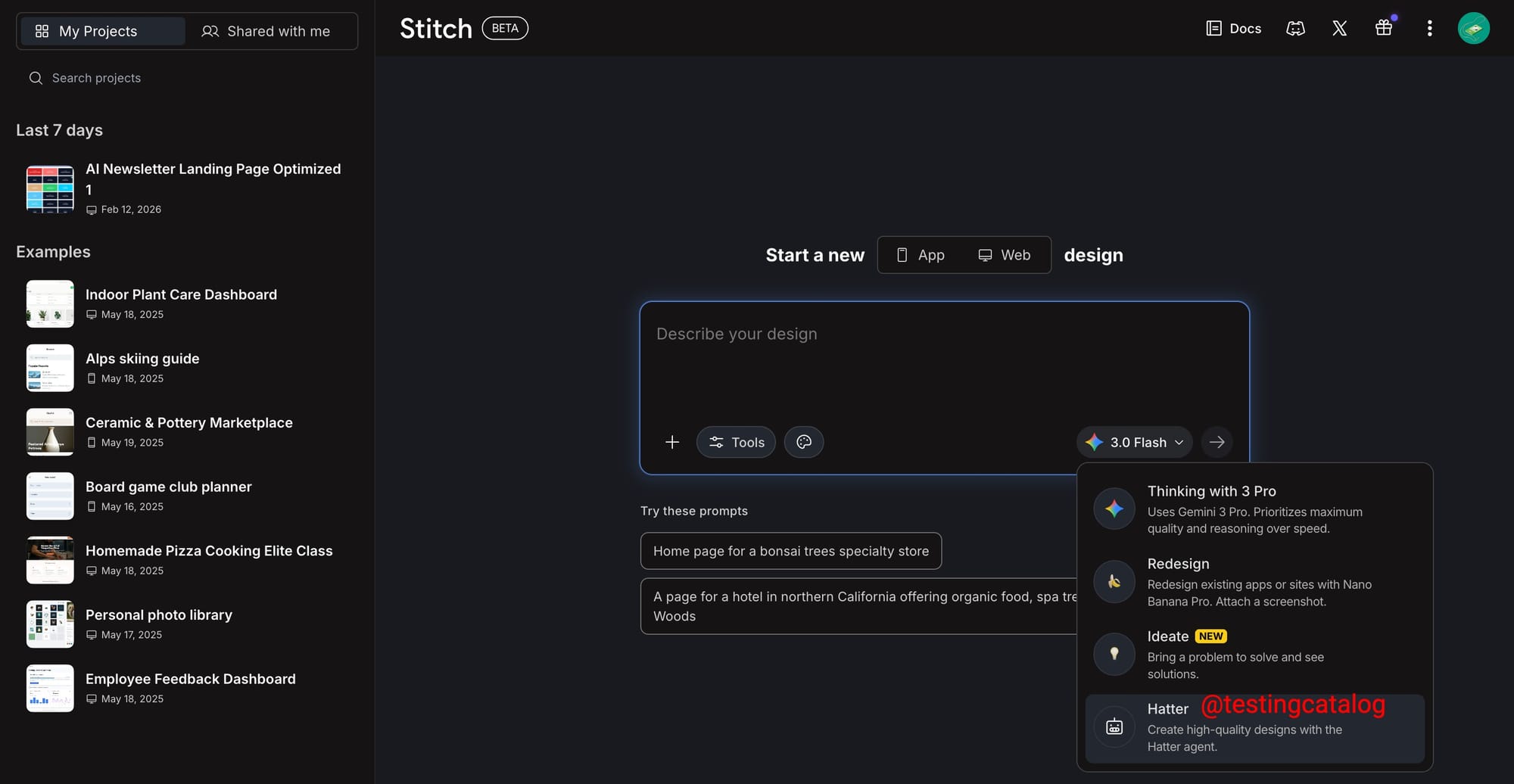
Google’s AI design tool Stitch, which launched at Google I/O 2025 as a rebranded version of Galileo AI, appears to be preparing another addition to its growing agent roster. Just days after publicly rolling out the Ideate agent on February 11, a new option called “Hatter” has surfaced in the latest builds of the platform.
Google is testing a new Hatter agent on Stitch, along with a new tool to generate App Store assets and a simpler way to setup MCP connector for coding tools like Gemini CLI, Claude Code, Antigravity, Cursor and others.
— TestingCatalog News 🗞 (@testingcatalog) February 16, 2026
"Create high-quality designs with Hatter agent" pic.twitter.com/x1aiUESmAR
Described as an agent that can “create high-quality designs,” Hatter sits alongside existing options like Flash Agent, Pro Agent, and the recently added Ideate in the mode selector. Its exact purpose remains unclear, when triggered, it currently produces results similar to the standard design flow, but its labelling as an “Agent” rather than a model suggests Google may be positioning it to handle more complex, multi-step design tasks. This could tie into the previously spotted “Deep Design” system, a design-focused counterpart to Deep Think that would apply deeper reasoning to UI generation.
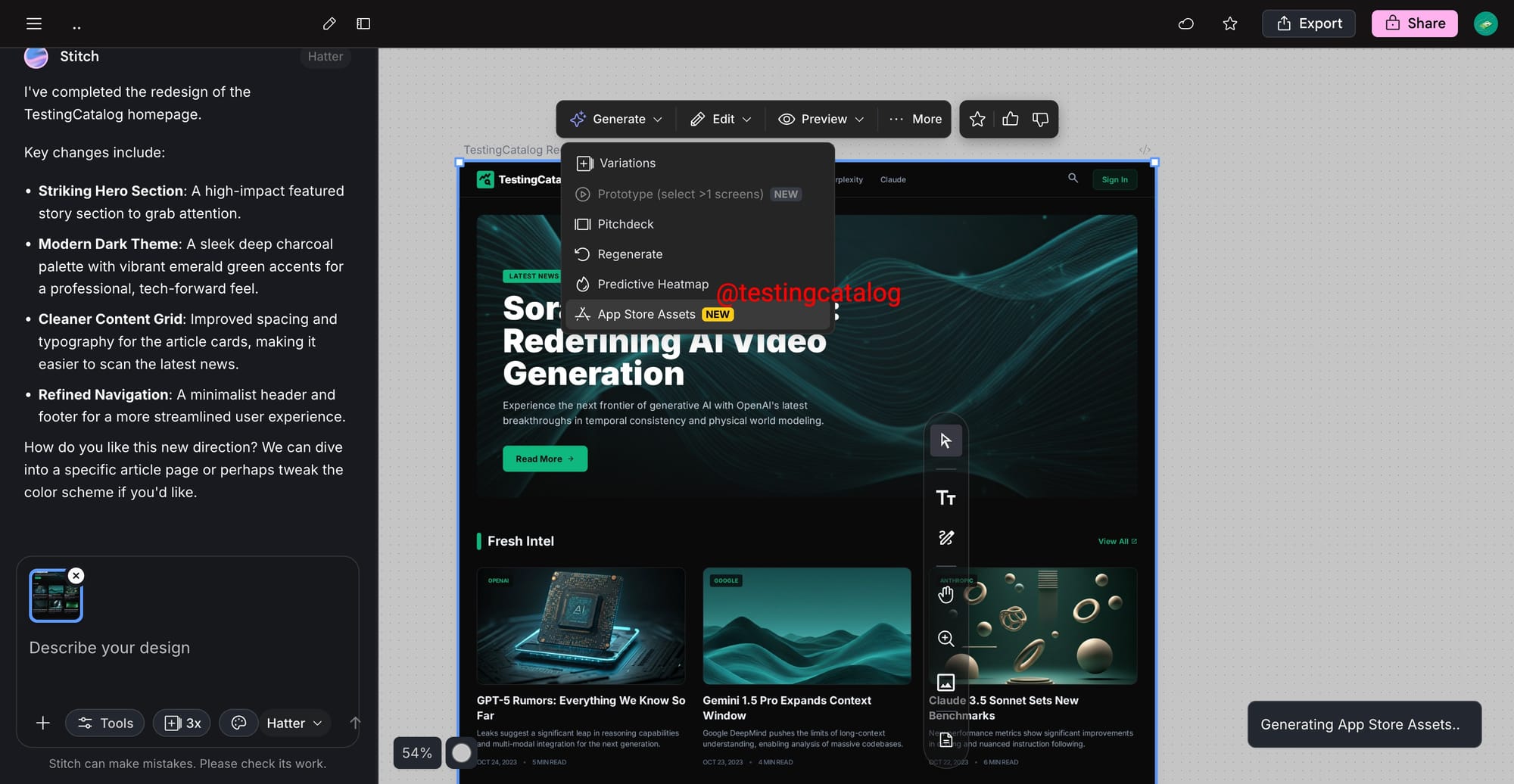
Beyond Hatter, two other features have appeared in development builds:
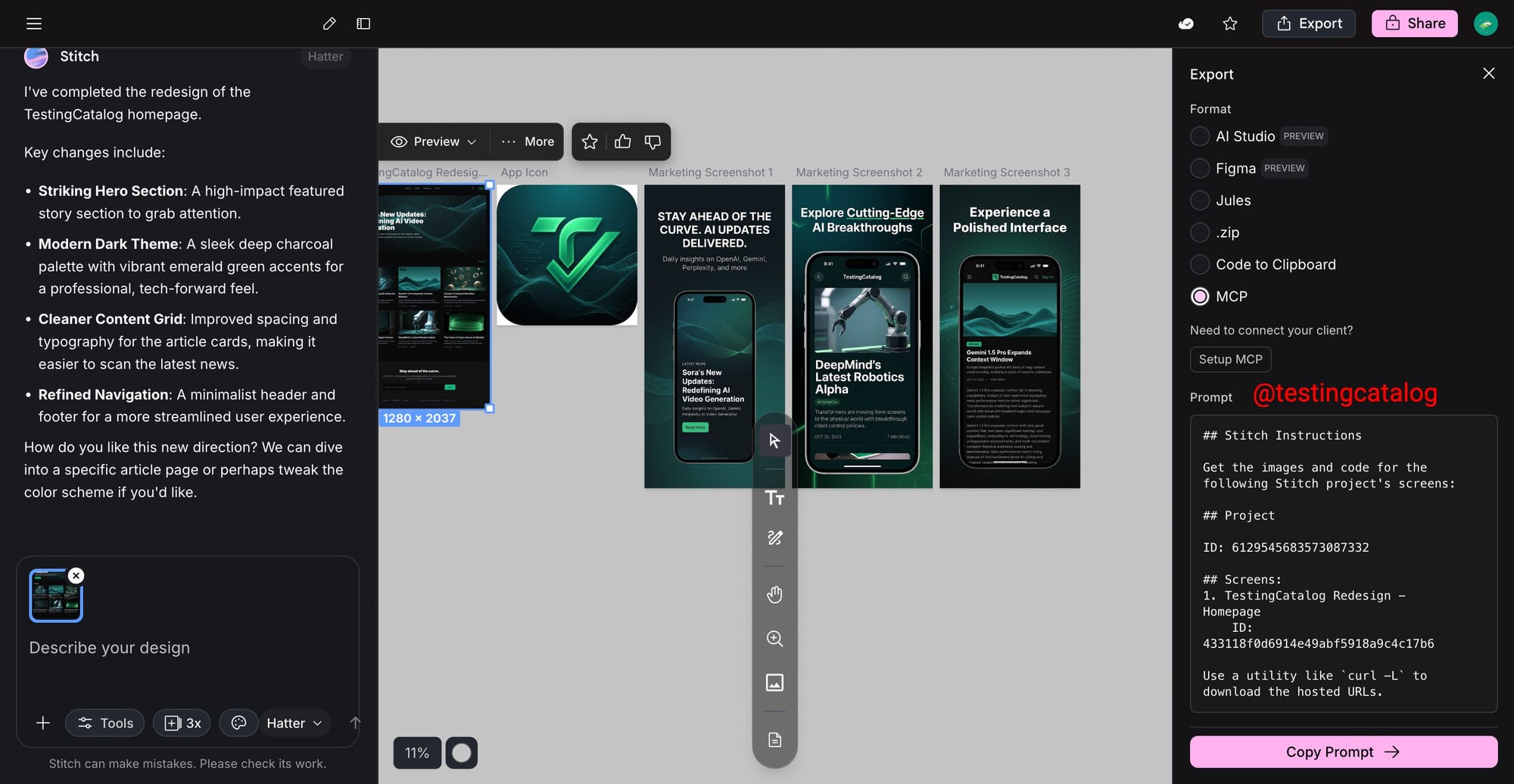
- App Store Asset Generation: This feature would allow users designing mobile applications to automatically produce a set of screenshots with descriptions and an app icon. It serves as a practical shortcut for anyone prototyping apps who needs store-ready visuals without switching tools.
- Native MCP Integration: Built directly into Stitch’s export menu, this replaces earlier third-party export options like Lovable. This built-in MCP setup would generate an API key and allow connections from tools like Cursor, Claude, Claude Code, and Gemini CLI. While community-built MCP bridges for Stitch already exist on GitHub, a first-party implementation would lower the barrier considerably, especially for developers who want to pull Stitch designs directly into their coding environments.
Google has been steadily expanding Stitch’s capabilities since launch, adding Figma export from all agents, the Ideate agent for early-stage exploration, and now what appears to be a pipeline toward deeper AI-driven design reasoning. Designers, indie developers, and product teams prototyping mobile apps stand to benefit most from these additions if they ship publicly.


