

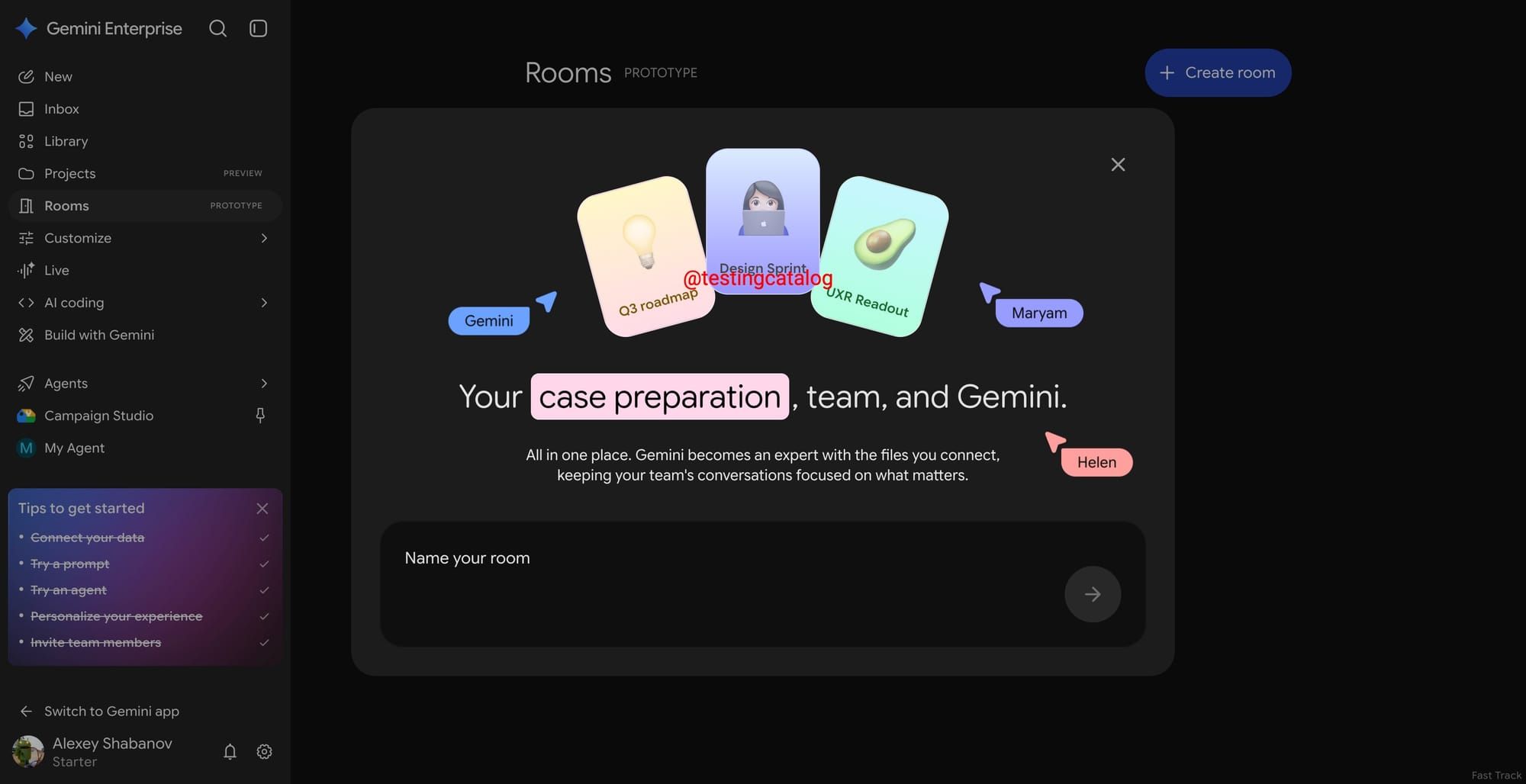
Google is prototyping a new Gemini Enterprise feature called Rooms, which could turn the platform into a shared workspace where teams collaborate with both colleagues and Gemini around a specific objective. TestingCatalog found references to the feature in recent Gemini Enterprise builds, but it remains marked as a prototype, and Google has not yet indicated plans to ship it publicly.
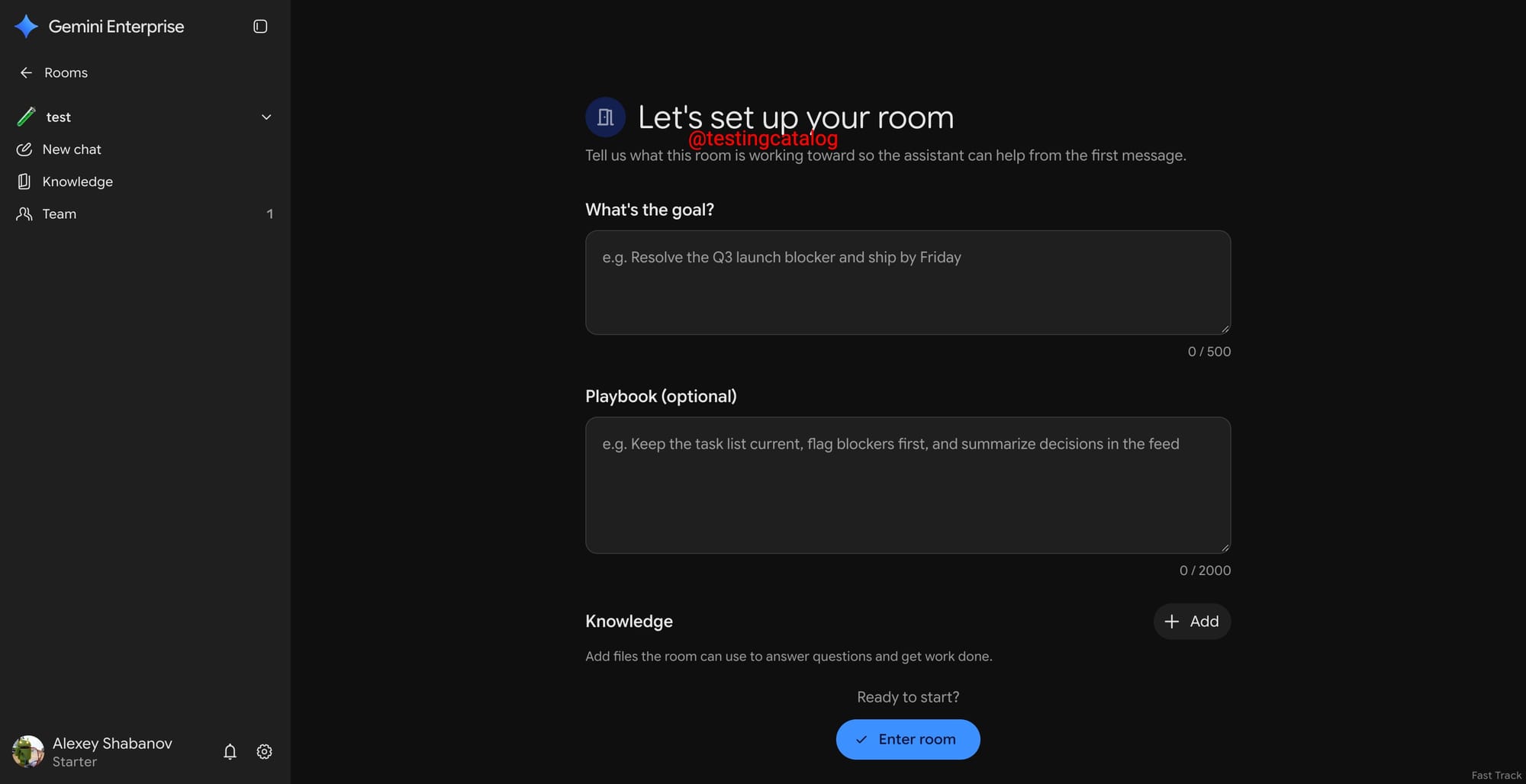
Rooms are described as an “all-in-one place” environment where Gemini becomes an expert using connected files while keeping team conversations focused. Creating one involves defining a goal, a playbook describing how Gemini should operate, and a knowledge base. Teams can then add members and files, maintain shared context, and communicate with each other or Gemini inside the same space.
The concept appears closely related to Projects, which Google publicly introduced at Cloud Next 2026 as shared workspaces for humans and agents. Projects already combine conversations with sources from services such as Google Workspace, Microsoft OneDrive, NotebookLM, and team chats. Rooms appear to take that idea further by giving the workspace an explicit objective, operating instructions, and a more structured knowledge layer.
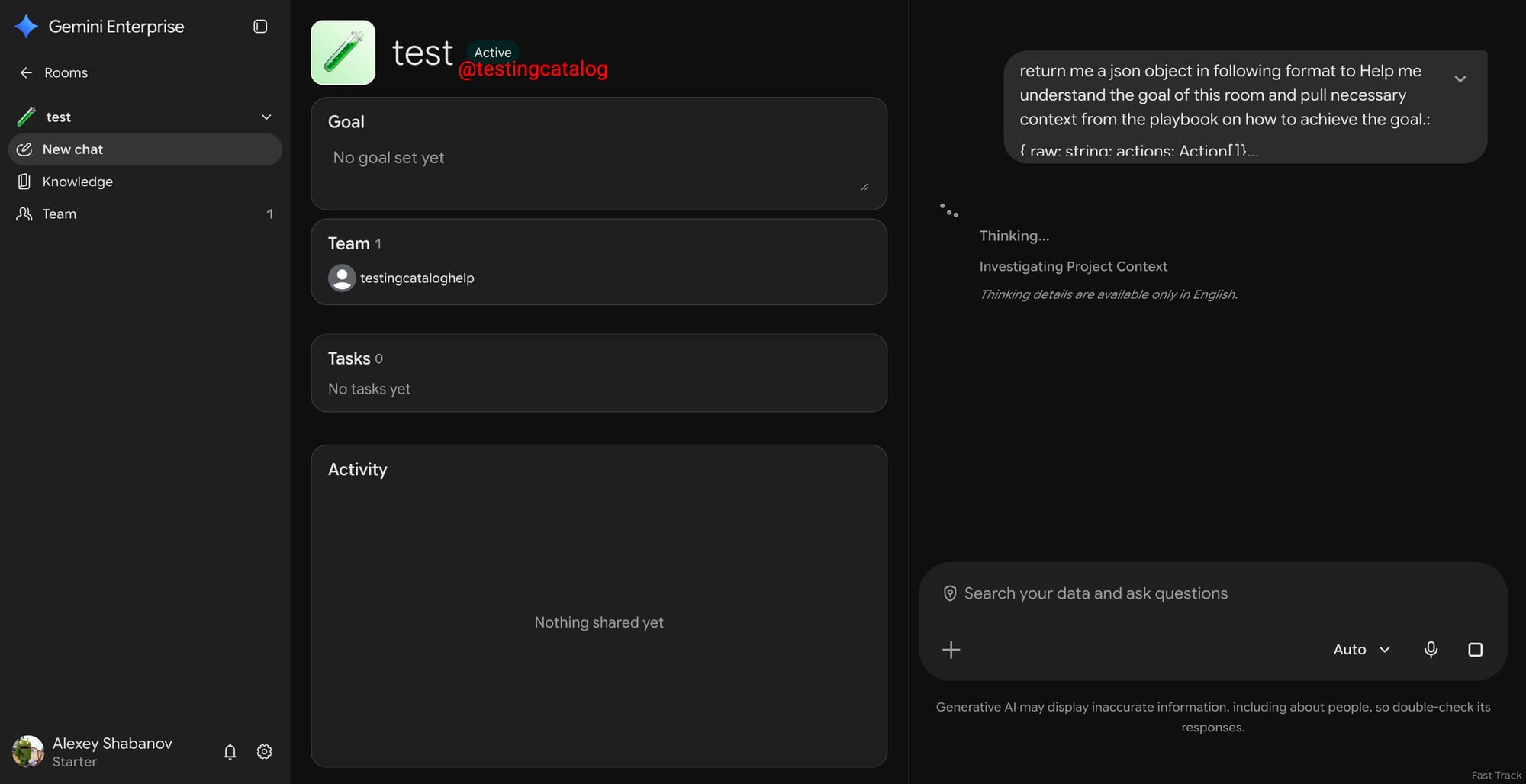
For enterprise teams, this could position Gemini closer to project management and operational collaboration software rather than serving primarily as an assistant layered over company data. One particularly useful direction would be connecting context gathered during Google Meet calls with room decisions, documentation, tasks, and ongoing conversations, although there is currently no evidence that Meet integration is part of the prototype.
Google has been steadily repositioning Gemini Enterprise as an agentic workplace platform, with long-running agents, Projects, Canvas, an Agent Gallery, enterprise connectors, and persistent agent memory all forming parts of that strategy. Recent interface changes point in the same direction: the Customization area is being reorganized to include dedicated Agents and Memory sections, with agents potentially moving into a list where users can inspect and configure them.
For now, Rooms remain an internal prototype. Their final name, availability, supported data sources, and whether they will replace or coexist with Projects are still unclear.


