

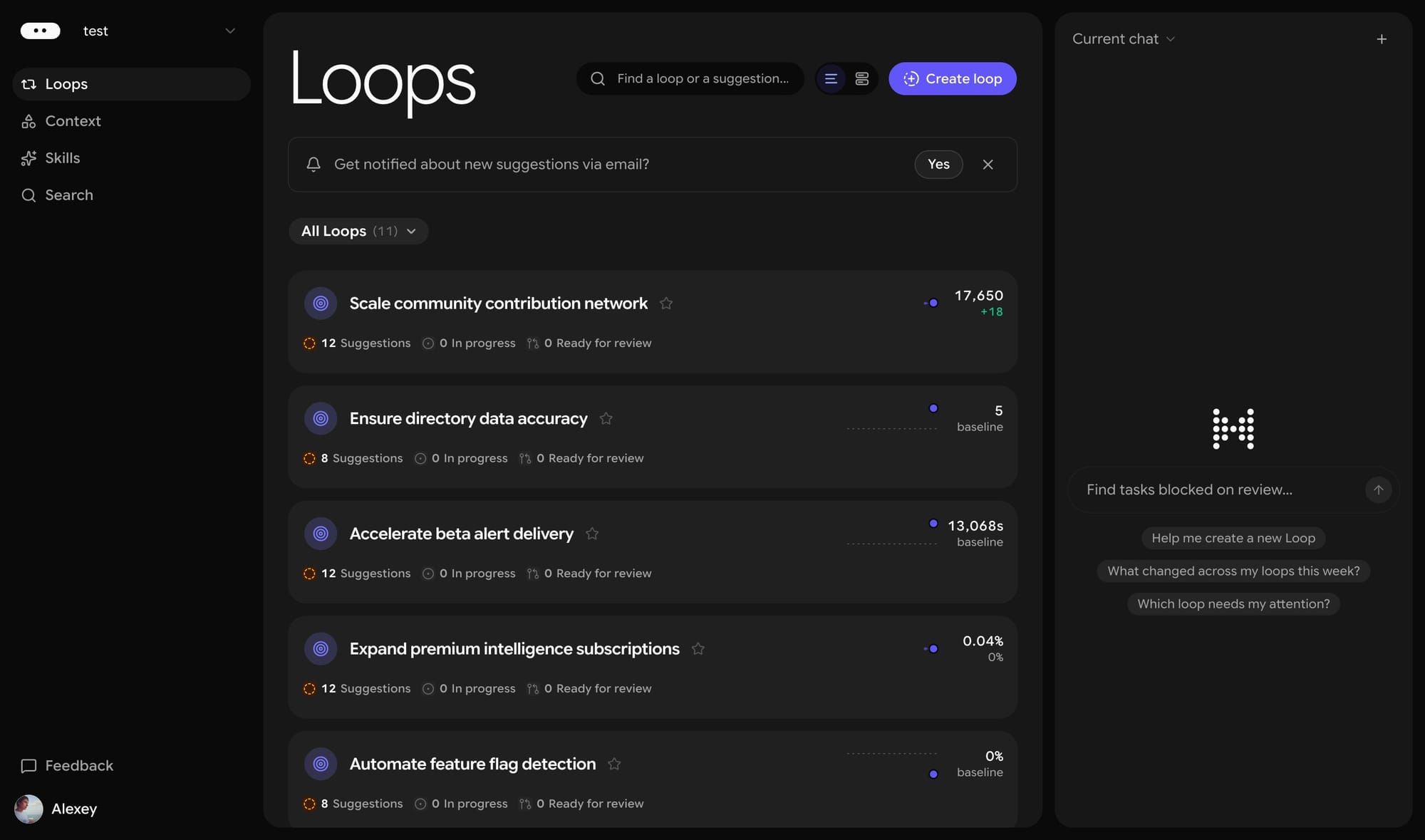
Google has announced Stitch Loop, a new Google Labs experiment that turns Stitch into an autonomous, long-running product agent. Stitch helps teams design a product, while Stitch Loop is built to keep improving it once it is live, covering the full cycle from product discovery to implementation and monitoring. The waitlist is open globally for all users, with eligible Google AI Ultra subscribers getting priority access, and the pitch targets lean teams that ship fast but struggle to keep up with post-launch work.
BREAKING 🔥: Google has announced Loop, a new Stitch experiment.
— 🚨 AI News | TestingCatalog (@testingcatalog) November 18, 2026
Loop is an AUTONOMOUS AI agent that handles a full cycle from product discovery to implementation and monitoring.
This is a new type of solution that can improve your product on its own, with the user's role…
Teams start by connecting GitHub and product context such as logs, user behavior, and feedback through more than 180 integrations, custom MCP servers, or CLI uploads. Each loop then surfaces evidence-based suggestions, offers solutions with tradeoffs, builds the chosen fix in an isolated cloud sandbox, opens a GitHub pull request, and keeps watching live data after the goal is met. Nothing merges until a person reviews the pull request.
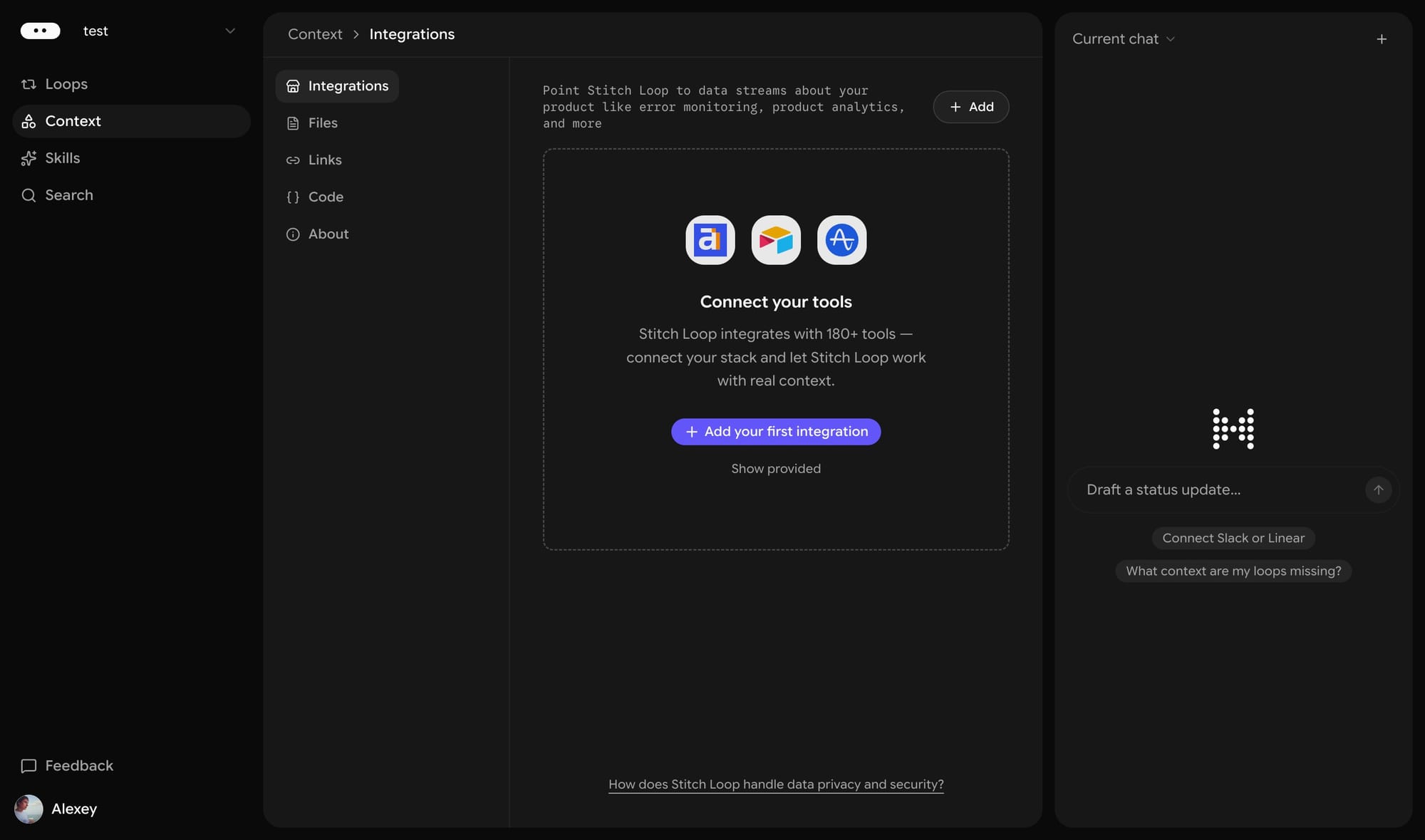
Built-in loops cover security, pairing Gemini 4 Carbon with CodeMender, Google DeepMind's code security agent, along with latency and WCAG accessibility, and teams can add custom loops for goals like checkout conversion. Coding agents such as Google Antigravity can pull product context through the Stitch CLI and MCP, and an @stitch bot in Slack sends daily insight digests.
Today’s coding agents stop when code ships. Stitch Loop, a new experiment from @GoogleLabs, keeps working after launch.
— Google (@Google) November 18, 2026
Using Gemini 4 Carbon and CodeMender, it watches live metrics, tests fixes in a sandbox, and opens PRs for you to approve — all tied to your objectives. Join… https://t.co/QmlrE8j8gT
Google calls this a new direction for Stitch, the Google Labs tool that millions of designers, developers and founders use to turn ideas into working interfaces. Justin Toupin, Director of Product Management at Google Labs, argues that coding agents stop when a pull request merges, while the real work begins in production. Google positions Stitch and Stitch Loop as steps toward agents that support lean teams from ideation through continuous optimization.
Every Stitch Loop workspace comes with a default security loop.
— Stitch by Google (@stitchbygoogle) November 18, 2026
Built with Gemini 4 Carbon and CodeMender, it continuously scans your codebase, flags vulnerabilities with evidence, and opens PRs with proposed fixes before they become incidents.
You always have the final call.… pic.twitter.com/RdKQRd00FJ
I have been testing Loop for weeks. I asked it to optimize TestingCatalog.com, and it made many small tweaks to the theme I am using while suggesting improvements for accessibility and compliance. During my pre-launch testing, it ran on Gemini 3.8 Flash, and now Google is releasing it with an upgraded model. In general, I see Gemini 4 Carbon as a step forward over the 3.8 series.
Overall, I think Loop is a new type of solution and a higher level of delegation. Instead of managing AI agents directly, you manage an AI manager that manages other agents, while your own role comes down to setting goals, reviewing outcomes, and making decisions. The difference is that this tool is built specifically for this purpose, so it is designed to be autonomous. It is a rebirth of Jules, yet it is a unique product that other labs are not offering yet, so neither Codex nor Claude Code is a relevant comparison here. I bet other labs will eventually develop similar solutions.
Sources and related context
- Google on X: Stitch Loop announcement: Supports: Google's main account says Stitch Loop uses Gemini 4 Carbon and CodeMender to watch live metrics, test fixes in a sandbox, and open pull requests for approval.
- Stitch by Google on X: custom loops: Supports: The Stitch team's launch thread explains custom loops across 180+ integrations, pointed at outcomes like checkout conversion or support tickets.


