
TinyFish has flipped the switch on Mino, a web agent platform that turns almost any website into an operational surface for code, not humans. Launched in public beta after powering more than 30 to 35 million agentic operations every month for Google Hotels, DoorDash, and ClassPass, Mino targets the messy 95% of the web that has no APIs: clinics, salons, shelters, supplier portals, and government forms.
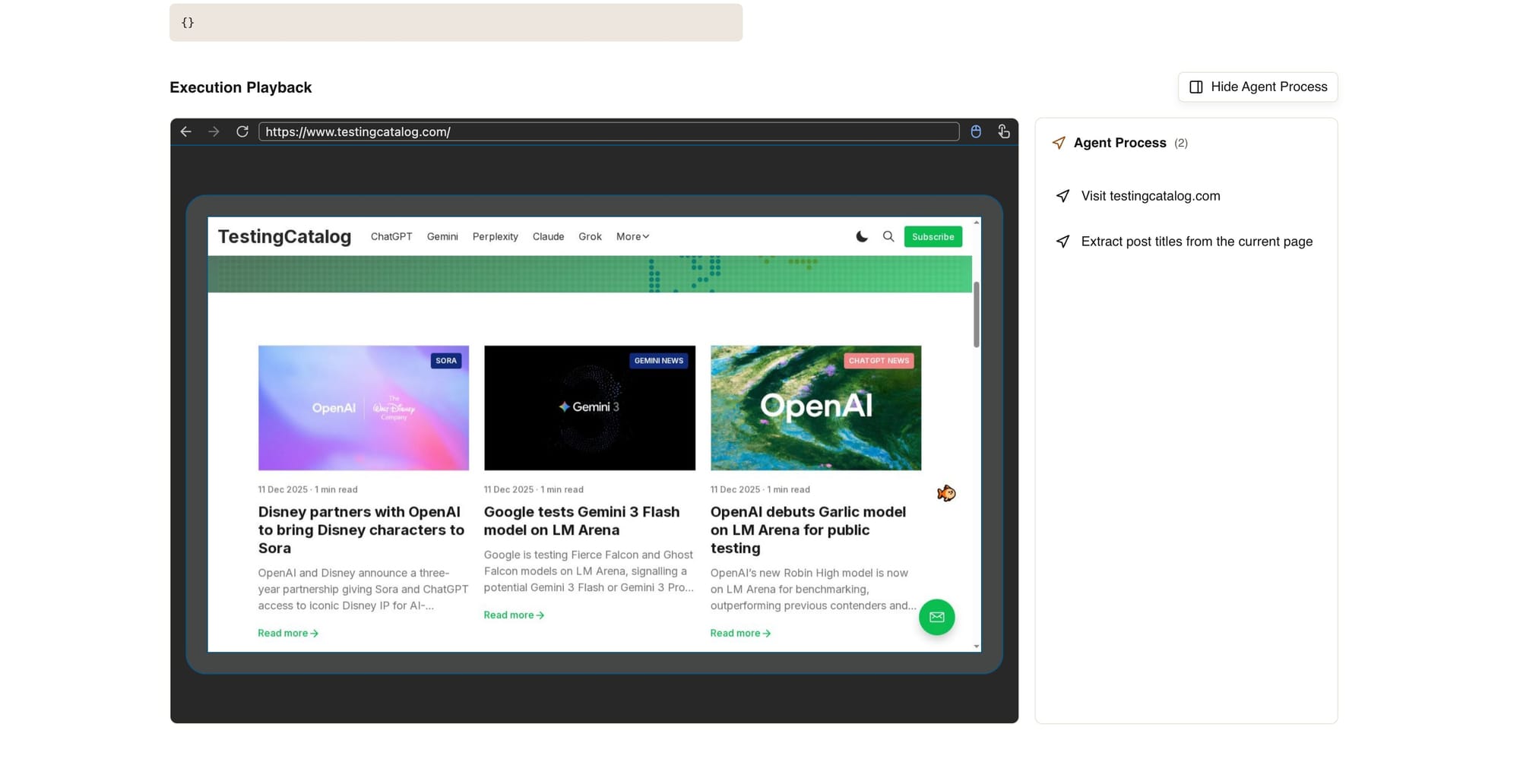
Example task: Go to testingcatalog.com; Check all the posts from the past 7 days - categorise them based on the unique product name in the tag; For every category, list down all post titles.
Mino exposes this stack directly to builders. Through an API, a visual Platform, and an MCP server, developers send a URL plus a natural-language goal and receive structured JSON. Under the hood, large models run once to learn a workflow, then compile it into deterministic browser automation that can survive layout shifts, logins, JavaScript booking flows, Cloudflare or DataDome checks, and form filling with fictitious data. Parallel execution across multiple sites, stealth browser profiles, and proxy routing are built in. Internal benchmarks cite 85% to 95% task success, task times from seconds to a few minutes, and beta guardrails such as a ten-concurrent-task sandbox for abuse control.
The web was built for humans.
— TinyFish (@Tiny_Fish) December 15, 2025
And honestly, that's fine for you guys.
But the next trillion internet users are AI agents, robots, and devices who act on your behalf - booking appointments, filling forms, placing orders, and getting things done - using sites that will never,… pic.twitter.com/EMoIrmOn7M
Behind Mino is TinyFish, a Palo Alto startup positioning itself as an enterprise web-agent company rather than another search or scraping vendor. The firm recently raised around 47 million dollars from backers including ICONIQ and USVP, framing its mission as operating across the entire web instead of indexing a small slice of it, with claims of 99.99% reliability, four times broader coverage, and roughly half the cost of legacy automation. Early industry commentary highlights Mino as a concrete path from impressive browser-agent demos to production systems where thousands of workflows run quietly in the background, rather than a single flashy task on stage.