

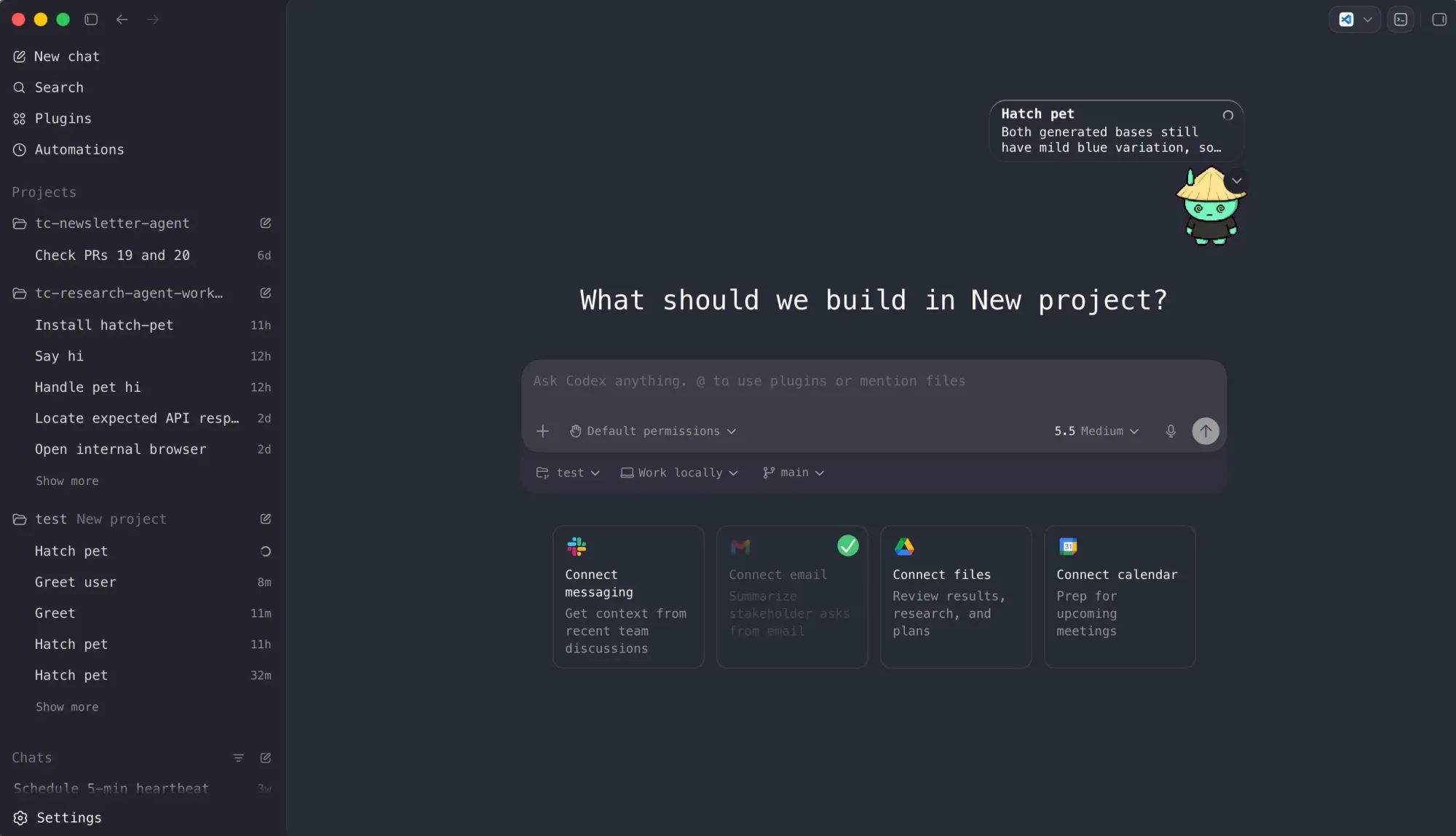
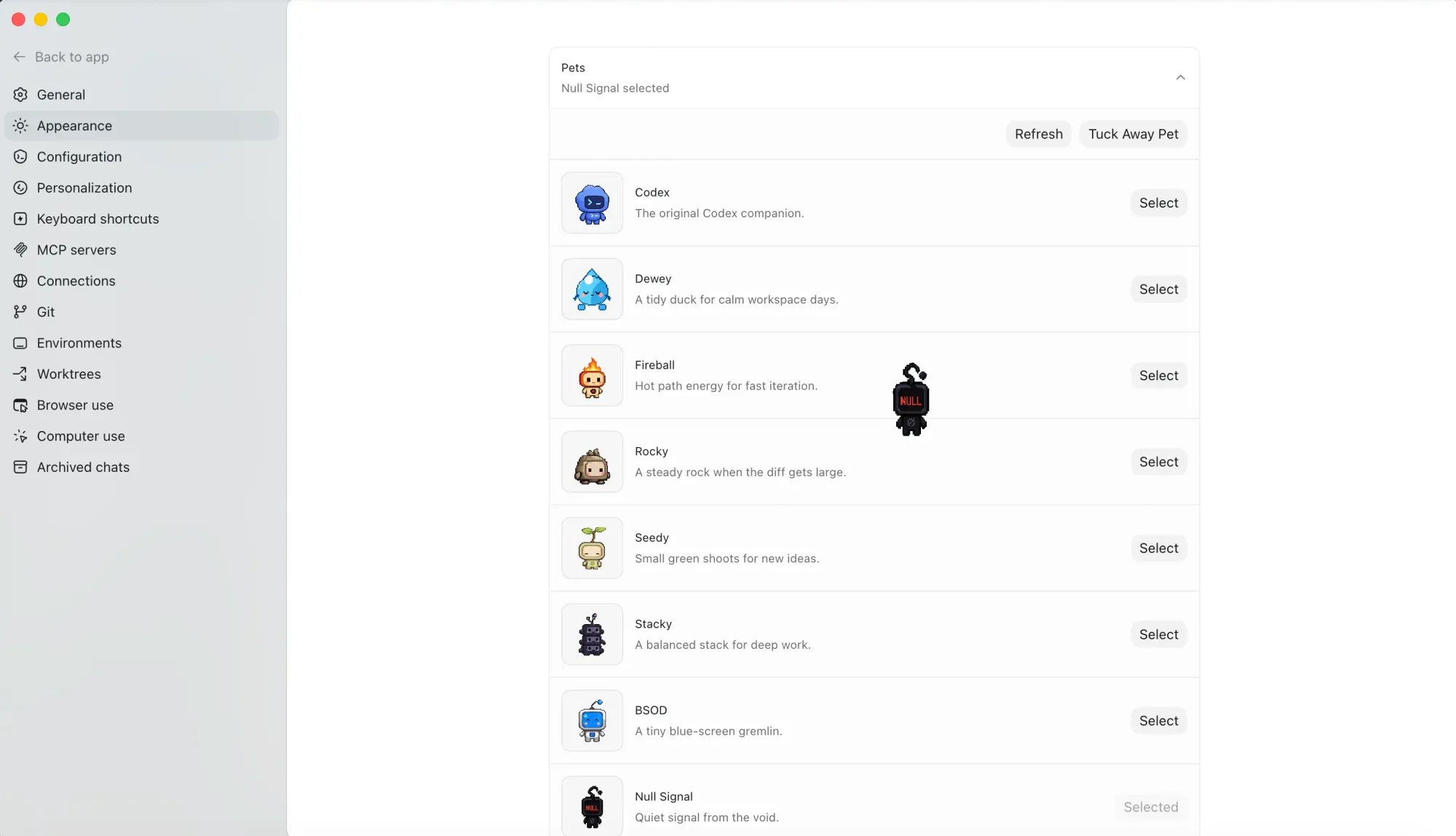
OpenAI shipped a fresh update to its Codex desktop app, and the headline addition is unmistakably playful: Pets, animated companions that live as overlays on top of the screen even when Codex itself is minimized. Eight predefined pets ship out of the box in a deliberately cute pixel-art style, with short message bubbles mirroring what Codex is doing in the background. If a pet pipes up while a task is running, clicking on it opens a reply path back to the agent, turning a passive status indicator into a small two-way channel. Users summon or hide them with the /pet command.
Codex named him "Minty" 👀
— TestingCatalog News 🗞 (@testingcatalog) May 2, 2026
Which Codex Pets did you make? Drop them below! https://t.co/2rd7pIAUKT pic.twitter.com/YcT9Tv9VA0
The creative side comes through a bundled skill called Hatch, which takes any uploaded image and spins it into an animated pet, saved as a file in the local Codex home folder so it can be packaged up and shared. Within hours of release, community-driven directories such as PetShare and PetDex started popping up, with X timelines filling with custom creations. My own, generated from a profile avatar, ended up named Minty.
The same release quietly tucked in two utility moves that may matter more in the long run. Codex now auto-detects configuration files left behind by other coding agents, including Claude Code's CLAUDE.md, and imports them so plugins, project conventions, and custom rules carry over without manual rewrites. For developers bouncing between agents to dodge weekly limits, that lowers the friction of switching mid-task.
OpenAI made it easier to switch to Codex, as now you can import settings, plugins, agents, and project configuration from other tools.
— TestingCatalog News 🗞 (@testingcatalog) May 1, 2026
At launch, Codex will also automatically detect new configs and suggest importing them.
ALLYOURCONFIGSBELONGTOUS 👀 https://t.co/s3Sjg7Xm0n pic.twitter.com/ltljrnS5Nd
A new dictation dictionary in Settings also lets users pre-load abbreviations and personal phrases that voice input would otherwise mangle, cutting one of the more tedious correction loops in the Codex voice flow.
OpenAI is working on a Custom Dictionary feature for Codex and ChatGPT.
— TestingCatalog News 🗞 (@testingcatalog) May 1, 2026
Users will be able to add their common phrases and abbreviations so they are properly recognized during voice dictation.
As a heavy voice-dictation user, this is the main feature that made me pay for a… https://t.co/5DwlR9EmgY pic.twitter.com/mcjauEsWHk
Taken together, the bundle reads as OpenAI continuing to reposition Codex from a coding command center into a fuller desktop super-app surface. Personality-bearing overlays, cross-agent config portability, and voice tooling line up with the broader push toward Codex as the operating layer for ChatGPT alongside Atlas, where charm and stickiness now count as much as raw capability.


