

Notion is preparing a set of new features targeting selected workspaces under an early access program for an AI-first workspace. This configuration introduces a dedicated toggle in the settings that changes the application structure, especially the left sidebar. Here, users would see separate tabs for AI-powered chats, pages, and an inbox, consolidating all AI-related conversations in one place.
BREAKING 🚨: Notion is working on AI-first Workspaces to enable users to build AI-powered organisations. This feature is expected to arrive soon in Early Access.
— TestingCatalog News 🗞 (@testingcatalog) December 29, 2025
AI-first Workspaces may come along with the introduction of "AI Credits" as well.
And new internal models, too? pic.twitter.com/ibF7Z7KGfJ
This approach is expected to help teams and organizations working intensively with Notion AI, as it centralizes AI communication and allows for seamless switching between standard content and AI-powered functions.
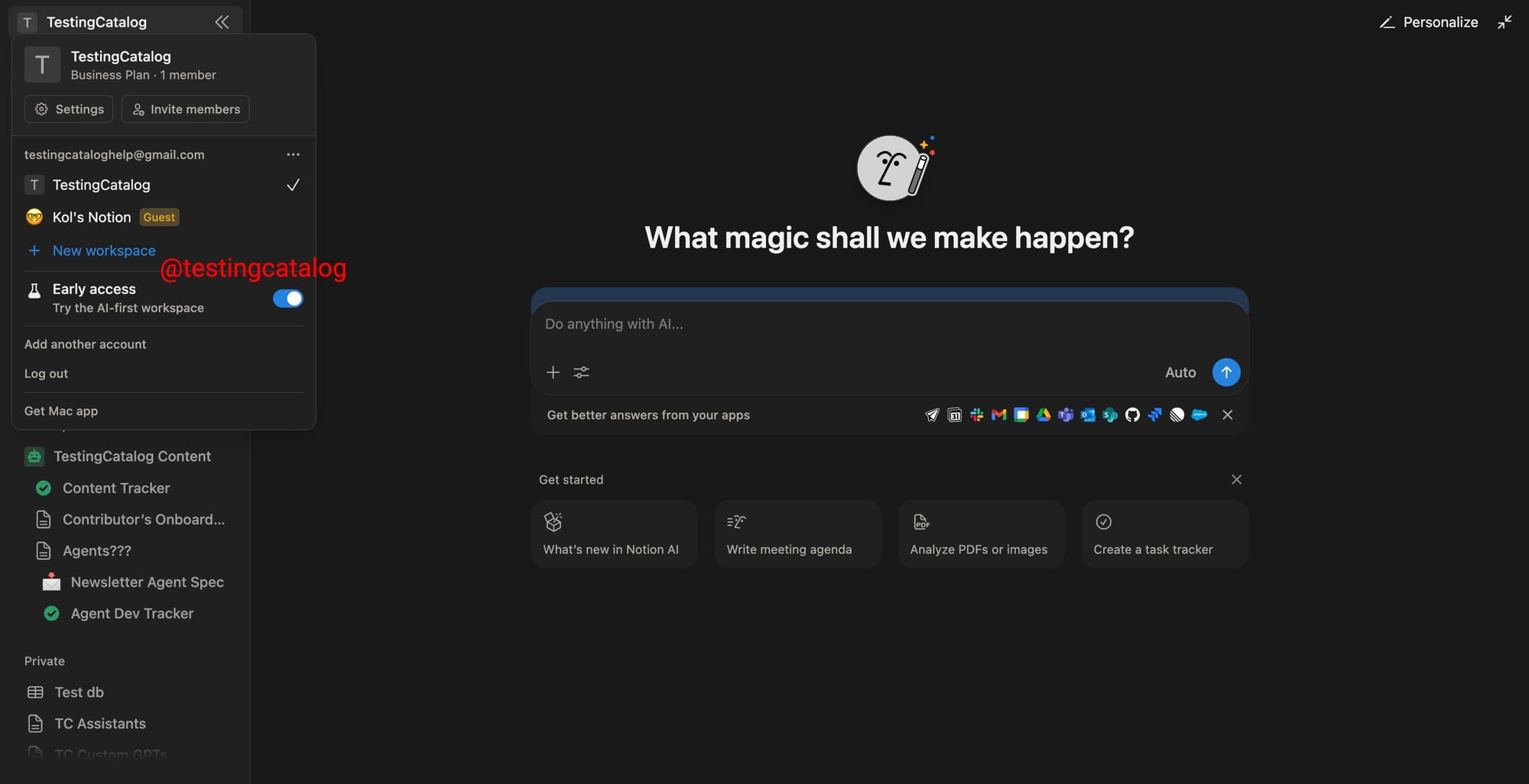
An additional option in the settings may permit Notion AI to directly edit pages, which, once enabled, would let AI handle document modifications across the workspace. The flexibility to grant or restrict editing rights gives admins and end-users finer control over how and where AI can operate within shared environments.
The introduction of an AI credits system is also under development. This system is likely tied to metered AI usage, with the settings page showing quotas, current usage, and a breakdown of time saved by different AI features such as enterprise search or database creation. This would cater to organizations that rely heavily on advanced AI capabilities, as it enables them to monitor and potentially purchase additional AI credits on top of standard subscription plans.
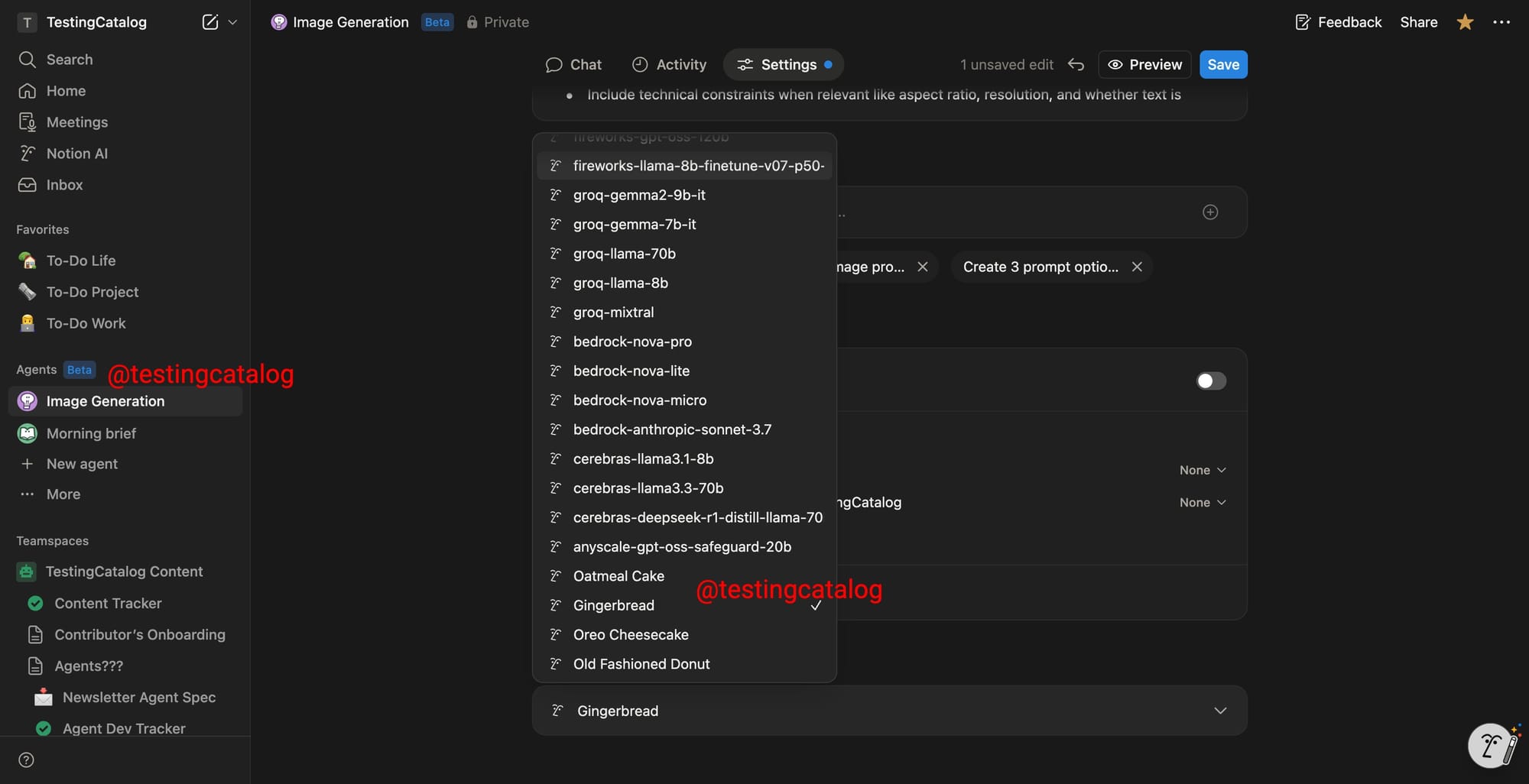
Internally, Notion is experimenting with models using concealed names like Oatmeal Cake, Gingerbread Oreo Cheesecake, and Old-Fashioned Donut, a naming strategy similar to what Google has used for Android releases. These names may refer to both new, as yet unreleased AI models, or hidden variants of existing ones, although none are currently active for public use. This aligns with Notion's ongoing push to strengthen its AI product line and keep pace with industry trends, reflecting a strategy that blends both platform and model innovation for future updates.


