
Meta is rolling out Muse Spark 1.1, a new multimodal reasoning model from Meta Superintelligence Labs, alongside the public preview of the Meta Model API. The model is now available in Thinking mode in Meta AI, while developers can start using it via Meta’s new API surface. Meta says the release brings major gains in agentic workflows, computer use, coding, and multimodal understanding compared with the first Muse Spark model.
1/ muse spark 1.1 is an industry-competitive agentic and coding model. across many agentic evals it rivals gpt-5.5 and opus-4.8.
— Alexandr Wang (@alexandr_wang) July 9, 2026
available now through the new meta model api and in meta ai. 🧵 pic.twitter.com/AfaAPDPPxC
Muse Spark 1.1 is built for long, tool-heavy tasks. It can plan work, call tools, operate across external apps and services, use MCP servers and custom skills, and coordinate parallel subagents. Meta says the model can manage a 1-million-token context window, retrieve information from much earlier in a task, and compact the context so later steps retain critical details. In computer-use scenarios, the model can decide whether to write scripts, click through interfaces, or batch actions depending on the task.
Muse Spark 1.1 excels at multi-app computer-use workflows by maintaining context across extended sessions and intelligently choosing between scripting, direct UI interaction, and batched actions at each step. It’s able to navigate unfamiliar interfaces with minimal human… pic.twitter.com/qfGueYUj1V
— AI at Meta (@AIatMeta) July 9, 2026
For coding, Meta positions Muse Spark 1.1 as a large-codebase model for bug fixing, feature implementation, migrations, automated screenshots, debugging, and validation loops. The company says it has trained the model to support agentic coding setups with planning mode, goal conditioning, subagent delegation, and context compaction. The model also adds stronger multimodal workflows, including visual-to-code generation, image and video captioning, and tasks that require the model to inspect visual or audio inputs while acting on a user’s behalf.
The new API marks a shift from the earlier Muse Spark rollout, which was limited to Meta AI and a private API preview. Meta’s evaluation report states that Muse Spark 1.1 extends access to external developers via an API that supports tool calling, function calling, and developer prompts. The report also compares it with Muse Spark 1.0 and notes that the new version achieves higher benchmark performance across multiple domains, especially cybersecurity and agentic coding, while employing additional mitigations before deployment.
Meta just released Muse Spark 1.1 and is the new SOTA on MedScribe and TaxEval, taking the top spot from Fable 5 while being 10x cheaper and twice as fast. Meta currently holds the top 2 spots on TaxEval
— Vals AI (@ValsAI) July 9, 2026
It is also the new #1 on Harvey's Legal Agent Bench, dethroning Grok 4.5… pic.twitter.com/0IjinLA6lq
Meta says the model was evaluated under its Advanced AI Scaling Framework before release. The evaluation report says that the unmitigated Muse Spark 1.1 reached a high-risk threshold in the chemical and biological, as well as cybersecurity, domains, but Meta applied multi-layered safeguards and assessed residual risk as moderate or lower before launch. The company also reported lower jailbreak attack success than Muse Spark 1.0 on StrongREJECT v2 and lower prompt-injection attack success on AgentDojo.
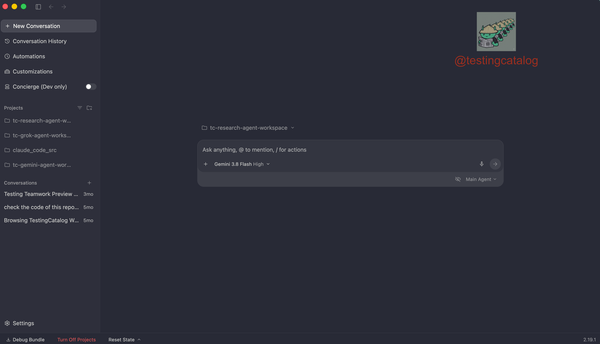
Meta AI is now powered by Muse Spark 1.1 👀
— 🚨 AI News | TestingCatalog (@testingcatalog) July 9, 2026
Overall, Meta is one of the companies that can scale their AI to billions of users in a very short amount of time.
The fact that we saw a 1.1 upgrade coming so fast means only one thing: Meta is back 🤖 pic.twitter.com/05ABGxGUqp
Early API partners quoted by Meta framed the release around agentic development and enterprise use. Replit CEO Amjad Masad pointed to the model’s million-token context, multimodal support, search with citations, structured output, parallel tool calling, and an OpenAI-compatible API package. Cline CEO Saoud Rizwan highlighted tool usage and pricing as relevant to scaled coding workloads, while Box VP of AI Products Yashodha Bhavnani said Muse Spark demonstrated enterprise capabilities competitive with frontier models in Box’s internal evaluations.