
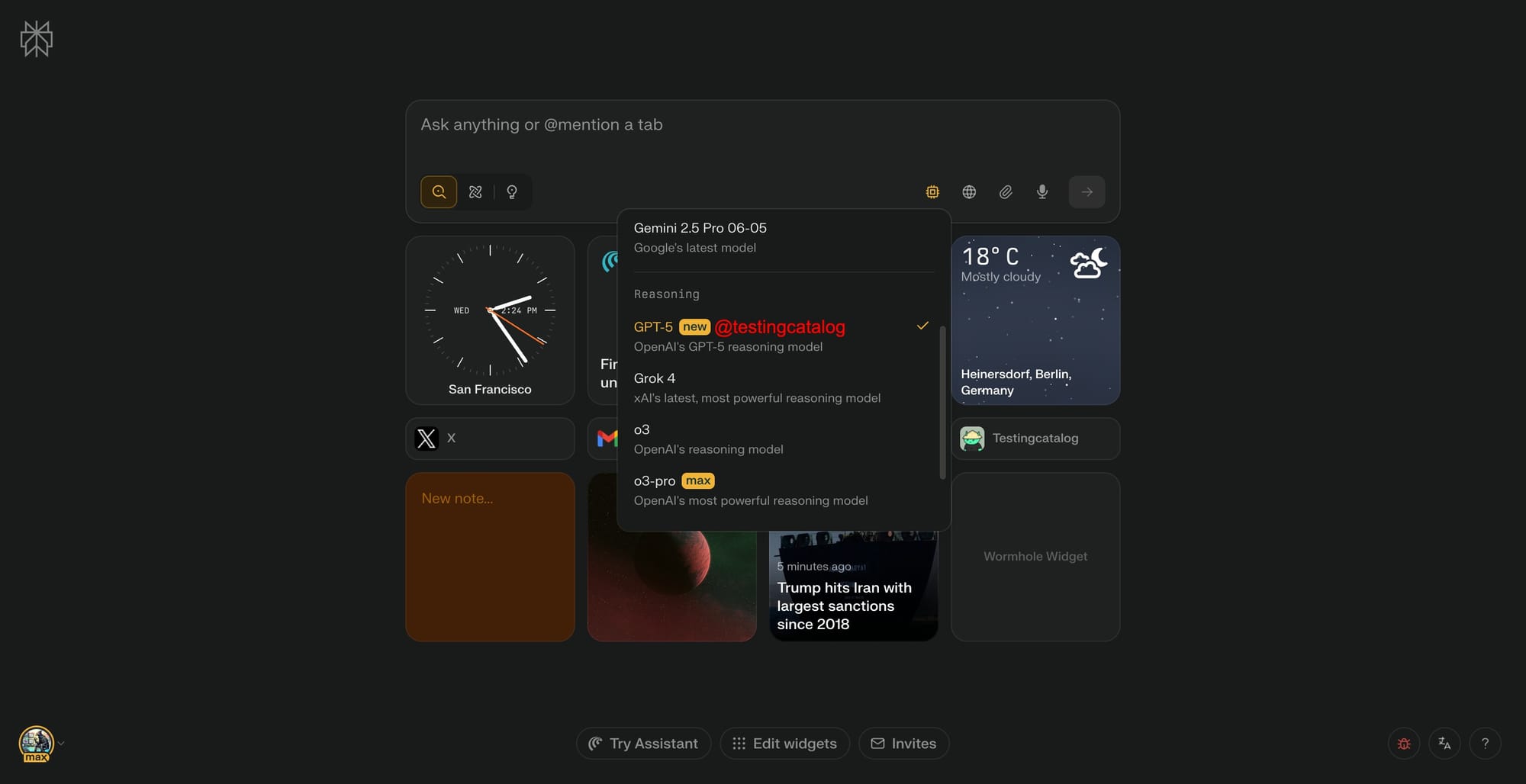
Growing anticipation surrounds the launch of GPT-5, with recent hints suggesting the official announcement could be imminent—potentially even sooner than the previously rumored August 5 date. Evidence has surfaced from Perplexity, an AI-powered search engine that frequently integrates new OpenAI models at launch. The appearance of a “GPT-5 reasoning model” option in Perplexity’s model selector, combined with its notably fast response time, suggests they might have early or test access, possibly indicating close collaboration or insider information regarding OpenAI’s rollout schedule.
For users, this would mean early access to advanced capabilities, but as Perplexity routes OpenAI models through their own API layers, it remains difficult to identify the underlying model with certainty. Sources suggest that GPT-5 could act as a router itself, dynamically delegating requests to different internal versions, such as mini, nano, or reasoning variants, making it nearly impossible for end users or third parties to determine which engine handled a particular query. Recent references to “auto” and “reasoning” modes in ChatGPT’s own configuration files further reinforce the likelihood of multiple GPT-5 variants being released, with flexible switching based on prompt complexity.
While the addition of the reasoning model in Perplexity aligns with these leaks, actual interaction with the true GPT-5 API appears limited or staged for now. For example, when we attempt tasks like SVG generation, the results are inconsistent and similar to what’s seen with prior models, suggesting that either the deployment is not finalized or API responses are still routed through older infrastructure. OpenAI has not yet confirmed any public timelines or technical details, but all indications point to a staged rollout, possibly with partners like Perplexity gaining earlier access for integration and testing.
OpenAI’s current strategy continues to evolve its API products for enterprise partners while gradually moving public ChatGPT and Copilot users to unified, auto-routing model endpoints. If the release is as close as the current clues suggest, these changes could reach users and developers within days. For now, all eyes remain on official OpenAI channels and rapid updates from platforms like Perplexity, which often serve as a bellwether for broader access to new AI models.


