

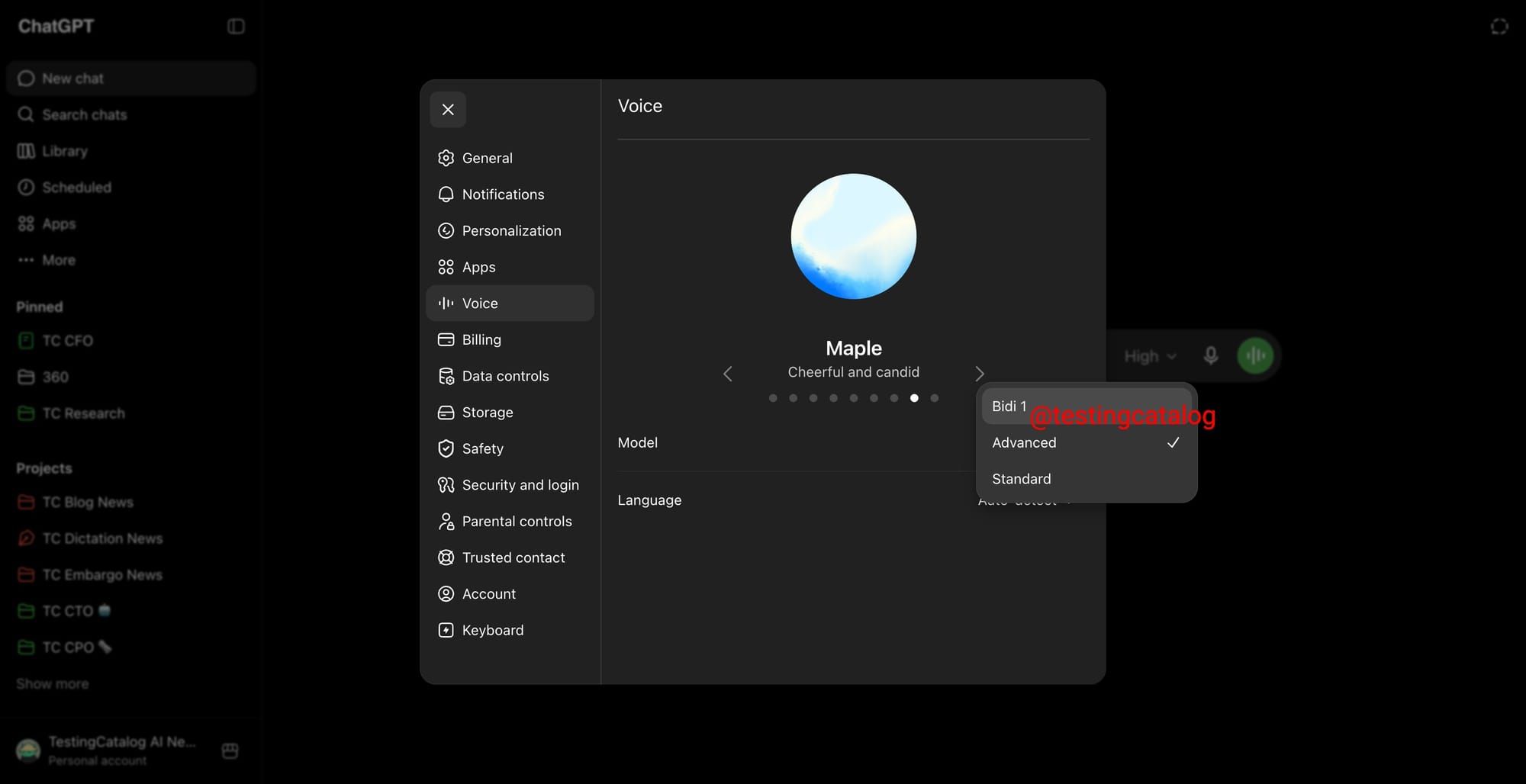
OpenAI looks set to hand ChatGPT's voice mode its biggest upgrade in months, with a next-generation audio model surfacing as Bidi 1, shorthand for the bidirectional design that lets the assistant speak, hear, and listen at once. References to it began appearing in the ChatGPT web interface ahead of a possible release this week, and it has already begun reaching a subset of users in the app.
BREAKING 🔥: First tests of "Bidi 1", an upcoming bidirectional voice model from OpenAI. This upgrade will arrive in ChatGPT and, potentially, in Codex soon as well.
— 🚨 AI News | TestingCatalog (@testingcatalog) June 23, 2026
> Bidi 1 can speak over while you are talking and keep listening.
> Bidi 1 can switch between tasks back and… https://t.co/BwWhCKx3G0 pic.twitter.com/Fawc74kBym
In our early testing, the gap from today's advanced voice mode is plain. Bidi 1 sits in the model selector under settings, beside the standard and advanced options, and turns the voice bubble yellow once picked. It offers small, natural acknowledgments — an "okay" or a brief nod — when you pause or slow down, without cutting across you. It also switches tasks on the fly: ask it to count to ten, interrupt to reverse the count, and it adjusts immediately.
OPENAI 🔥: An upcoming Bidi 1 voice model will be able to translate in real-time!
— 🚨 AI News | TestingCatalog (@testingcatalog) June 23, 2026
This will unlock a huge pile of use cases to be built on top of when it lands on the APIs. pic.twitter.com/95sRnSzJfs
More usefully, it holds the thread of a whole conversation rather than dropping earlier context, the weak point that has long dogged the current voice stack, and it no longer jumps in during longer pauses.
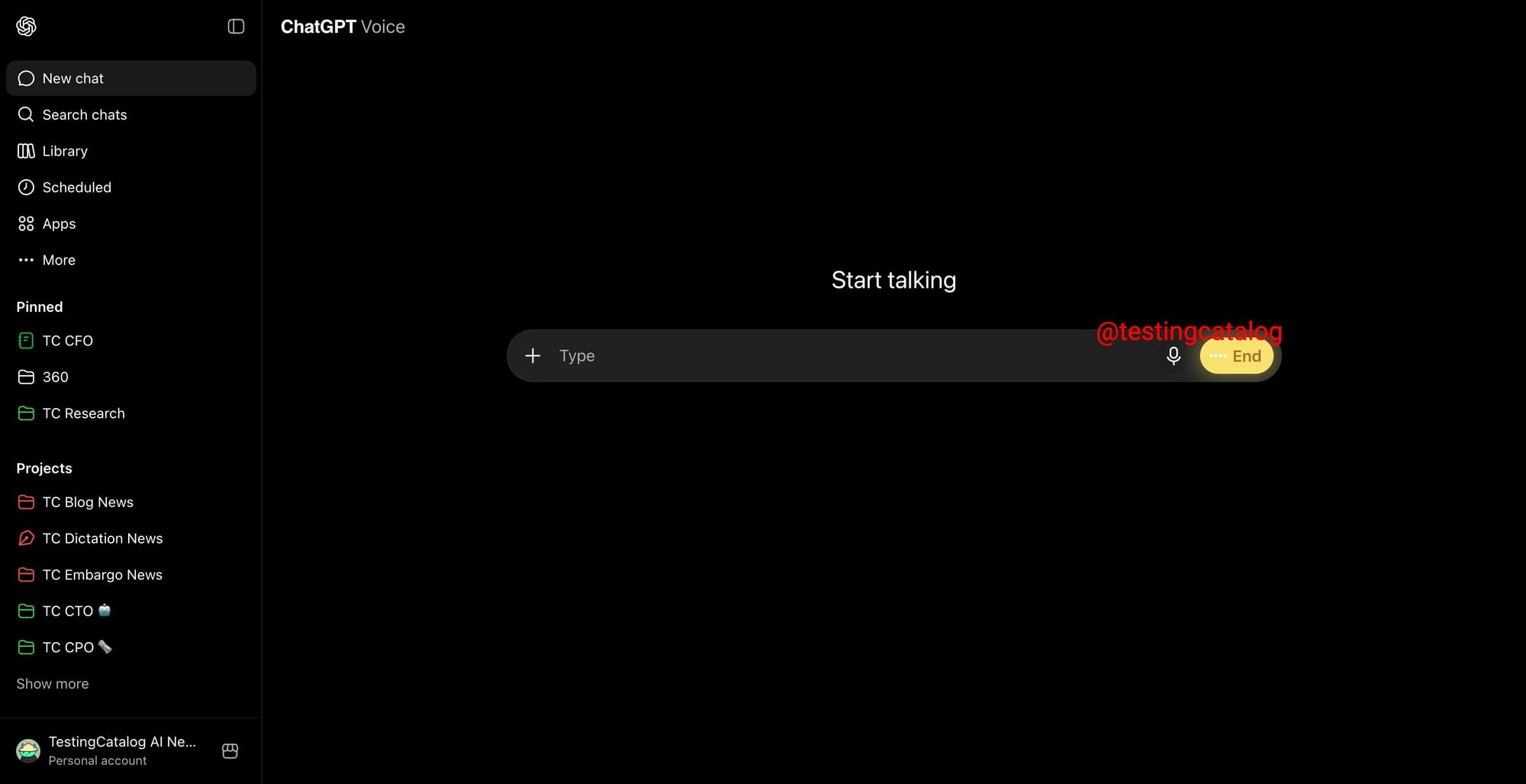
Creative behavior carries over from the first advanced voice rollout, singing and beatboxing included, though copyright handling is tighter; it declines popular songs outright while still attempting an original piece in a chosen artist's style.
The move reads as OpenAI closing the distance between its capable text models and an older voice layer, treating conversation as a core route into ChatGPT. The company has not formally announced it. A gradual, opt-in release across web and mobile looks likely, with the European Economic Area possibly waiting longer (not confirmed). Codex appears set for its own voice upgrade in the weeks after this launch, separate from it, and API access may follow later still (timeline is not confirmed).


