

Microsoft and OpenAI have entered a new phase of their alliance, loosening parts of one of the AI industry’s most important commercial relationships while keeping Azure at the center of OpenAI’s rollout path. Under the amended agreement, Microsoft remains OpenAI’s primary cloud partner, and OpenAI products are still set to ship first on Azure unless Microsoft cannot and chooses not to support the required capabilities. At the same time, OpenAI can now serve all of its products to customers through any cloud provider.
The next phase of the Microsoft-OpenAI partnership https://t.co/HpRS1T6DNb
— Microsoft News and Stories (@MSFTnews) April 27, 2026
The deal changes the economics and control structure around OpenAI’s technology. Microsoft will keep a license to OpenAI model and product IP through 2032, but that license is now non-exclusive. Microsoft will no longer pay revenue share to OpenAI, while OpenAI’s revenue share payments to Microsoft continue through 2030 at the same percentage, subject to a total cap. Microsoft also remains a major shareholder in OpenAI.
This is not a consumer feature launch. It is a platform-level reset aimed at cloud customers, enterprise buyers, developers, and partners who depend on OpenAI models through Microsoft or directly from OpenAI. The biggest practical change is distribution: OpenAI gains more room to place its products across cloud environments, while Microsoft keeps first access through Azure and a long-term claim on OpenAI IP.
Very interesting announcement from OpenAI this morning. We’re excited to make OpenAI's models available directly to customers on Bedrock in the coming weeks, alongside the upcoming Stateful Runtime Environment. With this, builders will have even more choice to pick the right…
— Andy Jassy (@ajassy) April 27, 2026
Don't miss the news from AWS and @OpenAI.
— Amazon Web Services (@awscloud) April 27, 2026
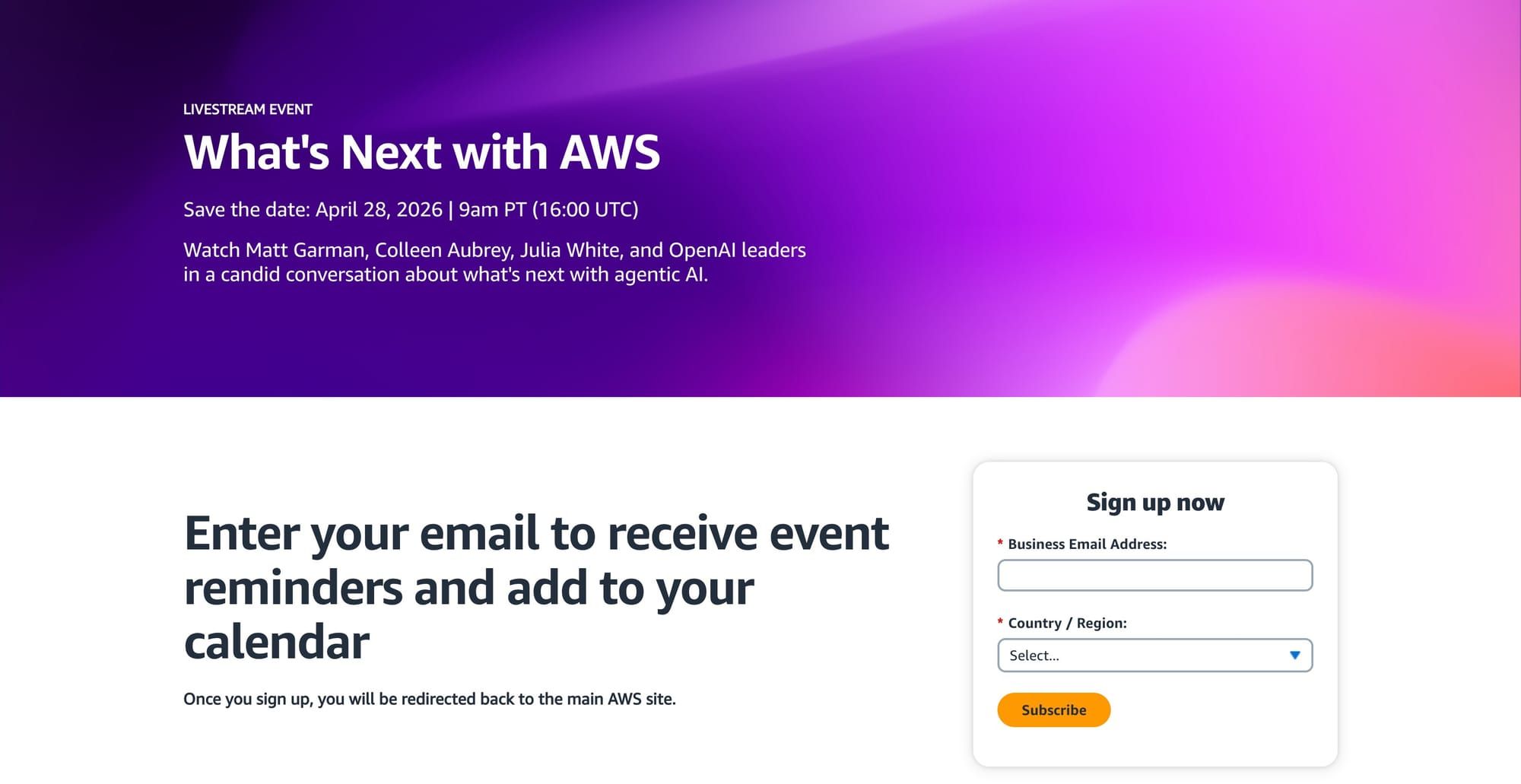
Join tomorrow's live conversation with leaders from AWS and OpenAI on what's next in agentic AI.
The shift marks a clear break from the October 2025 structure, where Microsoft’s rights included:
- Exclusive IP rights and Azure API exclusivity until AGI.
- OpenAI API products developed with third parties were exclusive to Azure.
- Revenue share terms were tied to AGI verification.
The new version removes some of that dependency by making Microsoft’s license non-exclusive and moving OpenAI’s payments to Microsoft onto a fixed timeline through 2030, independent of technological progress.
Microsoft’s role remains central because Azure is still the first-stop platform for OpenAI products, and Microsoft says the partnership will continue across data center capacity, next-generation silicon, and cybersecurity. For OpenAI, the amendment creates more commercial flexibility at a time when model distribution, cloud capacity, and enterprise access are becoming core constraints for frontier AI companies.


