
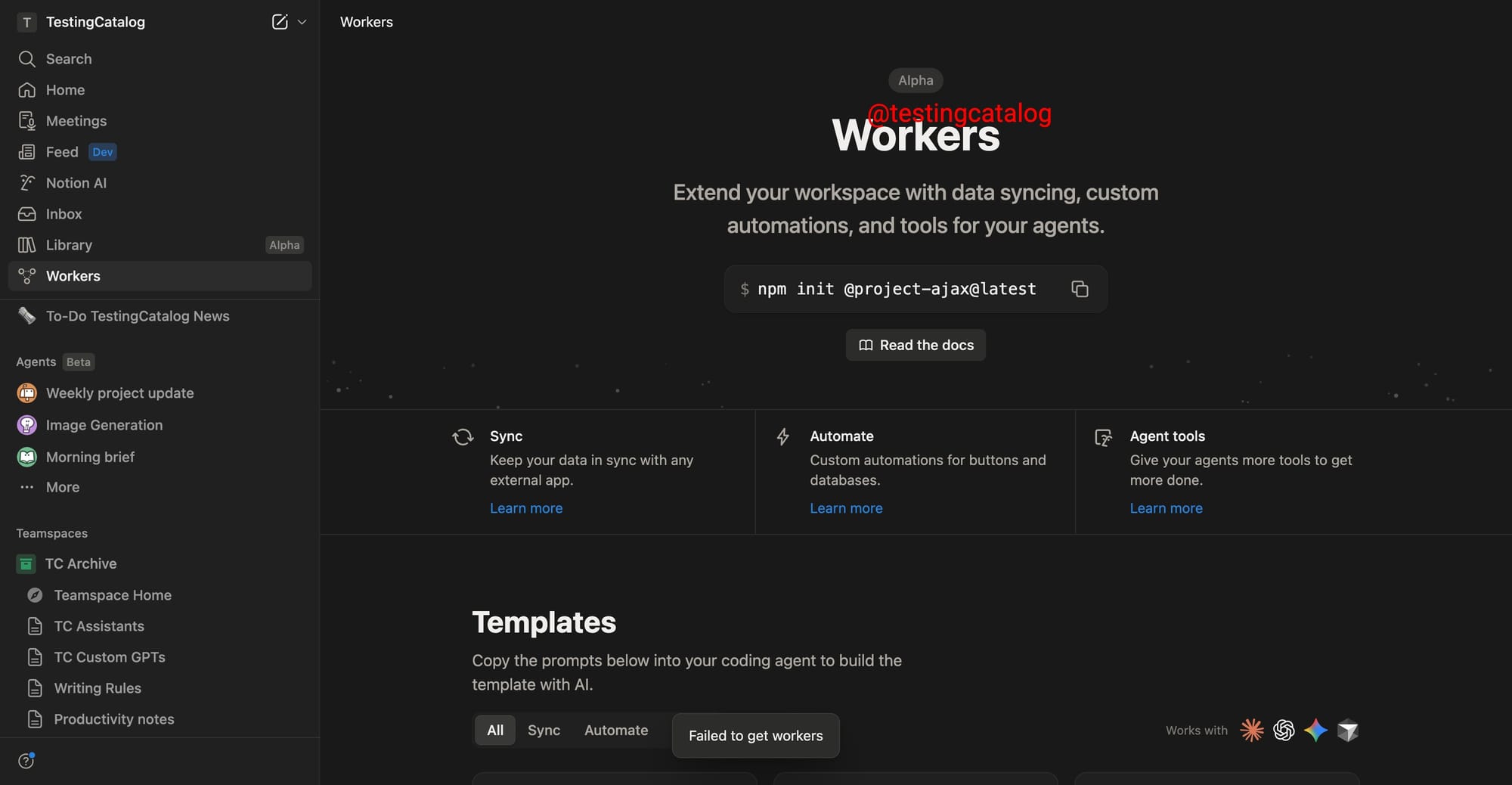
Notion’s AI agents are experiencing a steady stream of updates, with several changes emerging since last month across the agent setup flow and surrounding configuration. One noticeable change is UI-related: the settings layout for custom agents has transitioned from a full page to a side sheet. Additionally, Notion seems to be preparing a second iteration of its agents, featuring two experimental toggles labeled “Agents 2.0” and “Agents 2.0 Advanced.” Both are marked as experimental, and the wording suggests they may be linked to more compute power or stronger underlying models if and when they are rolled out.
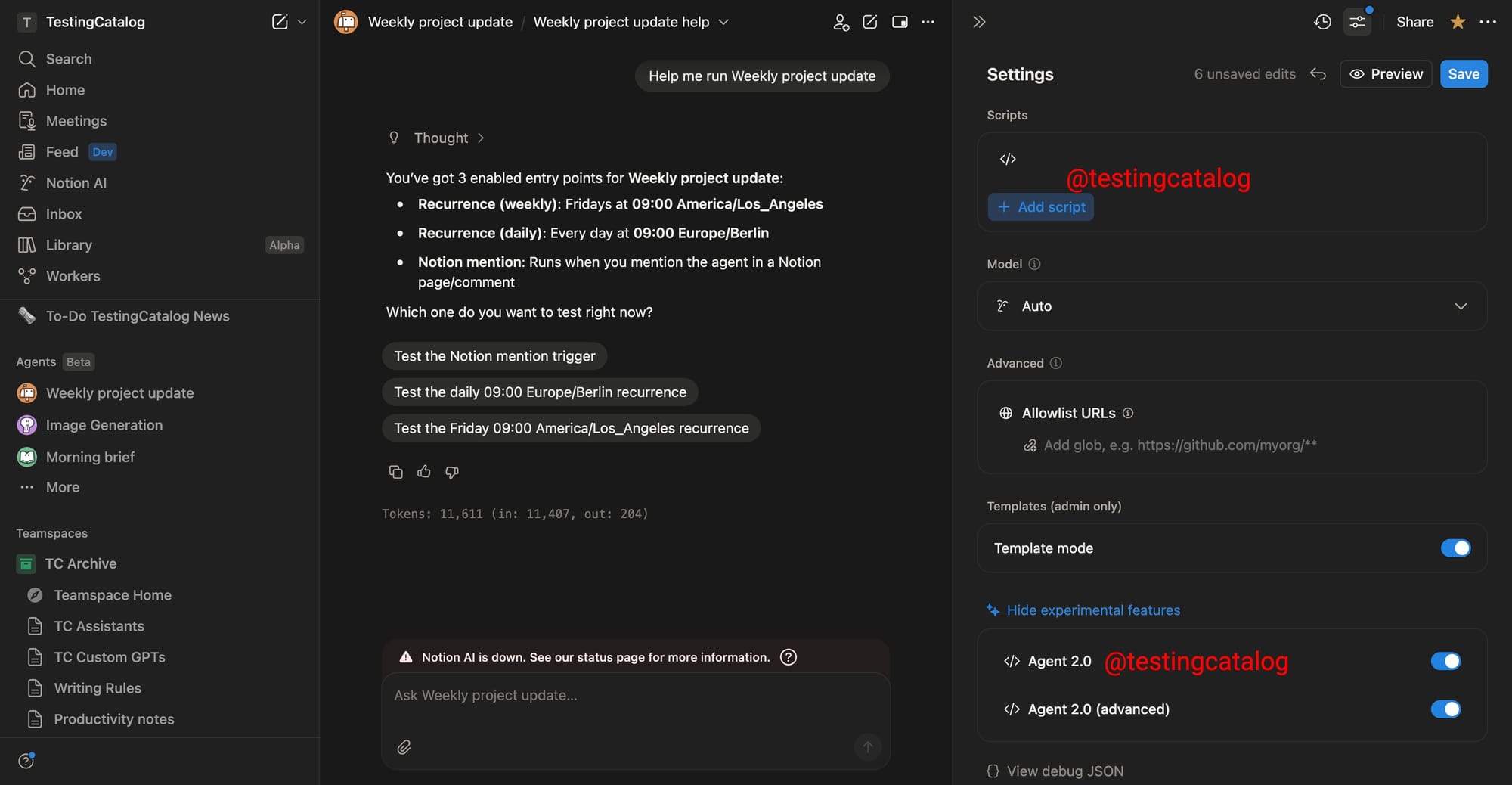
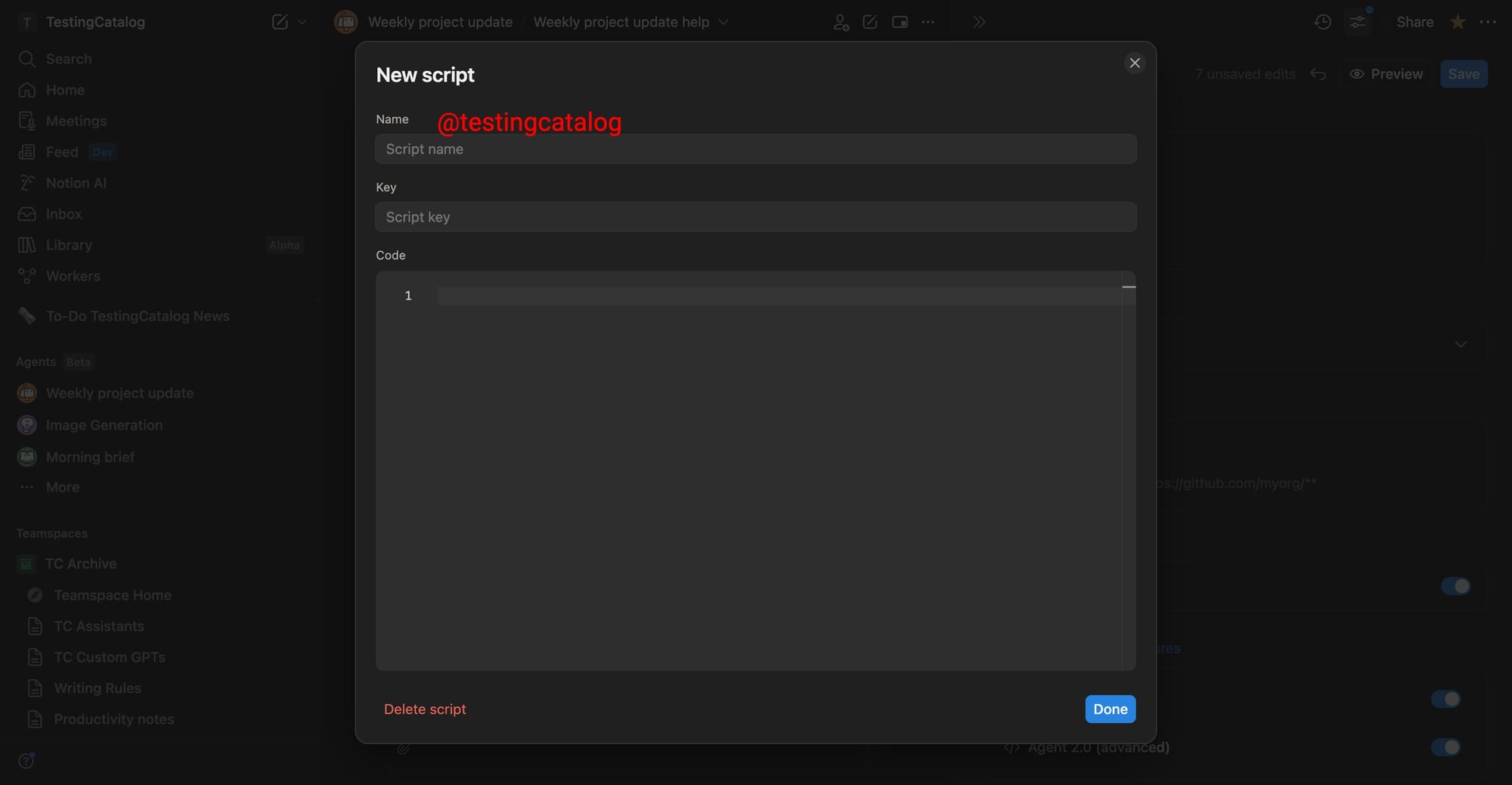
The same area also indicates functional expansion through triggers and automation. The triggers section now includes a Slack option, allowing an agent to be invoked when a message is posted in a channel, hinting at a deeper Slack integration than before. In the settings, there is also a new scripting configuration for agents, with fields for a script name, a key, and script code. The intent seems to be enabling agents to call into “Workers” as a capability when needed, rather than being confined to chat-style actions.
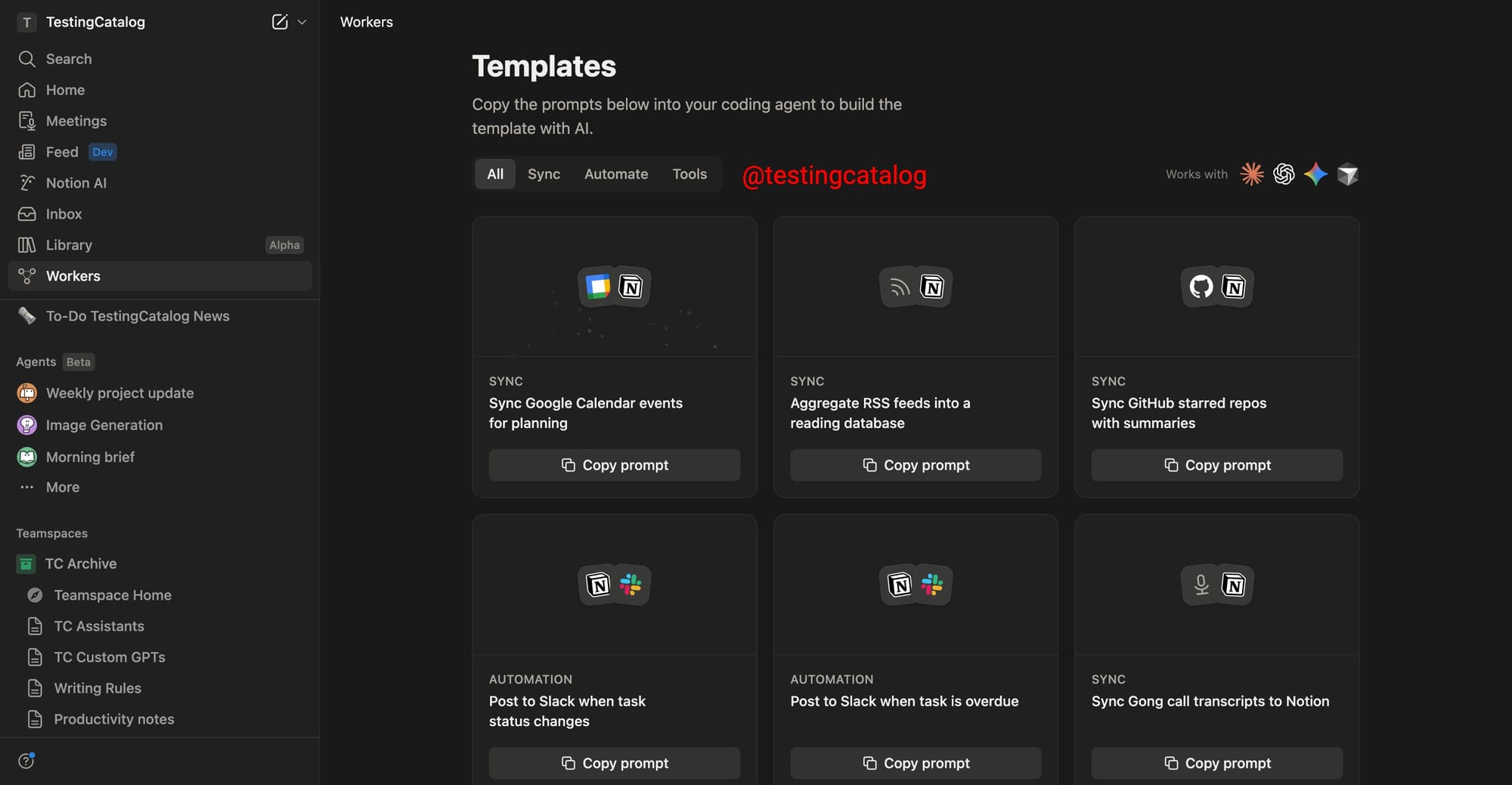
A related “Workers” section references an NPM package and a place to manage automations, including templates that connect external signals to Notion actions. Examples mentioned include:
- Creating a database when a connected GitHub account stars a repository.
- Posting Slack messages when tasks pass a deadline.
- Wiring actions into email and calendar flows.
If these features move beyond the experimental phase, they would primarily benefit teams already using Notion as an operational hub, especially small businesses and enterprise groups that want agents to react to events across Slack, GitHub, and scheduling tools directly from the agent configuration surface.


