

Meta is moving closer to launching its planned agent super app, previously known internally as Project Hatch. TestingCatalog has found that the product is being prepared under the launch name Muse, bringing it under the same branding Meta already uses for its new generation of AI models.
META 🔥: Project Hatch will be released under the name “Muse” and will arrive with a waitlist!
— 🚨 AI News | TestingCatalog (@testingcatalog) September 1, 2026
> Hatch was an internal codename of the upcoming superapp from Meta. Read more about Hatch in the post below.
Joined 👀👀👀 https://t.co/TQqXDYqk4b pic.twitter.com/VX8YacN3G1
The clearest change is on iOS. An app previously used for internal testing has transitioned into a Muse waitlist experience. Joining the waitlist appears technically possible, although Meta has not opened it publicly yet.
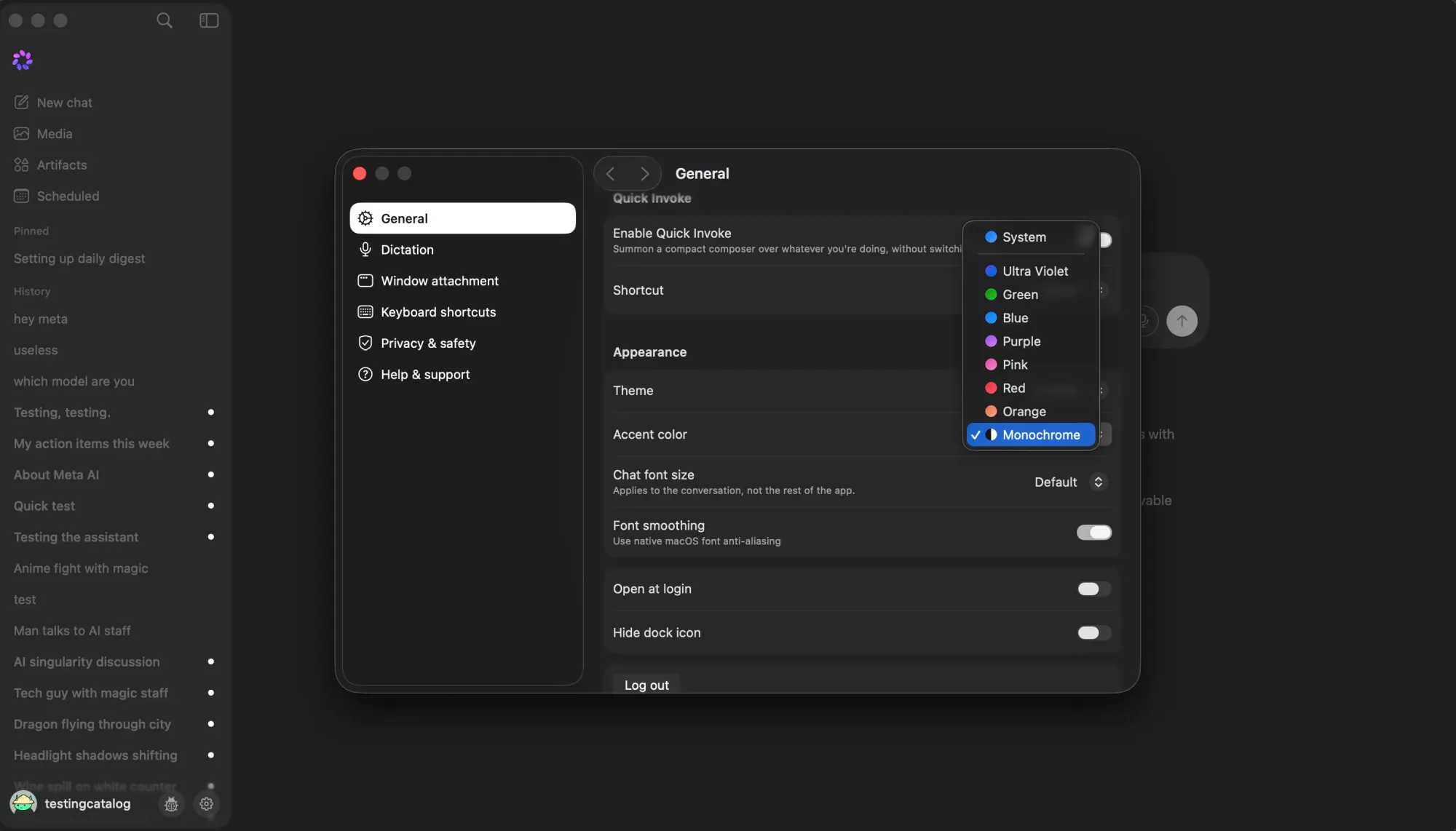
Meta’s existing desktop app is also changing. Recent updates add smaller additions such as theme support, secondary color selection, and a monochrome theme.
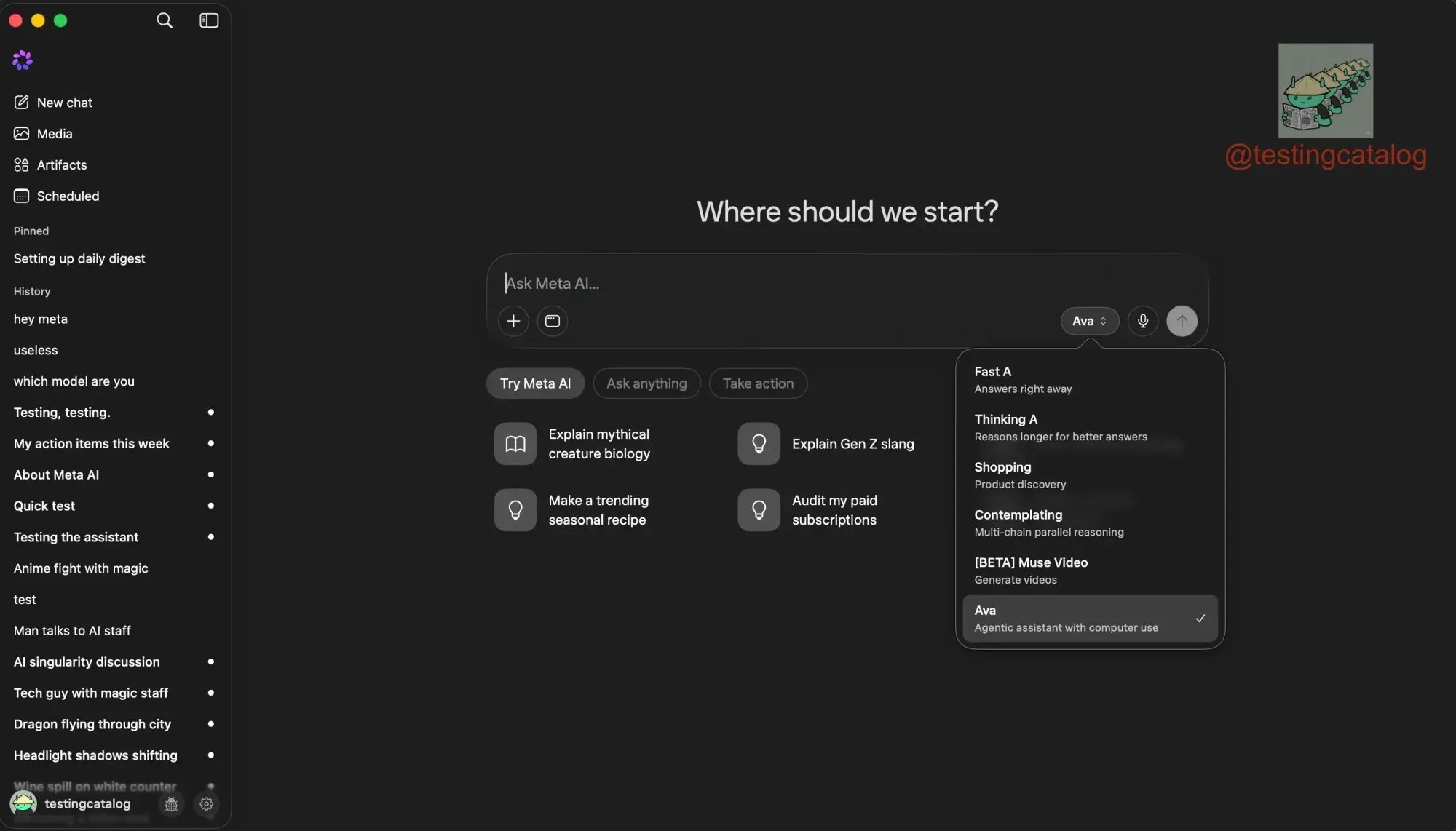
More importantly, Meta has added a setting for computer use and appears to be testing a model variant called Ava, described as supporting computer control. Ava itself is not currently accessible.
These additions provide more context around what Muse could become. Computer use would allow the agent to operate desktop applications as part of longer tasks, while browser control also appears to be under development. This would put Muse closer to products such as Codex and Claude that are increasingly built around autonomous, multi-step work rather than conventional assistant chats.
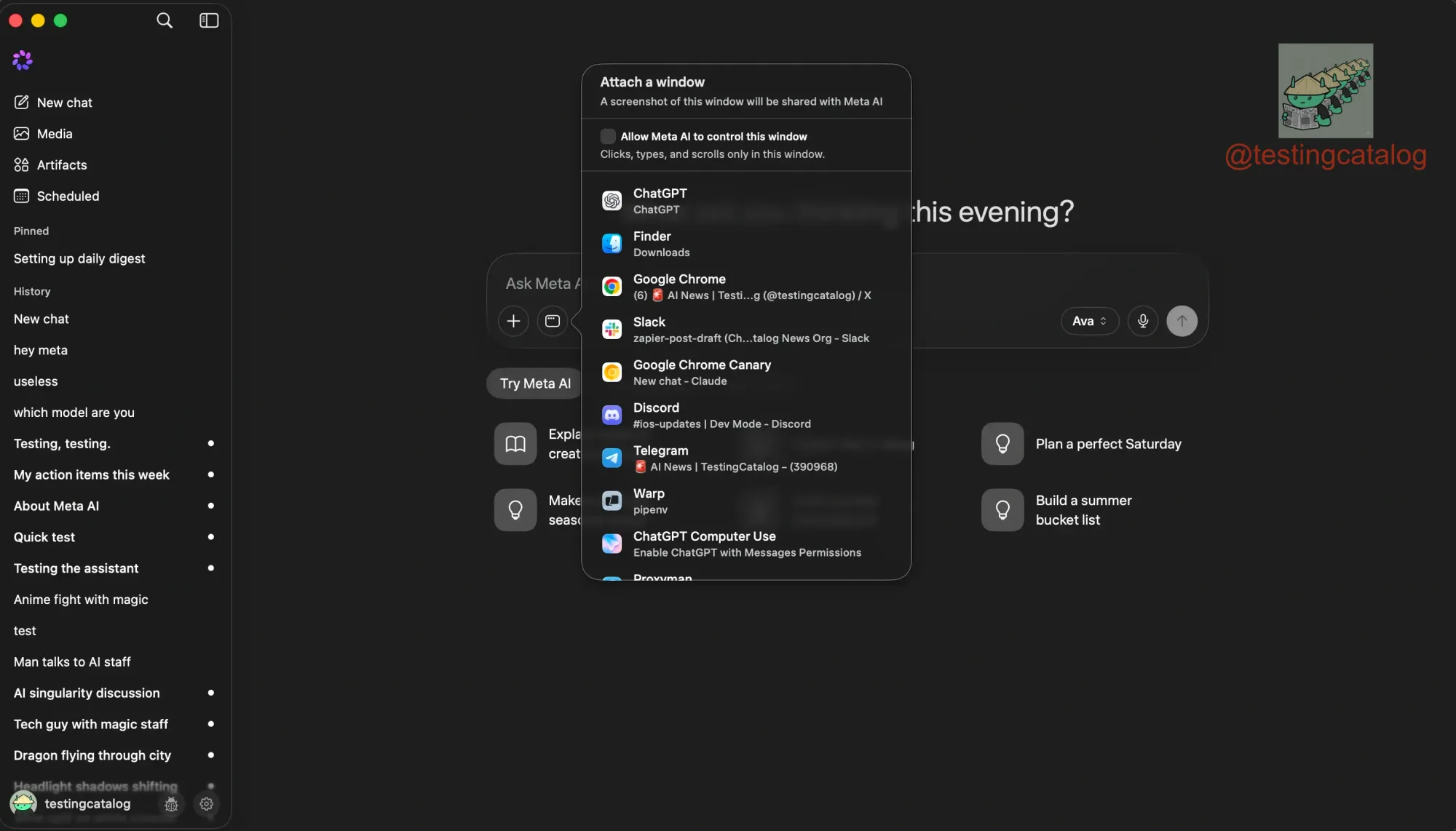
The direction also matches Meta’s broader model strategy. Muse Spark 1.1 and 1.2 already emphasize tool use, coding, and computer control, while Meta has publicly framed its AI roadmap around agents that can pursue goals and take action. Reports about Hatch have previously described a product capable of using websites, managing schedules, sending emails, and building custom tools, with Meta reportedly considering premium pricing as high as $200 per month.
The waitlist transition may also mean a more controlled rollout than previously expected. Rather than opening Muse broadly at launch, Meta could announce it first and gradually admit users while computer and browser control mature.


