
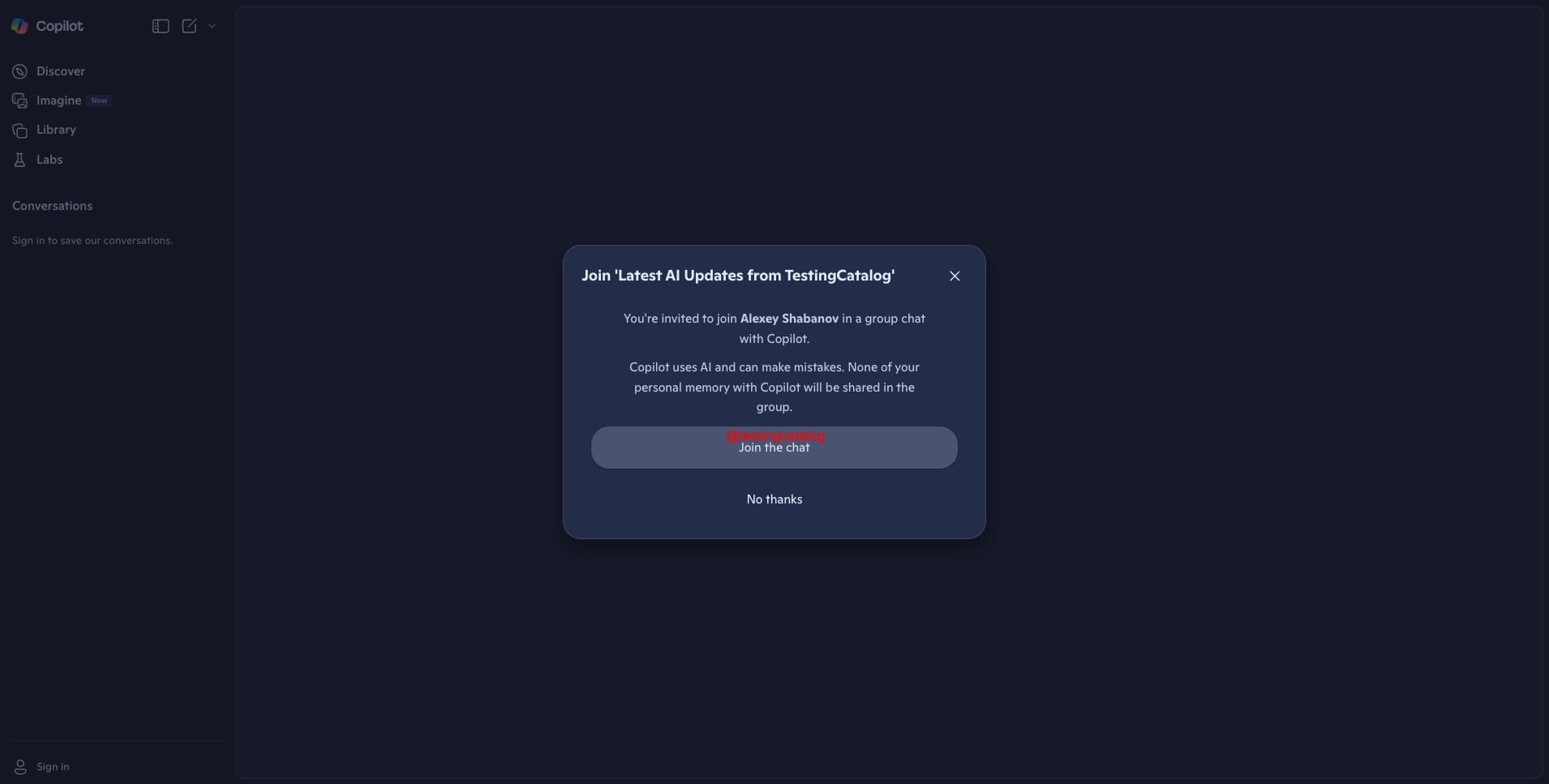
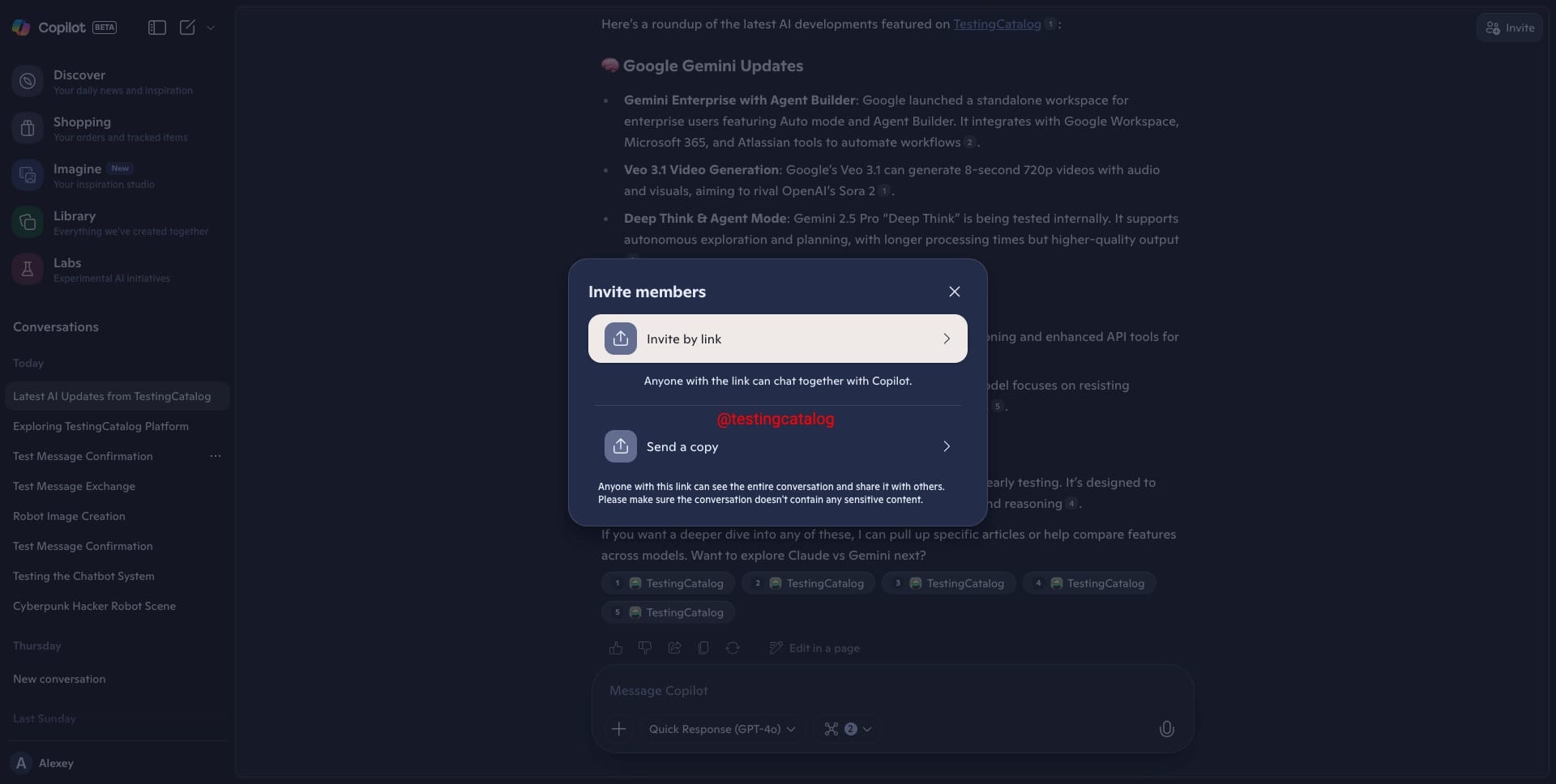
Microsoft is internally testing a new Group Conversations feature for Copilot, aiming to support collaborative chats where multiple users can participate in a single conversation and receive AI assistance. The current build allows any participant to generate an invite link, which can then be shared, letting others join the ongoing chat even if they don’t have a Copilot account.
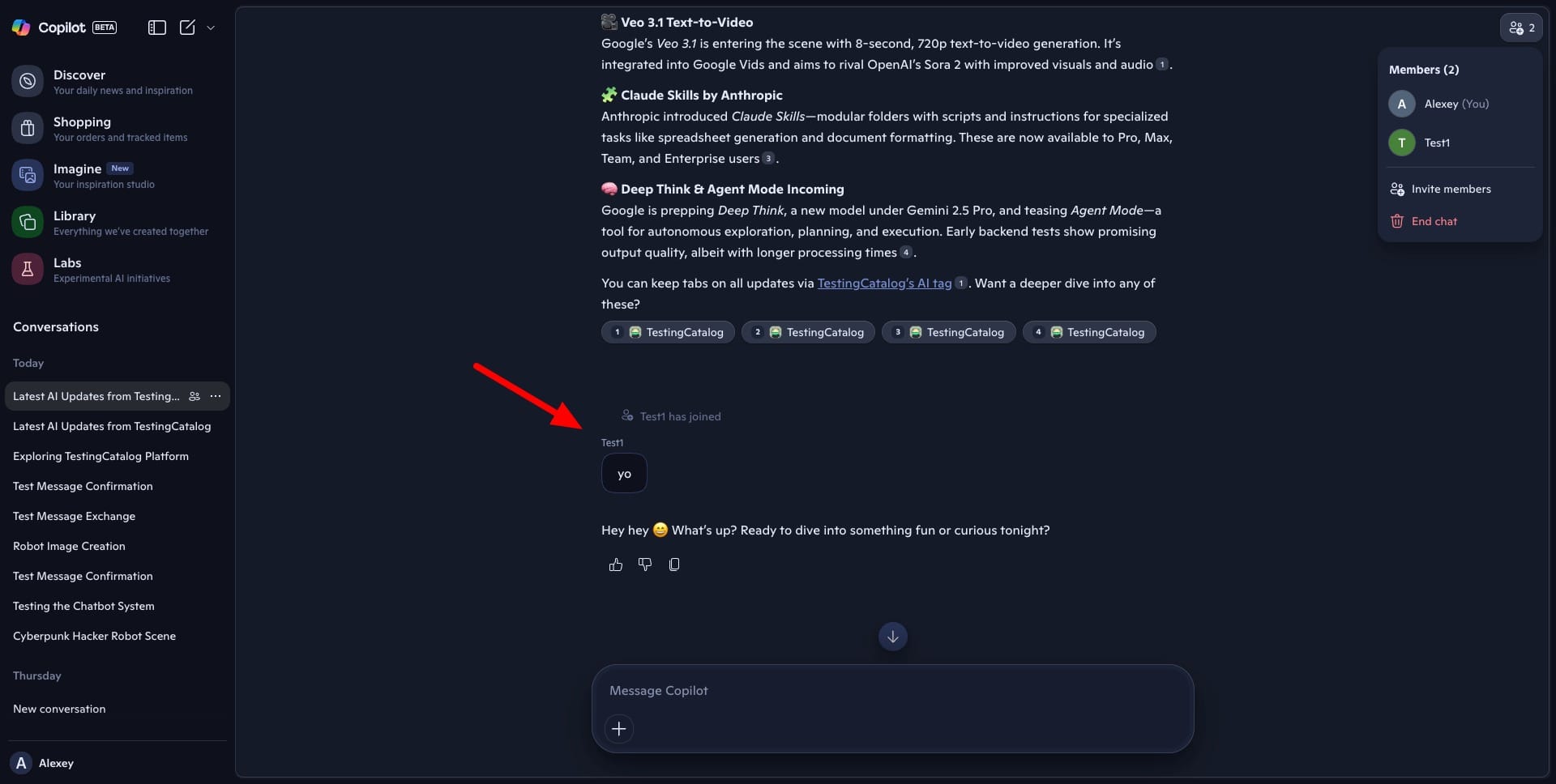
Those joining anonymously simply provide a name, broadening access beyond Microsoft account holders. Once inside, all members see the full chat history, and the interface marks group chats with a dedicated icon. Visual cues also indicate when someone joins or posts, making group activity clear.
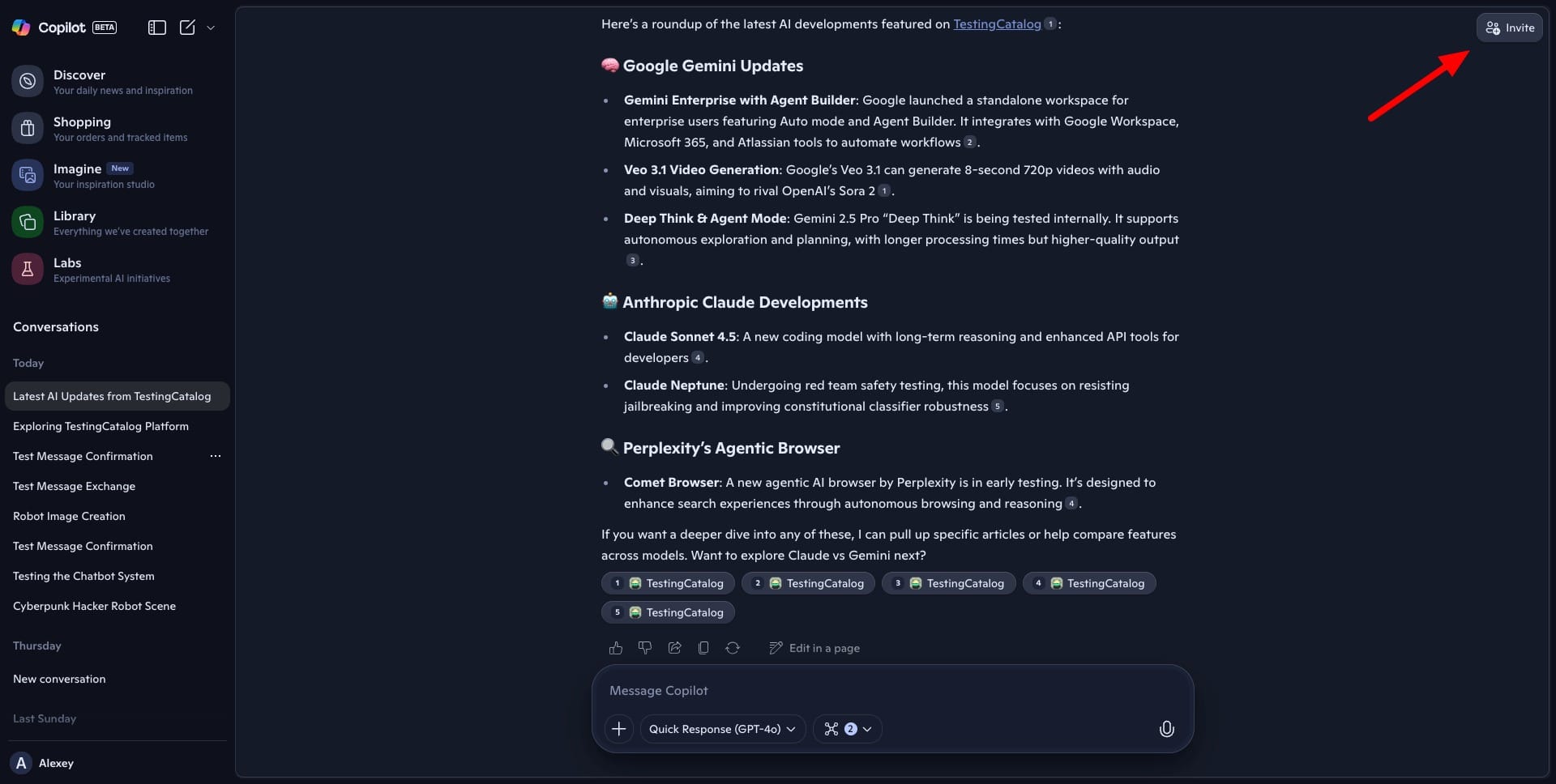
This addition would be particularly useful for teams, students, or any group needing a shared workspace with light AI support. However, most advanced Copilot features are limited within these group chats, with core functions like text and image generation remaining available. There’s mention of upcoming video generation, but this is still unreleased.
Microsoft appears to be following a broader trend, OpenAI is reportedly developing a similar group chat function for its mobile ChatGPT apps, potentially introducing collaborative AI chats to a much larger audience. While cross-platform group chat is not planned, Microsoft’s strategy often involves parallel or slightly accelerated releases of features seen at OpenAI, likely due to their close partnership and product overlap.
For now, group conversations are restricted to US users and remain in closed testing, but the approach is poised to unlock new collaborative workflows and could influence future releases across major AI platforms. Microsoft’s approach fits its pattern of integrating Copilot into productivity scenarios, focusing on practical, shareable AI tools that fit existing team dynamics.


