
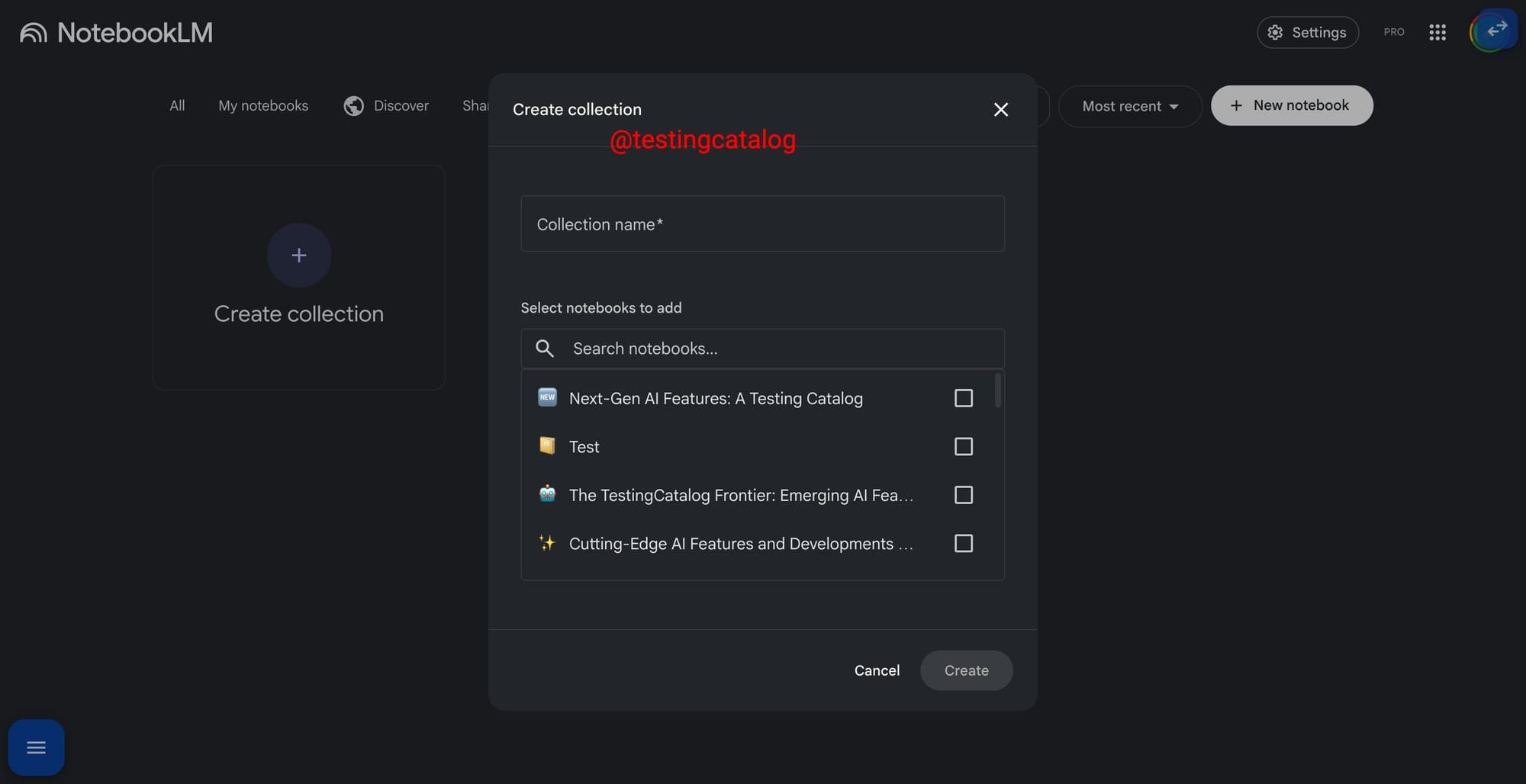
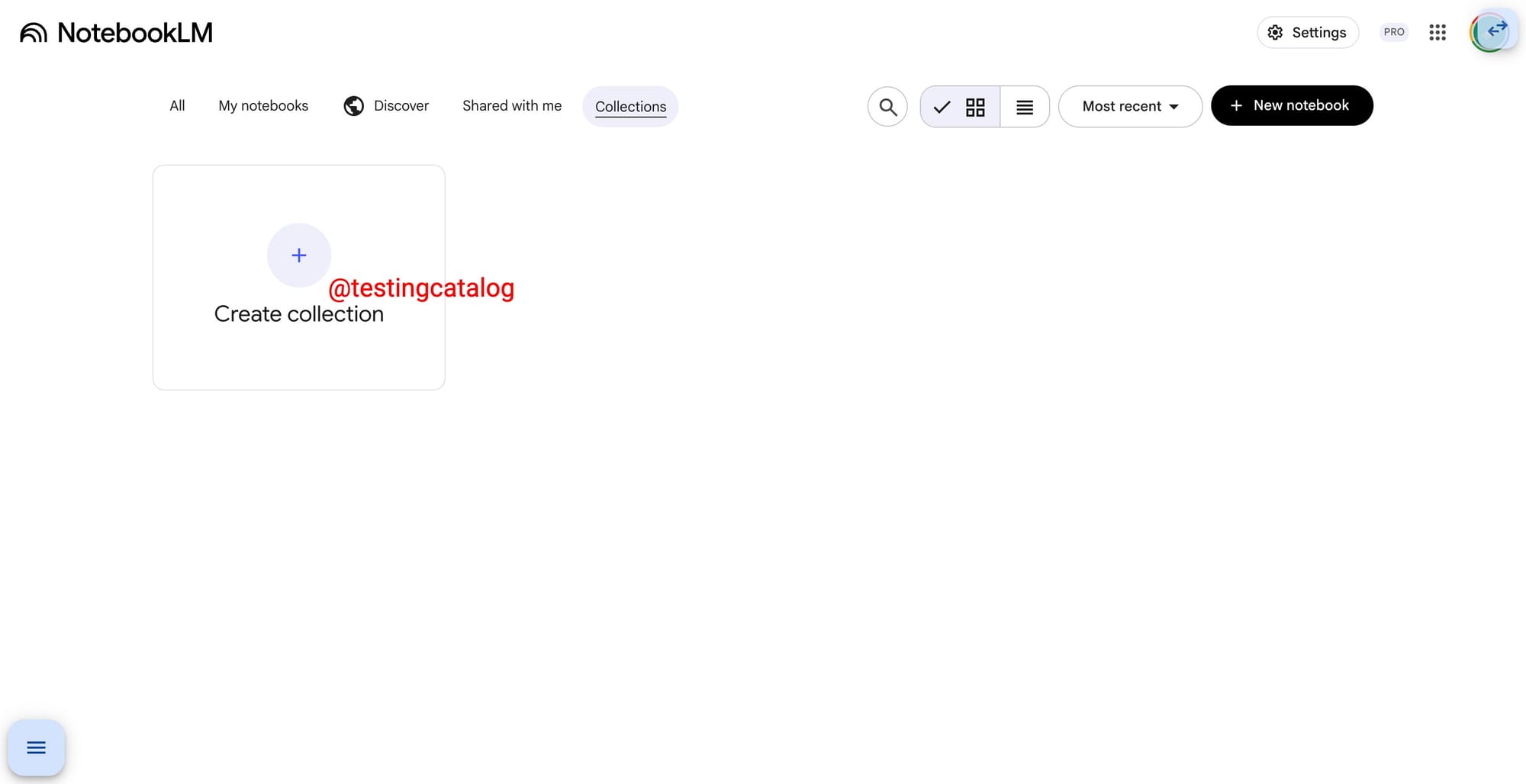
Google appears to be developing a collections system for NotebookLM that would let people group several notebooks under a single heading, surfaced via a dedicated tab in the main navigation. The capability has not been officially confirmed and looks to be early in development, with no timeline attached, but it points to a gap the tool has carried for some time.
NotebookLM already reads and clusters the sources inside an individual notebook, a source-level organization layer that reached full rollout in early May 2026. What it has lacked is any native way to group whole notebooks. Power users have leaned on browser extensions to approximate folders, and the team itself has acknowledged notebook-level grouping as the main piece still missing. Collections would fill that role, providing a top-level structure rather than a flat, scrolling list.
The people most likely to benefit are heavy users juggling many notebooks, particularly those who treat notebooks as project workspaces within Gemini. The two products now sync, so a source added in one place appears in the other. Notebook projects went free for all Gemini web users earlier this year, so the population sitting on large libraries has grown quickly. With the free tier allowing up to 100 notebooks, navigation friction was always going to surface.
There are signs that Google first weighed a label-based approach to notebook organization before leaning toward collections, though the reasoning behind any shift remains unclear.
The move fits a year spent reshaping NotebookLM from a question-and-answer layer over documents into a research-to-output hub welded to Gemini. Rivals face the same organizational weak spot: ChatGPT Projects, Claude Projects, and Perplexity Spaces all offer single containers, but none gracefully support grouping across dozens of them. A clean top-level layer would give Google an early answer to a problem the whole category is starting to feel.