
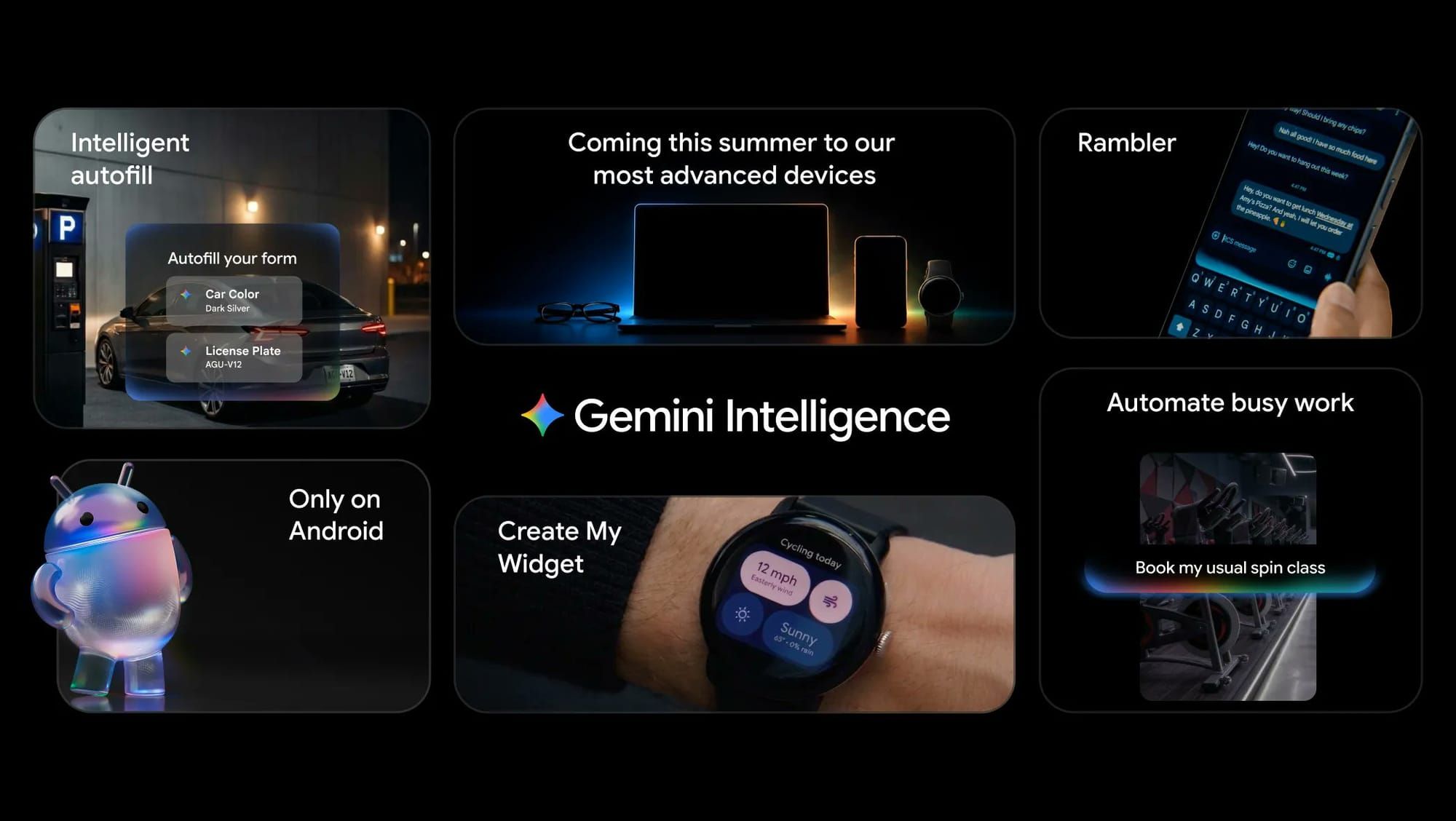
Google is pushing Gemini deeper into Android with Gemini Intelligence, a new layer for proactive AI across phones and other Android-powered devices. The rollout starts this summer on the latest Samsung Galaxy and Google Pixel phones, then expands later this year to Android devices, including watches, cars, glasses, and laptops. The move reframes Android as a system in which Gemini can read context, act across apps, and complete tasks only upon user command or confirmation.
Today, we introduced Gemini Intelligence, which brings the best of Gemini to our most advanced devices.
— Google (@Google) May 12, 2026
Gemini Intelligence integrates premium hardware and innovative software to help you stay a step ahead and work proactively to get things done throughout your day.… pic.twitter.com/NY30mNUXyy
The core feature is app automation. Gemini will be able to handle multi-step actions across supported apps, starting with food, grocery, and rideshare use cases. Google says users can long-press the power button and ask Gemini to create a shopping cart from a grocery list, find a tour based on a photo of a brochure, book a ride, or reorder a meal. Progress can be tracked through live notifications, and the final step remains with the user.
Google is also bringing Gemini in Chrome to Android at the end of June for select U.S. devices running Android 12 or higher with at least 4GB of RAM and English-US as the device language. Built on Gemini 3.1, it can summarize pages, answer questions about web content, connect with Google apps, create or edit visuals through Nano Banana, and run auto browse tasks such as reserving parking or updating an order. Auto browse will initially roll out to AI Pro and AI Ultra subscribers in the U.S. on supported devices.
Gemini Intelligence also includes Rambler, a Gboard-linked feature that turns natural speech into cleaner written messages, including multilingual speech in a single message. Another addition, Create My Widget, lets users generate Android or Wear OS widgets by describing what they want, such as a weather widget focused only on rain and wind speed or a meal-prep dashboard.
GOOGLE 🔥: A new Android Intelligence has been introduced during Android Show 2026!
— 🚨 AI News | TestingCatalog (@testingcatalog) May 12, 2026
- A whole new sleek design!
- Automated multi-step tasks across Android apps
- Gemini in Chrome gets Browser Use
- Automated form filling
- "Rambler" to turn voice notes into text
- Custom Gen UI… pic.twitter.com/Tjkz13OteR
The announcement builds on Google’s earlier Personal Intelligence work, which, after opt-in, connects Gemini to Google apps such as Gmail, Photos, YouTube, and Search. That context layer is now being integrated with Autofill on Google, allowing Android to fill out more complex forms using relevant information from connected apps while keeping the Gemini connection optional in settings.
Google is positioning privacy and control as central to the launch. Gemini app automation can be enabled for specific apps, purchases require confirmation, users can watch progress in real time, and Android’s Privacy Dashboard is being updated to show which AI assistants were active and which apps they used in the last 24 hours. Google also points to Private Compute Core, Private AI Compute, protected KVM, and prompt-injection defenses as part of the security model for agentic Android features.