

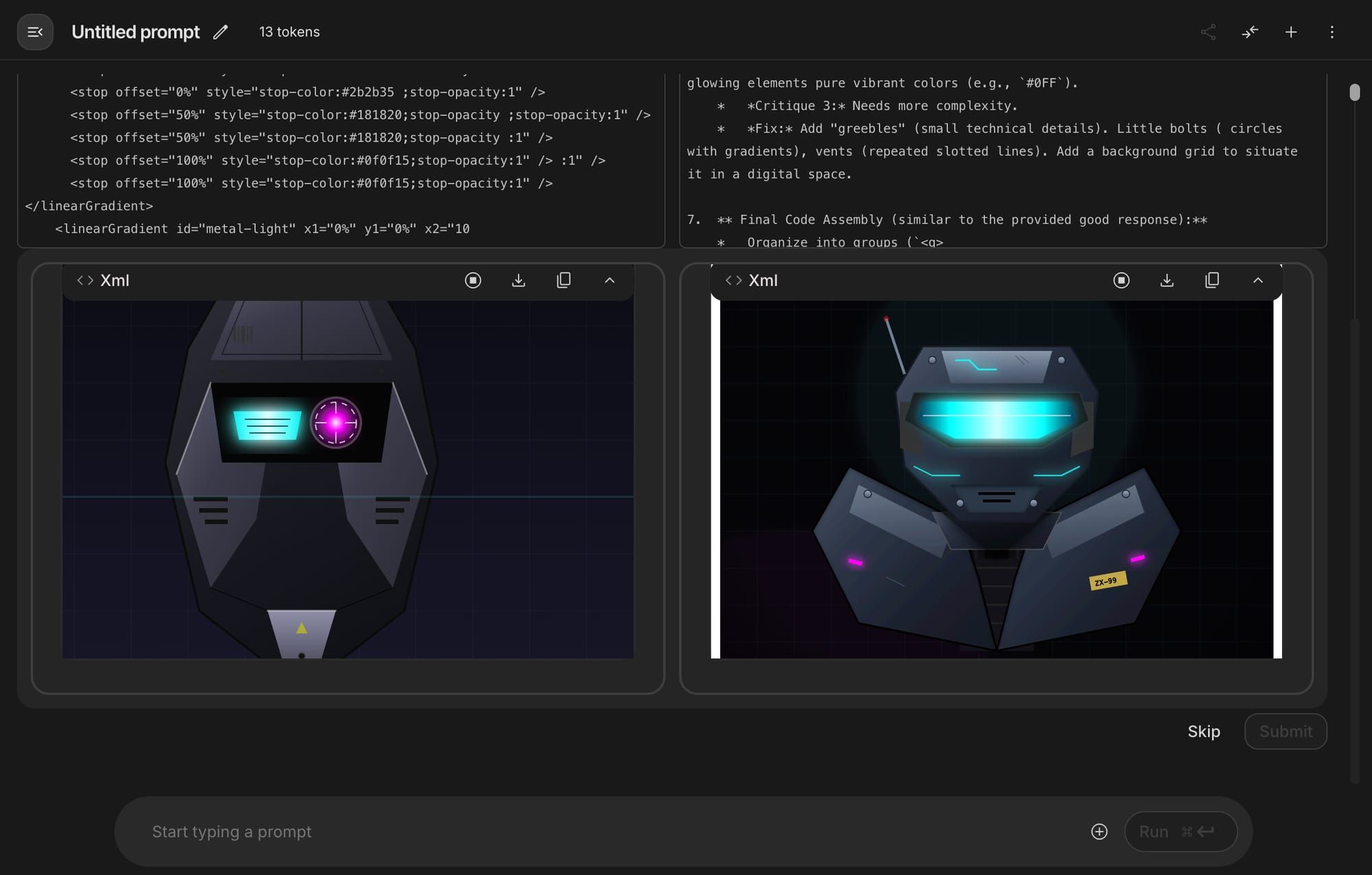
Google’s highly anticipated October release week is set to begin very soon, with much of the focus from the developer and research community resting on the rumored launch of Gemini 3, possibly on October 9 (UPD: Likely later).
It's time AI works for you.
— Google Cloud (@googlecloud) October 1, 2025
Join the #GeminiAtWork livestream on October 9 to learn how to take your business to the next level with Google AI!
Set a reminder to be notified when we're live ↓ https://t.co/cxoULaCmBN
Early testers have already benchmarked Gemini 3’s SVG generation capabilities, revealing a substantial improvement not only over Gemini 2.5 but also compared to Anthropic’s recently released Sonnet 4.5. The ability to handle complex SVGs has historically signaled strong coding and engineering performance, leading to considerable expectations for Gemini 3’s broader utility in software development and technical domains.
Claude 4.5 Sonnet vs Gemini 3 Pro on the robot SVG test
— leo 🐾 (@synthwavedd) September 29, 2025
I think there's a clear winner here pic.twitter.com/3cD9hqb9DF
Gemini 3.0 Pro, Cyberpunk robot SVG
— Lentils (@Lentils80) October 4, 2025
Left (2ht…), Right (5qa…) https://t.co/1GOyk8FJt8 pic.twitter.com/t5AyzmNj4M
The Gemini 3 launch could also bring updates to related products: Veo 3.1 and a new Nano Banana model reportedly based on Gemini 3 Pro, rather than the Gemini Flash variant used in previous releases (again, according to rumours). This potential shift suggests Google is aiming to raise the bar for both image generation and AI-augmented workflows, further differentiating its ecosystem from competitors like OpenAI and Anthropic.
Gemini 3.0 Pro is just INSANE for SVG.
— can (@cannn064) October 2, 2025
Prompt: Make a SVG of a PlayStation 4 controller https://t.co/F10rprPny3 pic.twitter.com/5FYTiCQP9v
Another notable change under development is the “My Stuff” feature in Gemini’s UI, which seems designed to give users streamlined access to their generated artifacts, such as images, mirroring the gallery feature seen in the ChatGPT app.
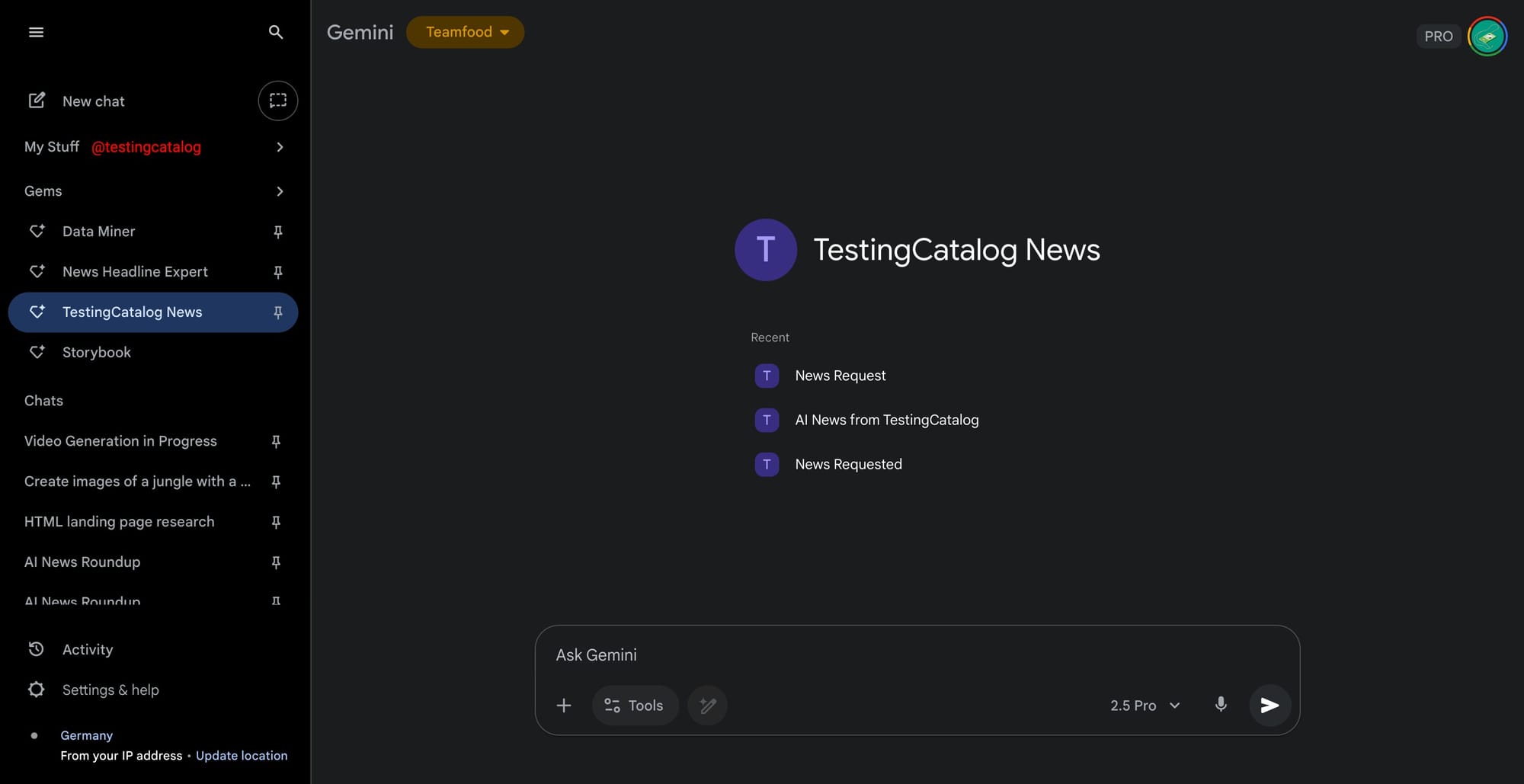
Google is also rebranding “apps” as “connected apps” and integrating select Google services more tightly into Gemini, reducing manual toggling but potentially limiting granular user control.
🚨NEW GEMINI 3.0 PRO UI EXAMPLES🚨
— can (@cannn064) October 1, 2025
to blow your mind. Gemini 3 will be a BEAST at frontend. pic.twitter.com/rEoek6L4TY
Gemini 3.0 Pro is legendary. it beats zenith at web design. It looks like a real website. almost 2300 lines of code. This was from A/B testing
— Charlie L. (@whylifeis4) October 2, 2025
From Shoop on Discord pic.twitter.com/cYOTlmxxQp
Behind the scenes, the long-awaited Agent Mode with browser control is progressing, with traces of browser automation features being added in test builds. This would bring Gemini’s functionality closer to what’s already available in ChatGPT and Copilot, letting users instruct the AI to take actions within a browser context. For AI Studio, smaller UI adjustments are also expected, reflecting Google’s continued effort to unify and polish its generative AI offerings.
These updates would mostly benefit developers, early adopters, and those using generative AI tools for technical content creation. The features have been surfaced through code analysis and usage in pre-release environments, but users should watch for official announcements and documentation for final details and access. This week marks a critical moment in Google’s push to establish Gemini as a leader in the generative AI space, with wide-ranging implications for both individual users and enterprise workflows.


