
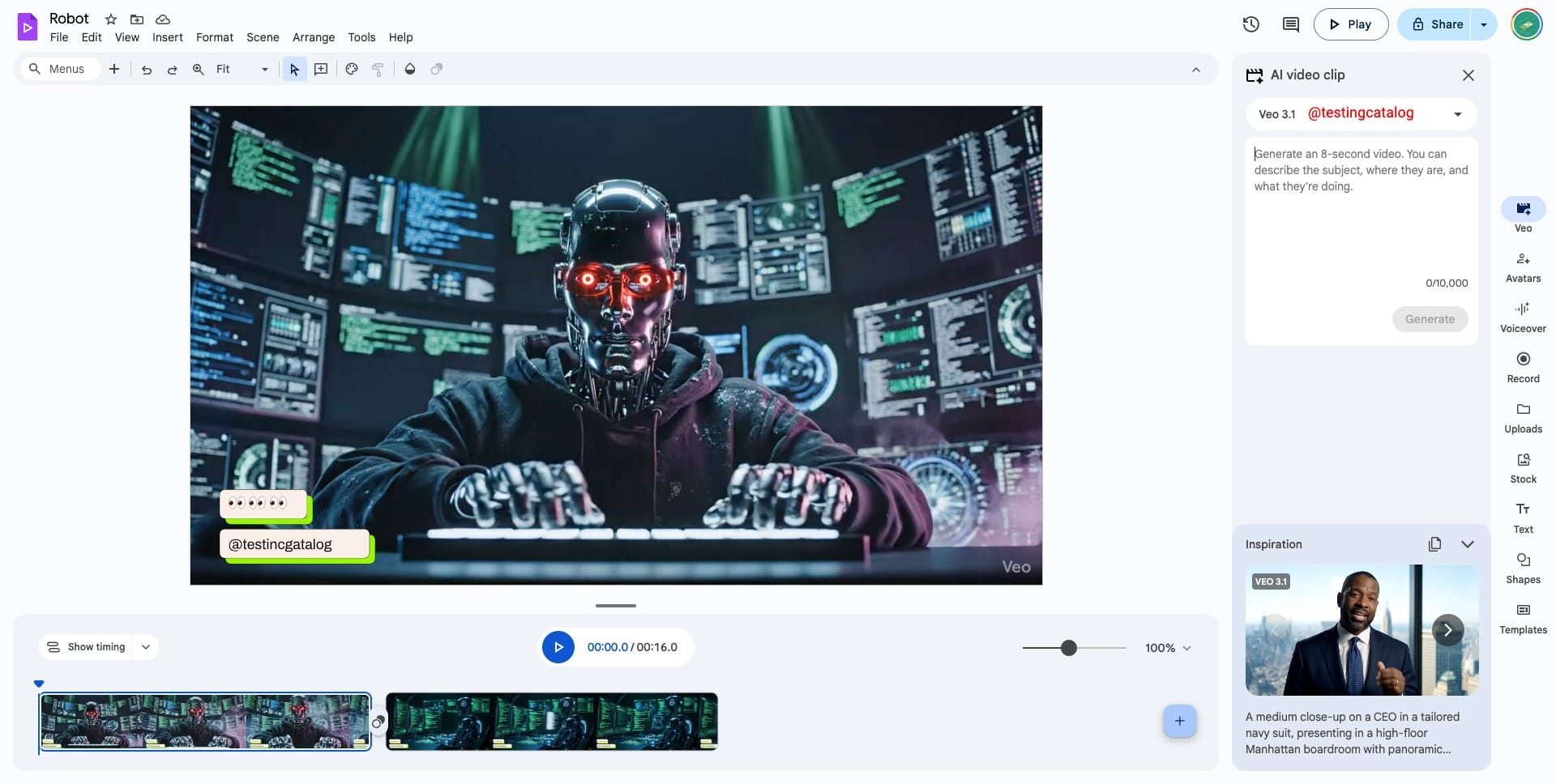
The growing anticipation around Google’s Veo 3.1 reflects the competitive pace in generative video AI, especially with Sora 2 from OpenAI now in public hands. Veo 3.1 is positioned as the next step after Veo 3, which already established a strong reputation for reliable video output. The main audience waiting for this update includes creators, marketers, and anyone interested in AI-powered content production, particularly those seeking alternatives to Sora or wishing to see what Google can deliver on the video front.
Google made Veo video generation and AI Avatars available on Google Vids for more users!
— TestingCatalog News 🗞 (@testingcatalog) October 10, 2025
Google Vids is the only Google product that contains hidden traces of Veo 3.1 pic.twitter.com/gGCIGVFvpy
According to available evidence, traces of Veo 3.1 have appeared in Vertex AI quota and, more tangibly, inside Google Vids. However, several platforms falsely referenced the model’s availability for their own promo campaigns, ending with a confirmation from Google that their claims are false.
Cyberpunk hacker robot working in front of many monitors
Veo 3.1 on Google Vids comes as text-to-video generation with support for 8-second, 720p video clips that include audio (better quality will likely be available on other Google products like Flow). Notably, the new model brings improvements in visual fidelity, prompt adherence, and especially audio tracks, which now include more convincing music. Test comparisons on prompts such as a cyberpunk hacker robot or dynamic volcano scenes reveal that Veo 3.1 produces more creative, detailed, and accurate outputs than its predecessor. Where Veo 3 tended to generate consistent but sometimes repetitive results, Veo 3.1 demonstrates a better understanding of nuance, providing videos that closely match prompt intent and add richer visual details, such as flowing lava or more lifelike dinosaurs.
Vulcan eruption shot, Everest drone POV, T-Rex destroying a village
The testing so far suggests the model doesn't have the same issues as Veo 3, like occasional oddities with object proportions (noted in the T-Rex prompt for the video above). Veo 3.1 marks a noticeable step forward in prompt fidelity and visual/audio quality.
Spinosauruses running through the field
As for Google, the company’s strategy has been to iterate quickly on foundation models and introduce them to select services (like Vids and Vertex AI) in preparation for the wider rollout. This staged release pattern gives Google both technical feedback and marketing momentum against OpenAI and others. Veo 3.1, when broadly available, will likely fuel direct comparisons with Sora 2, not only in terms of raw output but also integration within Google’s broader workspace tools. Early indications point to an official release in the coming weeks, so anyone in the AI video space should keep a close eye on updates from Google, especially as more samples and user experiences become public.


