
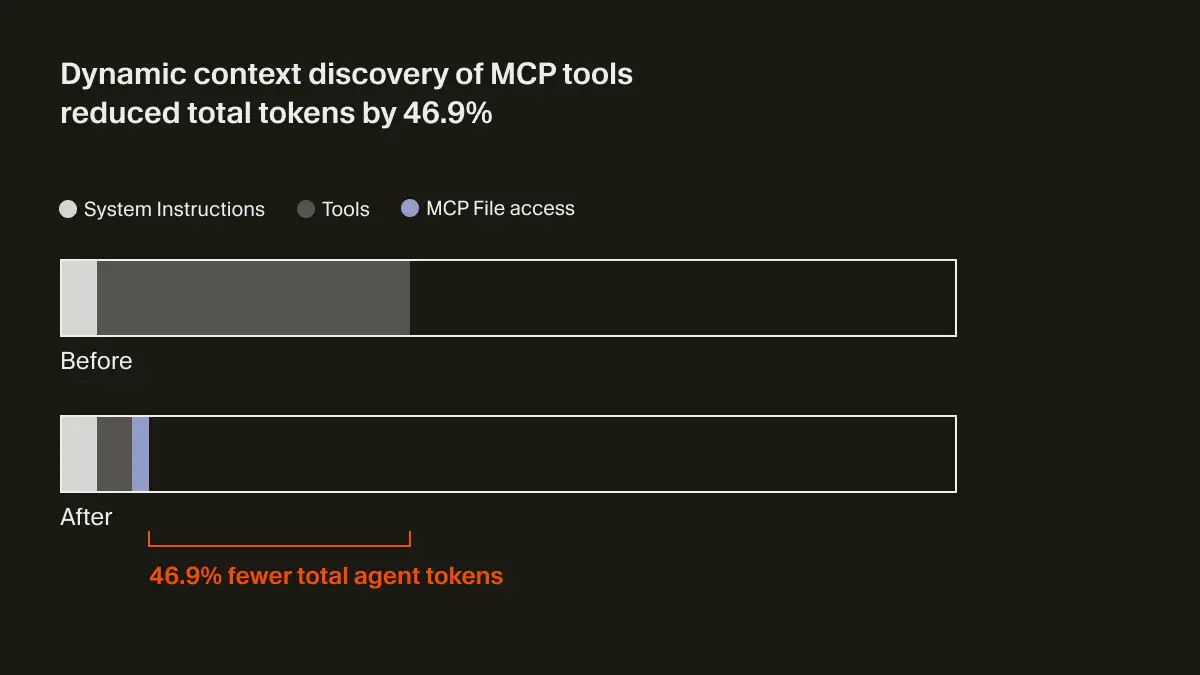
Cursor has introduced dynamic context discovery for its coding agent platform. This upgrade shifts how the agent handles large tool responses and context windows, opting to store outputs such as long shell command results and chat history as files rather than flooding the agent’s context with bulky, static data. The agent then retrieves only the necessary information using commands like tail or grep, allowing for more efficient token use and minimizing information loss. This method supports new standards like Agent Skills, letting the agent dynamically pull in domain-specific capabilities and scripts as needed. In an internal A/B test, dynamic context discovery led to a 46.9% reduction in token usage for agent runs involving MCP tools, highlighting a substantial technical improvement over static context methods.
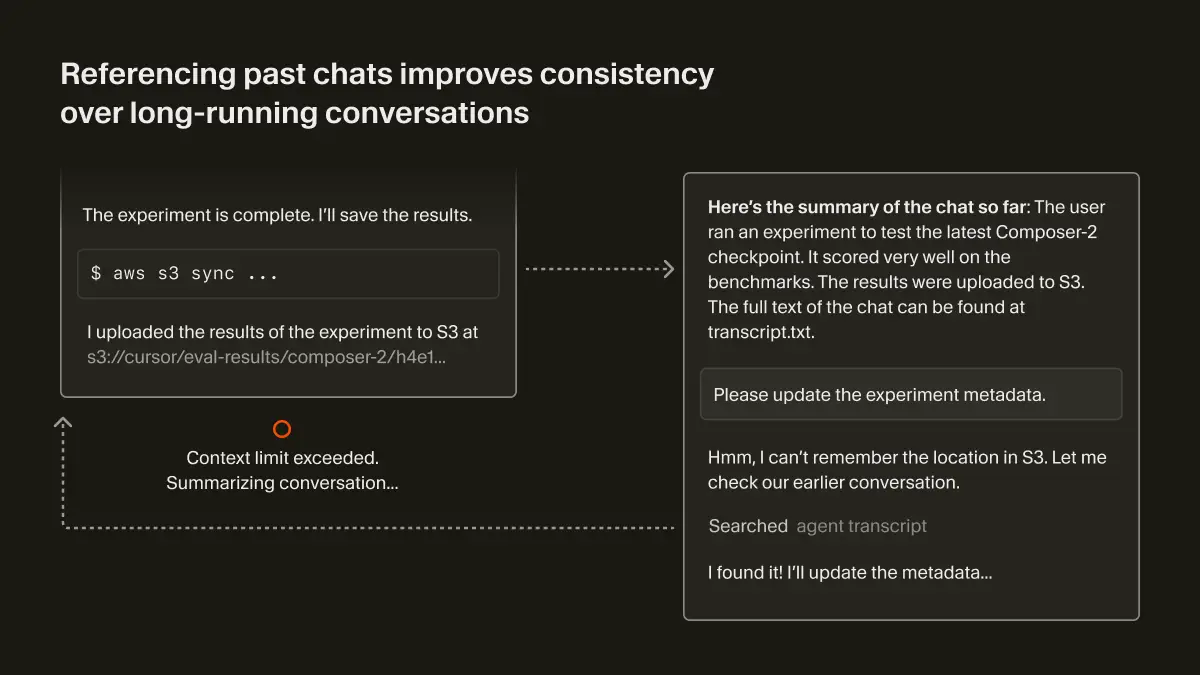
Cursor, the company behind these developments, is focusing on agentic AI models tailored for software development tasks. The team has optimized their agent harness to work with the latest frontier models and continues to refine context handling for improved agent performance. The new dynamic context discovery approach will be available to all Cursor users globally, rolling out in the coming weeks. This release is targeted at software developers and teams leveraging AI-powered coding agents, aiming to address the challenges of context bloat and information overload. By syncing terminal outputs, tool descriptions, and chat history as files, Cursor’s platform makes the agent’s workflow more adaptable and robust compared to previous static approaches or competitor solutions.


