
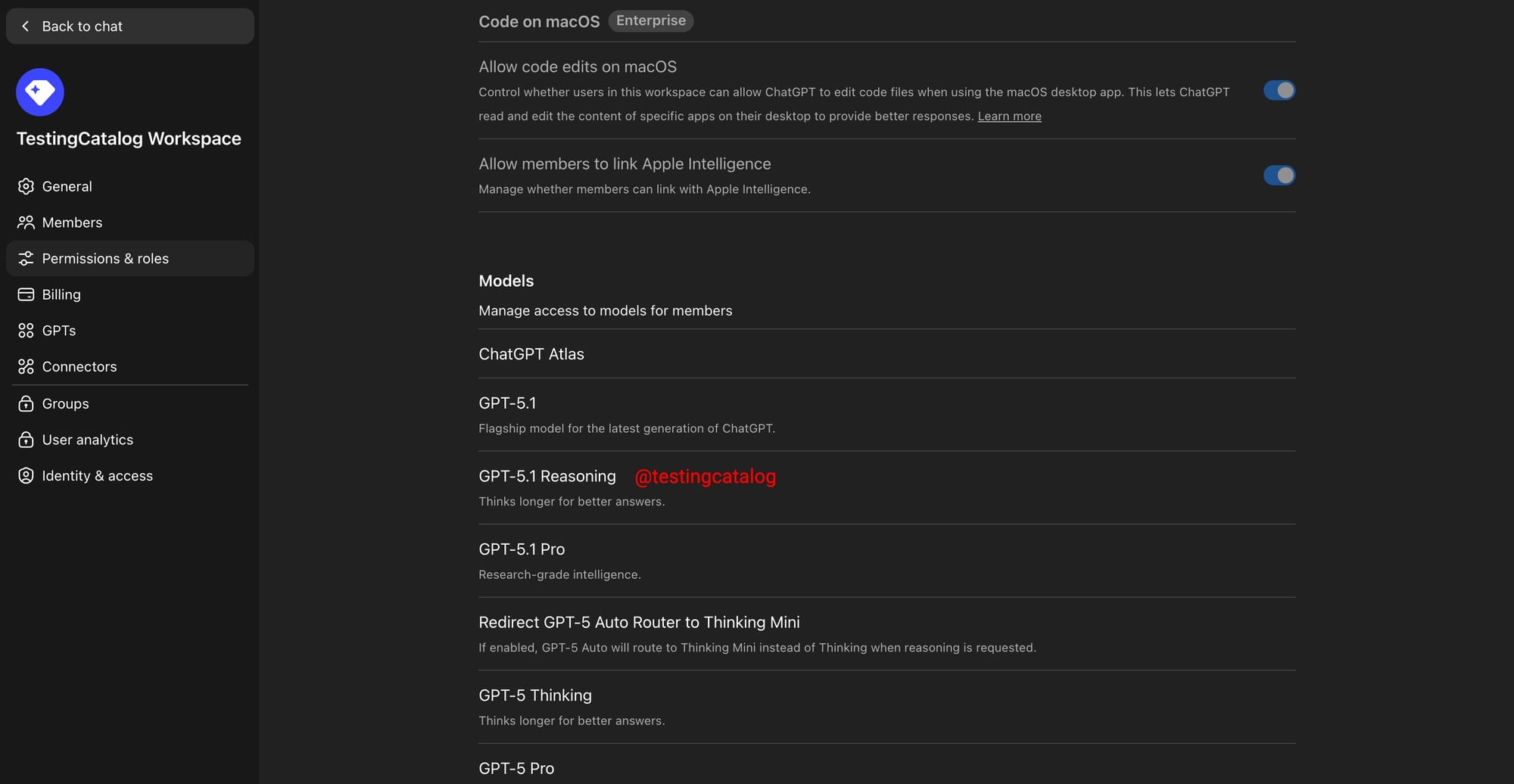
OpenAI is preparing to introduce a family of GPT-5.1 models, with references to GPT-5.1, GPT-5.1 Reasoning, and GPT-5.1 Pro recently discovered in the platform’s codebase. This approach suggests OpenAI is maintaining a similar product strategy as seen with GPT-5, continuing its trend toward simplified and transparent versioning. The code updates, specifically within Enterprise Permissions and Roles, indicate that enterprise customers will have the option to opt out of new model releases if they are considered experimental, a feature already familiar to larger organizations managing production workloads.
BIG OPENAI NEWS:
— Lisan al Gaib (@scaling01) November 7, 2025
GPT-5.1, GPT-5.1 Reasoning and GPT-5.1 Pro
GPT-5.1: "Flagship model for the latest generation of ChatGPT"
GPT-5.1 Reasoning: "Thinks longer for better answers"
GPT-5.1: "Research-grade intelligence" pic.twitter.com/GgInXcioAI
The latest code also references a general availability date of November 24th for the GPT-5.1 family. While this timeline is likely targeting enterprise accounts, there is a possibility that individual Plus and Pro users might gain access to the new models even earlier, possibly within the upcoming week. This timing appears to be aligned with broader industry trends, as OpenAI faces increased competition from releases like Kimi K2 Thinking and the anticipated Gemini 3 from Google.
New models on EQ-Bench writing evals: Kimi-K2-Thinking and the stealthed openrouter model polaris-alpha.
— Sam Paech (@sam_paech) November 7, 2025
Polaris-alpha likely is gpt-5.1, based on how the outputs cluster nearest gpt-5 and the fact that the model has very high rate limits. pic.twitter.com/MSsxPZ0nW6
There are also signs that one of the models, potentially GPT-5.1 Thinking, is already being tested under the name Polaris Alpha on platforms such as OpenRouter.
Community feedback points to high performance in creative writing and benchmark tests, increasing speculation about its true origin. If confirmed, this would suggest that public access to these capabilities is imminent.
A new stealth model, "Polaris Alpha," is now available on OpenRouter. 256k context window and a quite good performance.
— TestingCatalog News 🗞 (@testingcatalog) November 6, 2025
It is worth to test 👀 https://t.co/EHtg5DPYDF pic.twitter.com/lHrYCFxaVs
For OpenAI, the staged rollout of the GPT-5.1 lineup on ChatGPT reinforces its strategy of segmenting models for specialized use cases and customer segments. These developments follow OpenAI’s established pattern of incremental but public-facing improvements to their core models, directly responding to evolving demands from both enterprise customers and the broader AI research community.


