
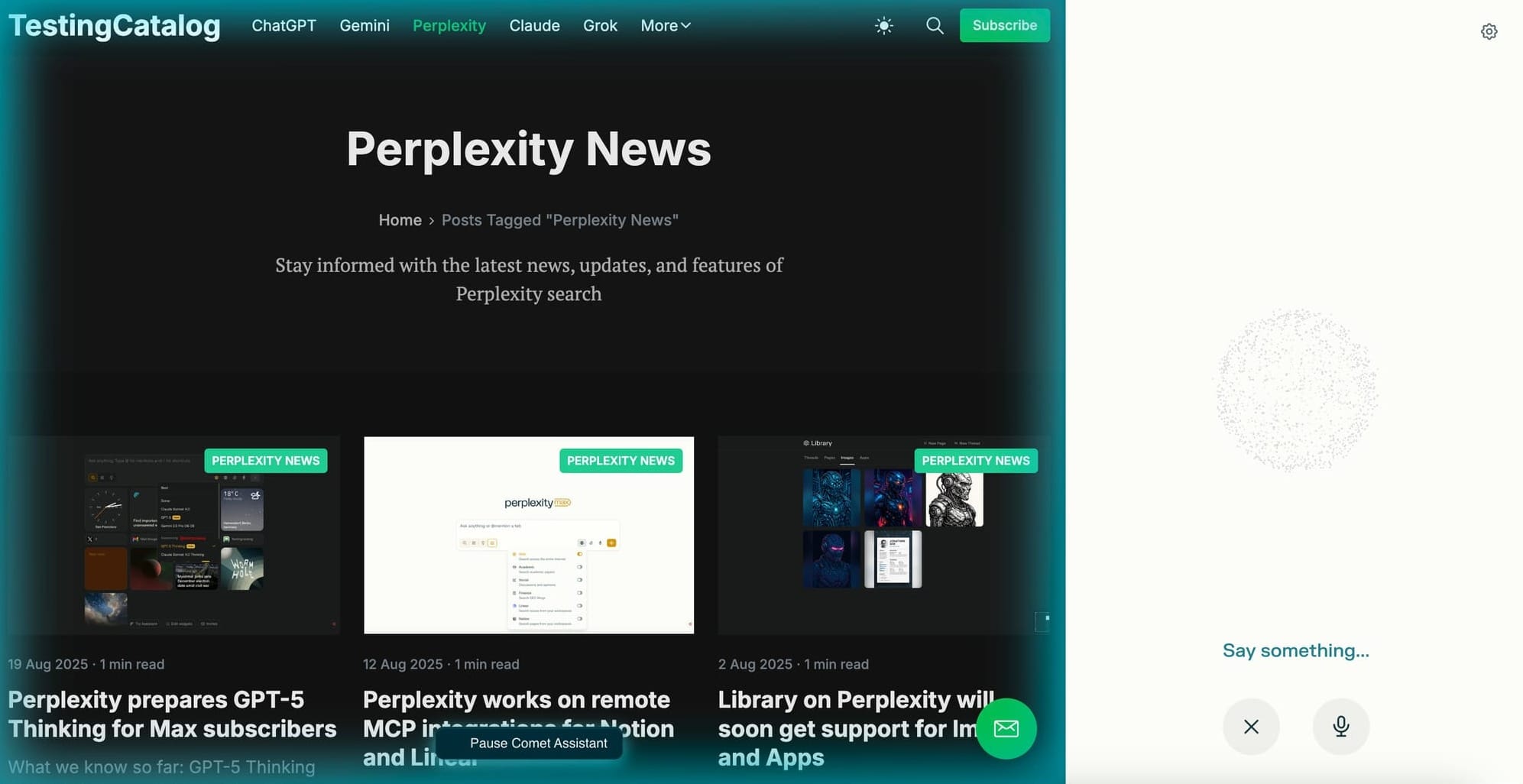
Perplexity’s Comet browser has quietly gained a new ability that moves its assistant closer to full task automation. While the latest build doesn’t overhaul the interface, the voice assistant in the sidebar can now directly control web pages rather than only the browser itself. This means spoken commands can trigger clicks, form filling, and navigation inside sites, not just tab management.
The feature works by letting the assistant take over visible page elements, providing real-time feedback as it executes actions. Unlike background automation where users only see final results, Comet shows each step, making it possible to intervene mid-process. The experience is slow at times but adds a layer of delegation that frees users from their keyboard or mouse, useful in scenarios like exercising while browsing on a TV or managing tasks hands-free.
BREAKING 🚨: Perplexity Comet browser can now control the open page via its voice mode!
— TestingCatalog News 🗞 (@testingcatalog) September 2, 2025
One of the most futuristic AI experiences available at this moment. Tons of new possibilities.
The future is now 👀 pic.twitter.com/uvrCL5zsvZ
From a design standpoint, the assistant’s voice UI blends into the sidebar with a polished look, reinforcing Perplexity’s strategy of embedding AI guidance directly into its browser rather than keeping it in separate chat interfaces. Voice commands previously handled navigation and tab operations, but extending them to on-page actions elevates Comet to a higher grade of control.
The rollout appears to be unannounced and likely experimental. Given Perplexity’s positioning of Comet as both a search companion and a testing ground for AI-driven browsing, the team will probably refine stability before making it official. If polished, this capability could position Comet as one of the first mainstream browsers to offer end-to-end, voice-controlled interaction with the web.


