
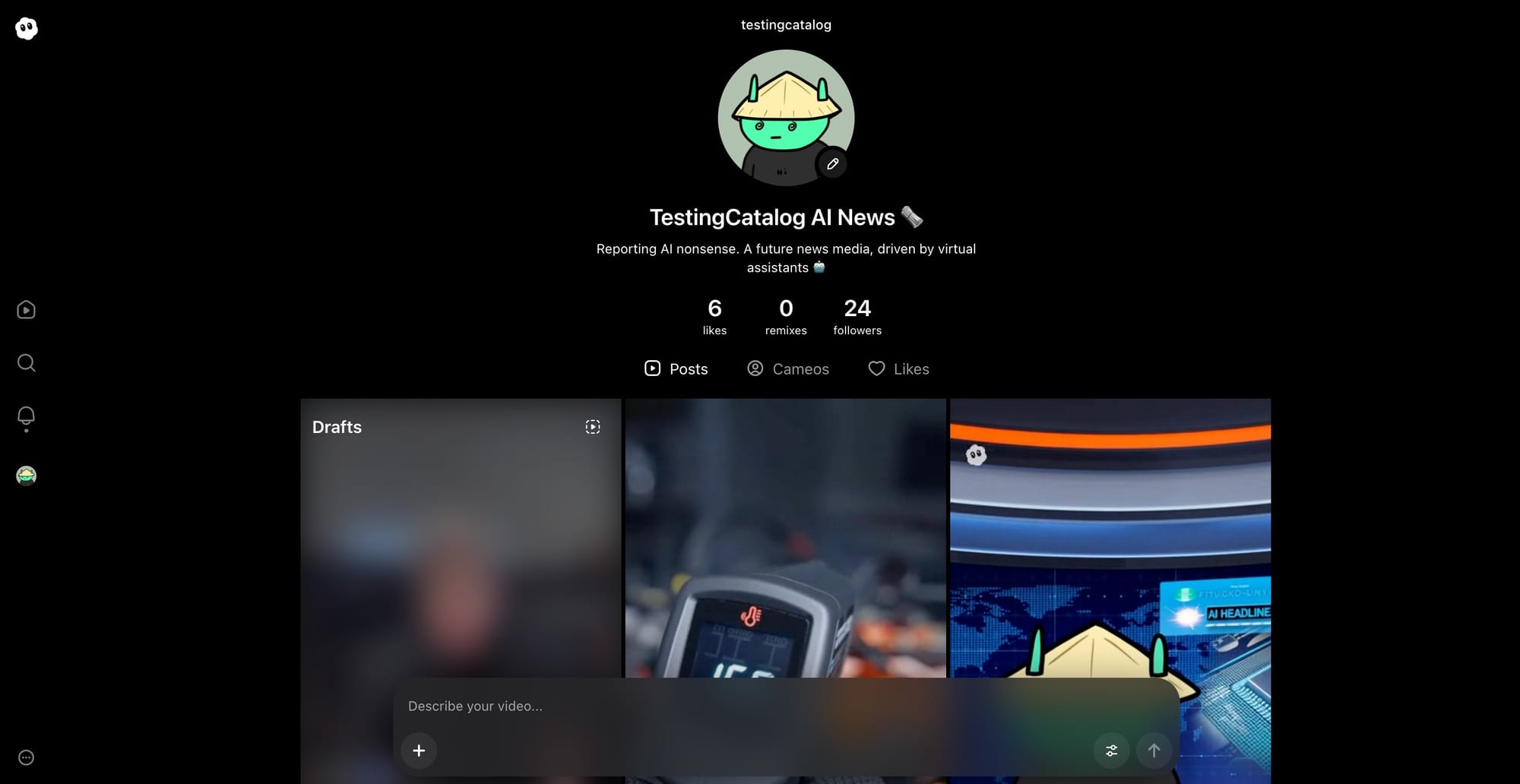
OpenAI’s latest update introduces Sora 2 as a dedicated iOS app with a social twist, allowing users to view and share AI-generated videos through a personalized feed. Users can now set up profiles, follow others, and build a presence within the app. This positions Sora 2 as an entry into the AI-powered content-sharing space, likely appealing to early adopters, creators, and those interested in experimenting with generative video technology.
The company’s strategy with Sora 2 signals an interest in creating a community around AI video, moving beyond simple one-off generations and toward network effects.
💠OpenAI will soon allow ChatGPT users to add a username and a profile photo.
— Radu Oncescu (@oncescuradu) October 1, 2025
(This is on ChatGPT’s Android app, beta version).
📲This feature isn’t working properly at this moment.@testingcatalog pic.twitter.com/pWjBSJIv1e
Meanwhile, recent Android beta builds of the main ChatGPT app show profile customization options, including profile pictures, display names, and descriptions, features that have not previously been part of the standard experience. This suggests OpenAI is exploring a broader transformation of ChatGPT from a pure productivity tool into a platform with social features. Code references to direct messaging further hint at upcoming capabilities that could allow users to communicate and collaborate directly, echoing what’s already available for collaborative projects inside ChatGPT Teams and Workspace accounts.
"Direct Messages" has now been added to the ChatGPT Android app (version 1.2025.273 beta) - codename "Calpico" / "Calpico Rooms"
— Tibor Blaho (@btibor91) October 1, 2025
Direct messaging was first introduced yesterday in the new Sora 2 iOS app, and now code references in the ChatGPT Android app show it includes direct… pic.twitter.com/e2kzWyu4N9
The main questions center on whether these new ChatGPT social features will remain distinct or eventually merge with Sora 2’s social system. This also raises speculation about possible integrations with other identity projects, such as World, considering Sam Altman’s involvement. If OpenAI moves ahead, the social layer could reshape user workflows and communication patterns, especially for teams and creators, but it faces stiff competition from established platforms like Meta and X.
As for timing, the presence of these options in beta builds and code suggests a gradual rollout, likely starting with limited tests before a broader release. The developer community is also watching for updates at the upcoming OpenAI Dev Day, where more details on the roadmap could emerge. For now, OpenAI’s move into social spaces seems to signal an ambition to become a multi-purpose platform, not just an AI assistant or productivity tool.


