
OpenAI has introduced a revamped Deep Research experience in ChatGPT, transitioning it from a "run it and wait" flow to a more interactive guided research session. Users can now constrain Deep Research to specific websites, incorporate context from connected apps, and intervene during the process to add requirements or redirect the work. The output has also been enhanced, with reports designed for review in a dedicated full-screen view, making long, citation-heavy writeups less cramped when skimming sections or checking sources.
Deep research in ChatGPT is now powered by GPT-5.2.
— OpenAI (@OpenAI) February 10, 2026
Rolling out starting today with more improvements. pic.twitter.com/LdgoWlucuE
This update is particularly beneficial for individuals engaged in recurring source-based work, such as analysts, founders, journalists, marketers, and researchers who prioritize reproducibility and scope control. Website-limited research addresses the "too broad" issue when users already know which domains they trust. Connectors are useful when the missing piece is within the user's workflow, such as email, calendars, documents, or other internal contexts that the model would not otherwise access. The ability to interrupt mid-run is crucial for iterative tasks, allowing users to pivot the report without restarting from scratch when the first batch of sources reveals a better angle.
Behind the scenes, OpenAI is aligning this feature with its latest flagship model line by moving the Deep Research backend to GPT-5.2. This aligns with OpenAI’s current product strategy, which emphasizes agent-like workflows that integrate browsing, synthesis, and tool access, rather than treating the chatbot as a single-shot answer box. Concurrently, there is growing anticipation around the arrival of GPT-5.3, following the recent release of GPT-5.3-Codex on the coding side. However, it remains unclear when a general ChatGPT-facing GPT-5.3 will be available and whether it will immediately replace GPT-5.2 in Deep Research.
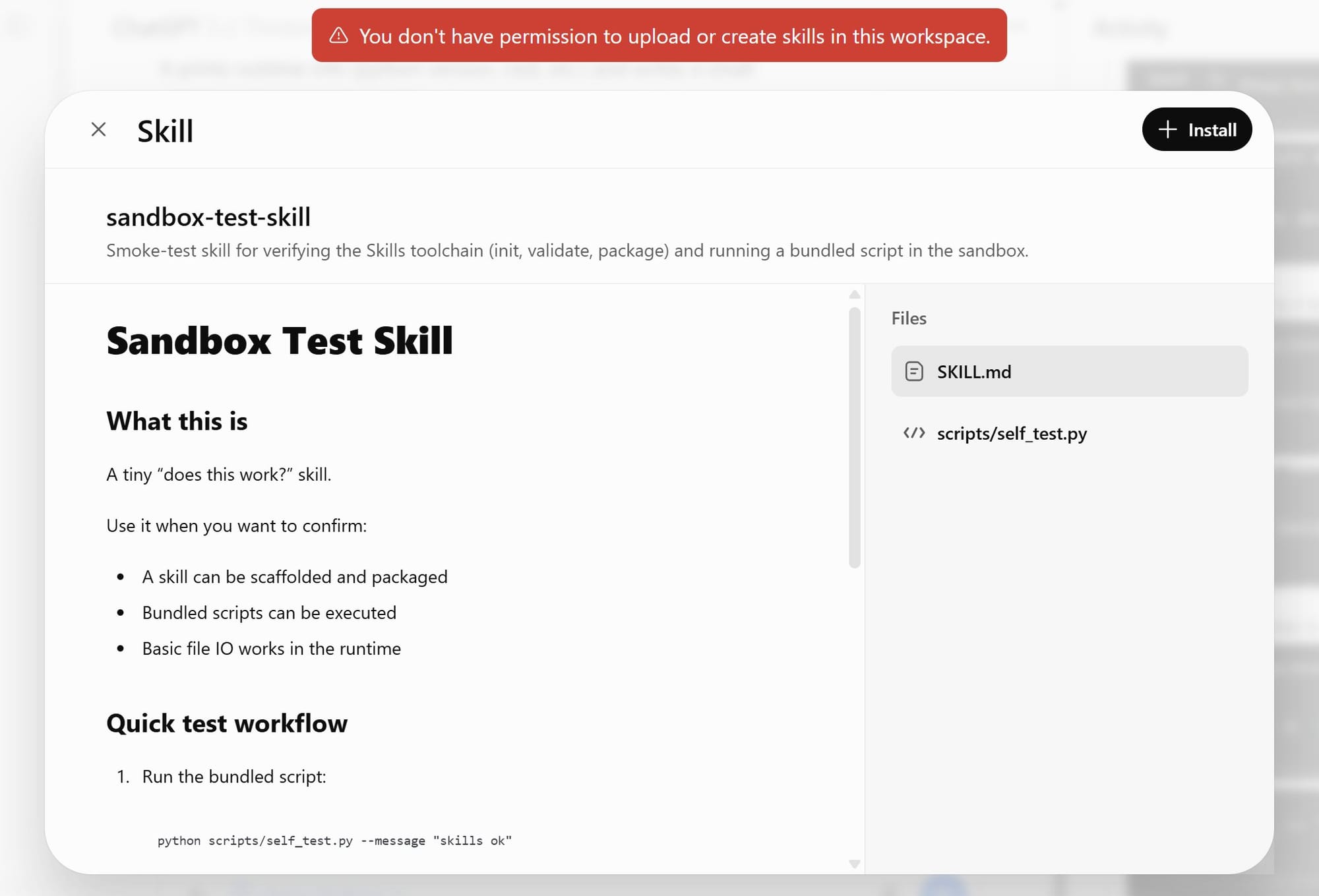
Woah! ChatGPT will add support for importing skills to your library
— Max Weinbach (@mweinbach) February 10, 2026
I just had it create a skill for me that I could use in Codex and got this popup in the chat pic.twitter.com/8AEUfKgjcD
In addition to the Deep Research upgrades, there are indications that ChatGPT may be preparing to introduce a first-party "Skills" layer. This would involve installable, editable workflow instructions that shape how the assistant behaves for specific tasks. The concept is reminiscent of agent frameworks and development tools, where a skill packages a repeatable procedure, constraints, and expected outputs, allowing the model to execute a known playbook instead of reinventing the approach each time. If OpenAI integrates skill management directly into ChatGPT, it would provide power users and teams with a native way to standardize workflows, share internal operating procedures, and maintain consistent results across individuals and projects without the need to build a full custom agent stack. While the timing remains uncertain, this direction aligns with OpenAI’s broader move toward configurable, tool-using assistants that are more closely integrated with real work.


