
OpenAI has started testing sponsored placements inside ChatGPT for logged-in adult users in the U.S., limited to the Free and Go tiers. Plus, Pro, Business, Enterprise, and Education users will not see ads, positioning the rollout as a funding lever aimed at keeping lower-cost access viable while preserving trust in the assistant for personal and work tasks.
We’re starting to roll out a test for ads in ChatGPT today to a subset of free and Go users in the U.S.
— OpenAI (@OpenAI) February 9, 2026
Ads do not influence ChatGPT’s answers. Ads are labeled as sponsored and visually separate from the response.
Our goal is to give everyone access to ChatGPT for free with… pic.twitter.com/S9BV24uJLb
The company says ads do not change ChatGPT’s answers and will appear as clearly labeled sponsored units that are visually separated from the organic response. During the test, ad selection is based on matching advertiser submissions to what you are discussing, plus signals like your past chats and prior ad activity, with the first slot going to the most relevant available advertiser.
OpenAI frames privacy as a hard boundary: advertisers do not get access to chats, chat history, memories, or personal details, and only receive aggregated performance data such as views and clicks. Safeguards include not showing ads for accounts where OpenAI is told, or predicts, the user is under 18, and blocking ads near sensitive or regulated topics such as health, mental health, or politics.
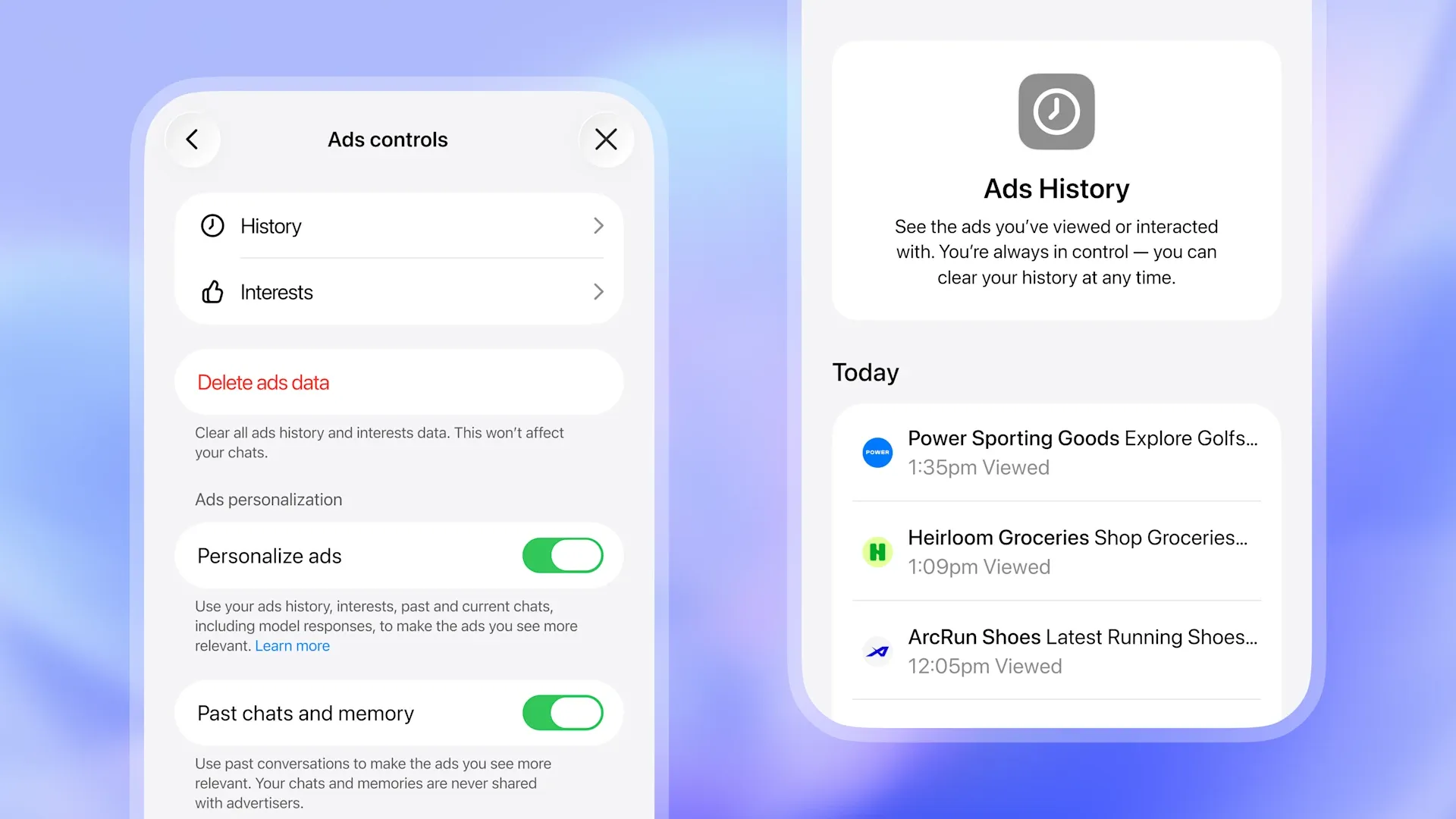
Users get controls to dismiss ads, provide feedback, see why an ad is shown, delete ad data, and manage personalization. If you do not want ads, OpenAI points to upgrading tiers, or opting out on Free in exchange for fewer daily free messages.


