
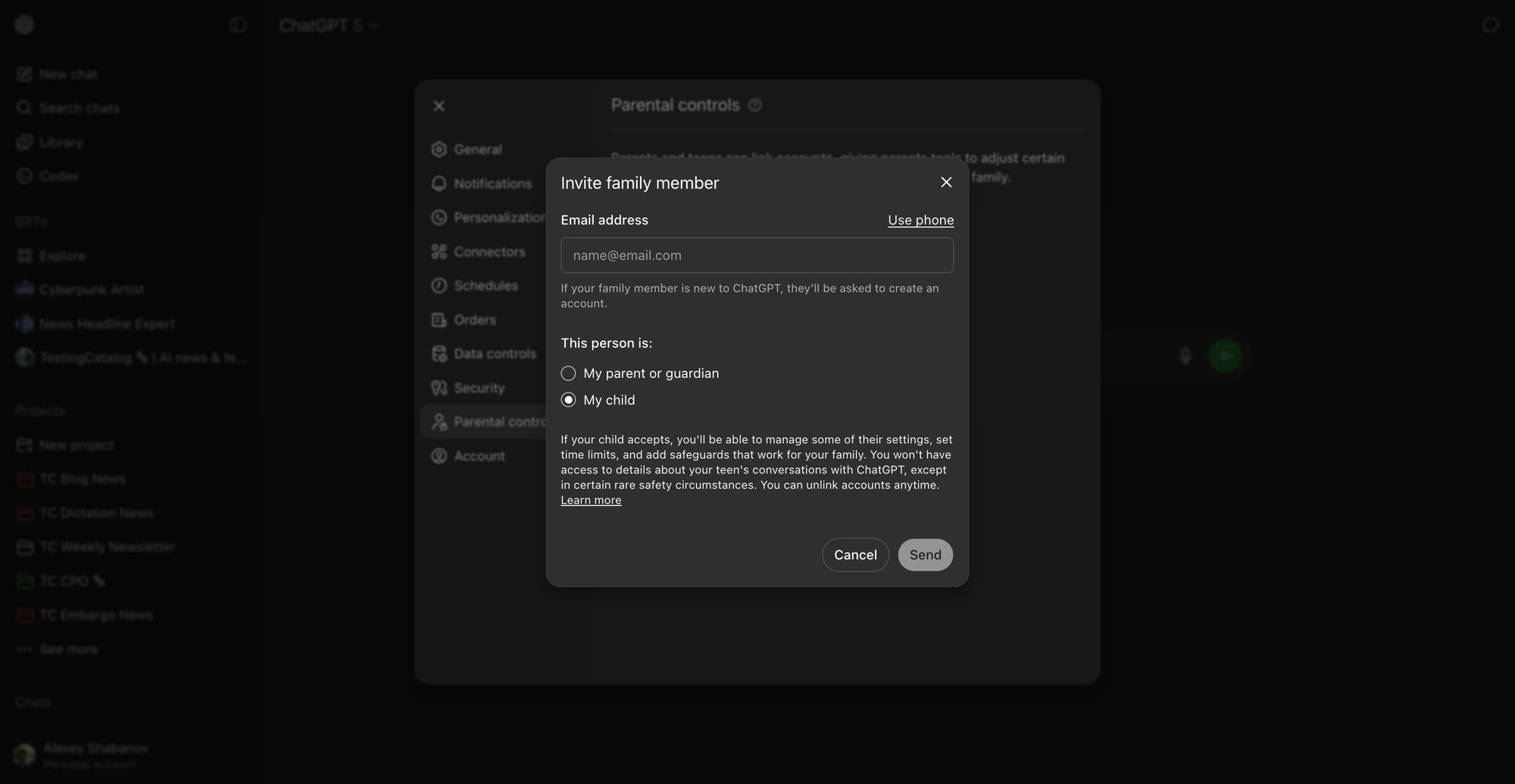
OpenAI has announced the introduction of parental controls for ChatGPT, allowing families to link a parent account to a teen account and manage usage through a new Settings flow. This feature targets teens aged 13 to 17, requiring guardian consent. The rollout is beginning now across all ChatGPT platforms.
Parents will have access to switches for voice mode, image generation, memory, and training use. They can also set usage limits and quiet hours. Linked teen accounts will benefit from stronger default safety filters, and teens will not be able to override guardian settings.
Introducing parental controls in ChatGPT.
— OpenAI (@OpenAI) September 29, 2025
Now parents and teens can link accounts to automatically get stronger safeguards for teens. Parents also gain tools to adjust features & set limits that work for their family.
Rolling out to all ChatGPT users today on web, mobile soon. pic.twitter.com/kcAB8fGAWG
OpenAI states that an age-aware profile will apply teen safeguards when a user is identified as under 18 or when age is unclear. The system is designed to reduce exposure to mature content and risky prompts, with crisis-related content undergoing stricter checks.
Why this matters: ChatGPT is moving from policy to enforcement, providing guardians with verifiable control instead of relying on device-level blocks. This update aims to build trust, ensure compliance with teen data rules, and offer clearer accountability.
How it works: A parent sends an invite, links accounts, and selects controls. They can limit or turn off chat review, image tools, and voice. Content filters are tightened by default for the linked teen profile, and changes take effect account-wide.
The feature set includes:
- Account linking
- Configurable limits
- Stricter defaults for teens
- Clearer data-use choices
These controls are available in Settings and apply to both web and mobile clients once enabled in the family account.
OpenAI’s background: ChatGPT permits use by individuals aged 13 to 17 with consent. The company has published youth safety policies, added opt-outs for training data, and developed stronger content classifiers. This release extends those commitments into product controls for families.


