
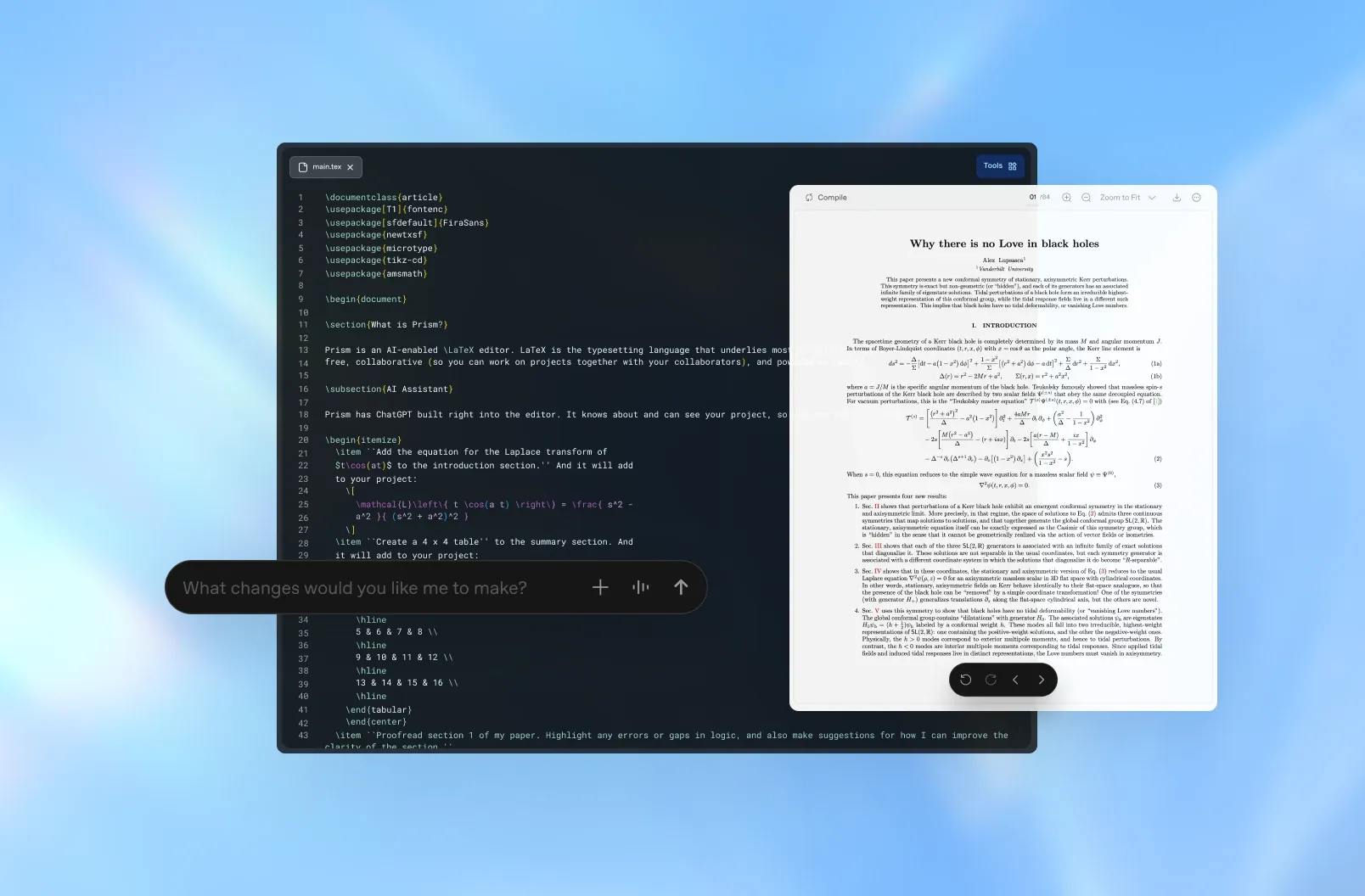
OpenAI has introduced Prism, a free, cloud-based, LaTeX-native workspace designed for scientists who write and collaborate on research. It is currently available for anyone with a ChatGPT personal account, offering unlimited projects and collaborators. OpenAI plans to extend access to ChatGPT Business, Enterprise, and Education organizations "soon."
Introducing Prism, a free workspace for scientists to write and collaborate on research, powered by GPT-5.2.
— OpenAI (@OpenAI) January 27, 2026
Available today to anyone with a ChatGPT personal account: https://t.co/9mTLAbxPdH pic.twitter.com/GJOIipU3hx
Prism integrates GPT-5.2 Thinking directly into the manuscript workflow, allowing the model to interact with the paper’s structure, equations, references, and surrounding context, rather than functioning as a separate chat window. OpenAI claims that Prism can draft and revise with full-document context, reason over equations and citations, pull in related literature (including from arXiv), convert whiteboard equations or diagrams into LaTeX, apply in-place edits upon request, and support optional voice-based edits for quick changes.
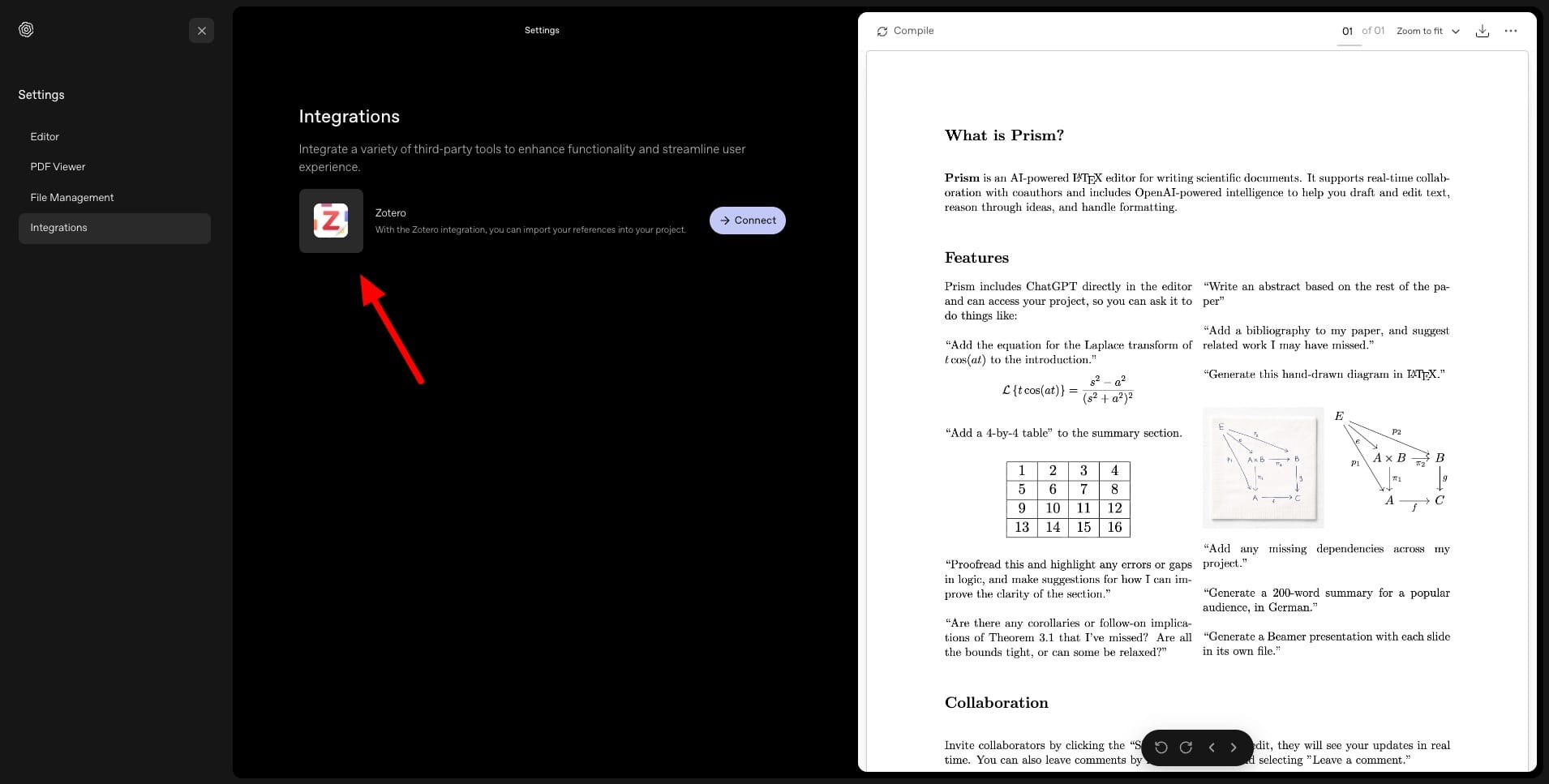
OpenAI positions Prism as a solution to the fragmented nature of day-to-day research tools, which often require moving between editors, PDFs, LaTeX compilers, reference managers, and separate AI chats. Prism aims to reduce collaboration friction by eliminating the need for local LaTeX setup and minimizing version conflicts through real-time co-authoring.
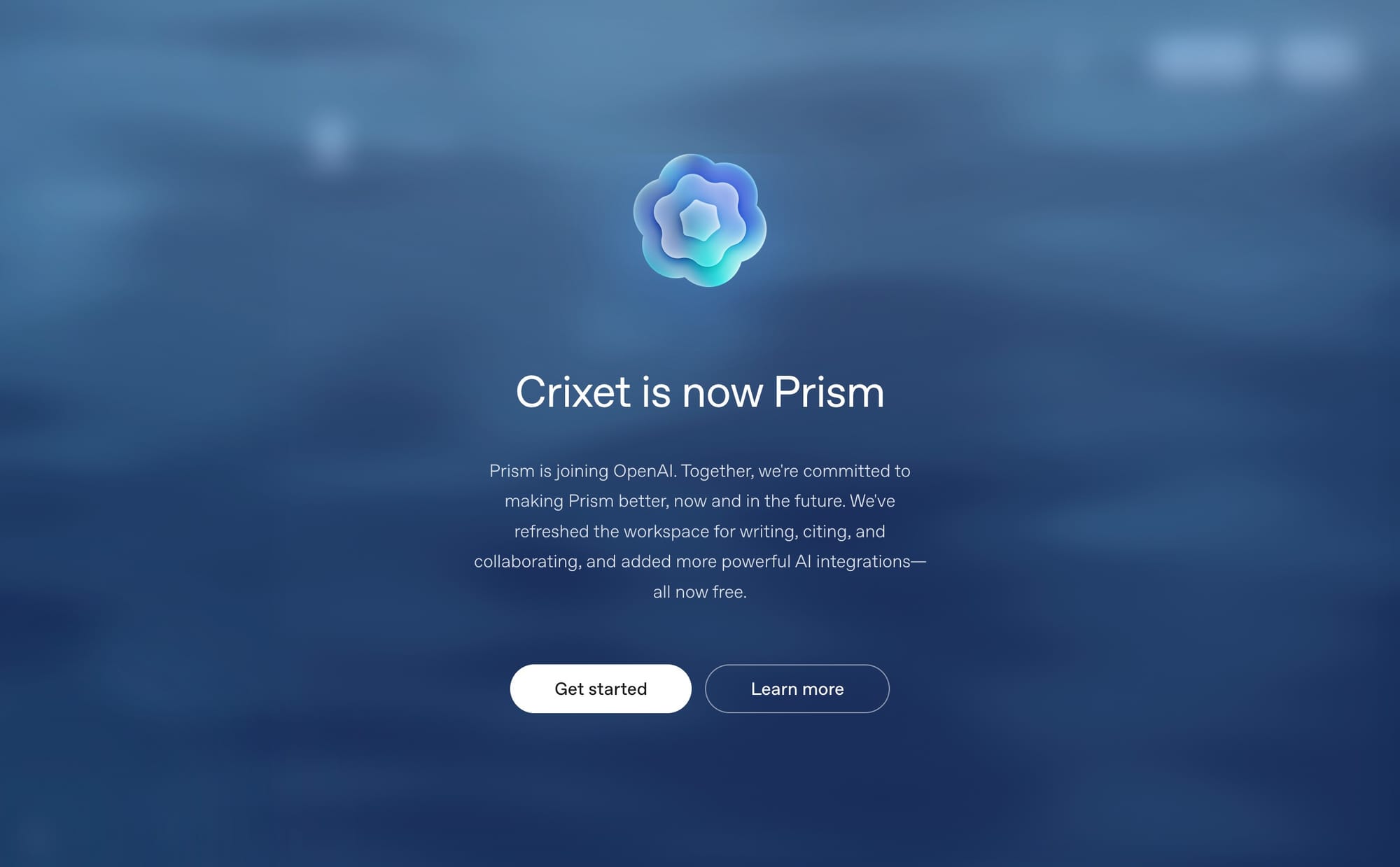
The product is built on Crixet, a cloud LaTeX platform that OpenAI acquired and later developed into Prism. Early social reactions highlight the "LaTeX-first" approach, the no-seat-limit collaboration model, and the potential for maintaining reasoning, writing, and formatting within a single shared project space.


