
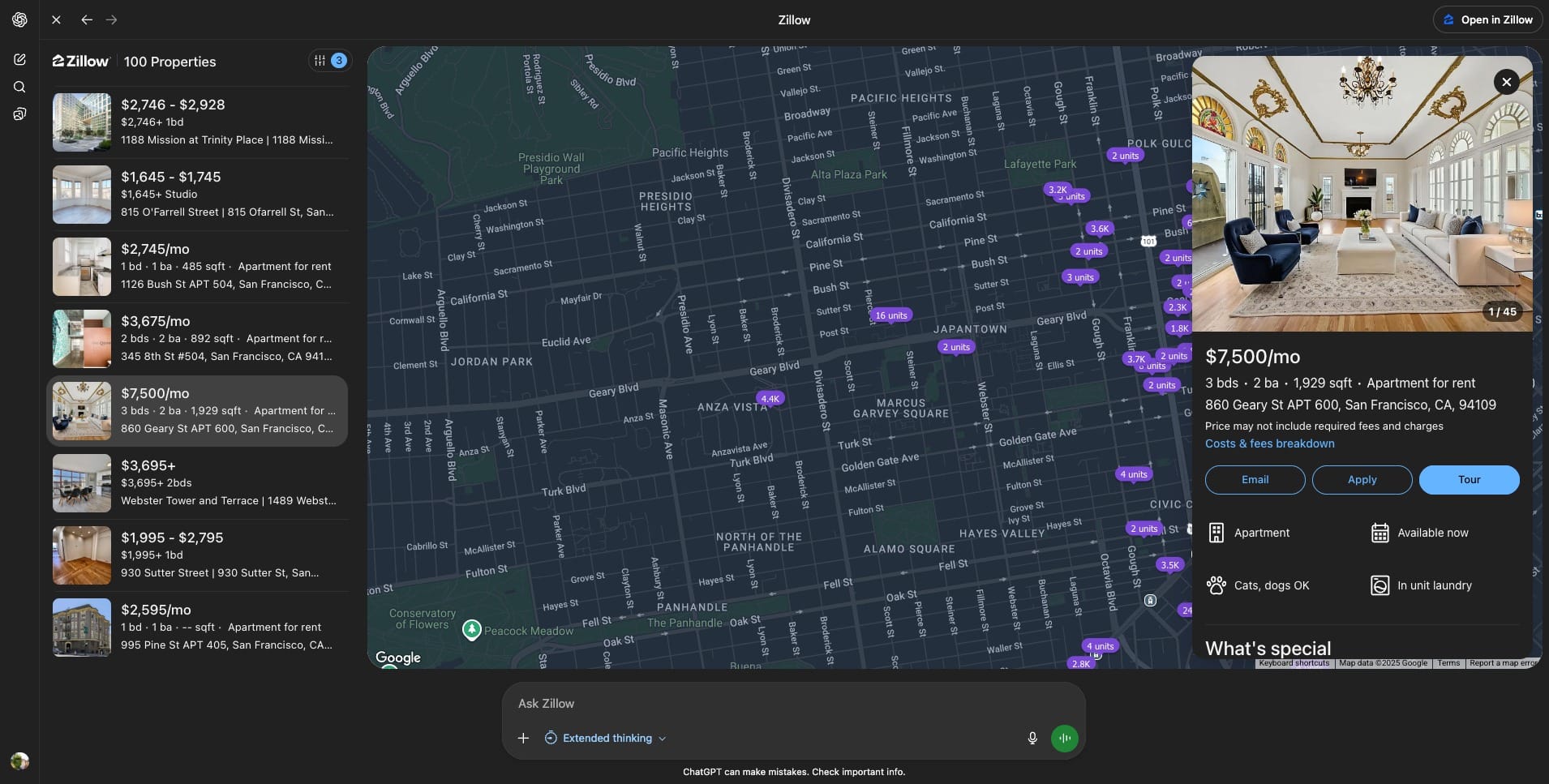
OpenAI has launched apps inside ChatGPT along with a preview of an Apps SDK. These apps are now available for all logged-in users outside the European Union on Free, Go, Plus, and Pro plans. Initial partners include well-known names such as Booking.com, Canva, Coursera, Expedia, Figma, Spotify, and Zillow. The rollout is currently in English, with support for the EU and a public directory with monetization options expected later this year.
BREAKING 🚨: OpenAI introduced Apps in ChatGPT! Apps are built on top of the MCP standard, and Apps from selected partners will be available on ChatGPT today already! https://t.co/AUJRe9UTcA pic.twitter.com/dZDULGAbLy
— TestingCatalog News 🗞 (@testingcatalog) October 6, 2025
Users can invoke apps by name or have them suggested in context. These apps render interactive user interfaces like maps, playlists, and slides directly within the chat. The first use of an app prompts a connection screen that discloses data sharing practices. OpenAI plans to introduce granular data category controls later this year.
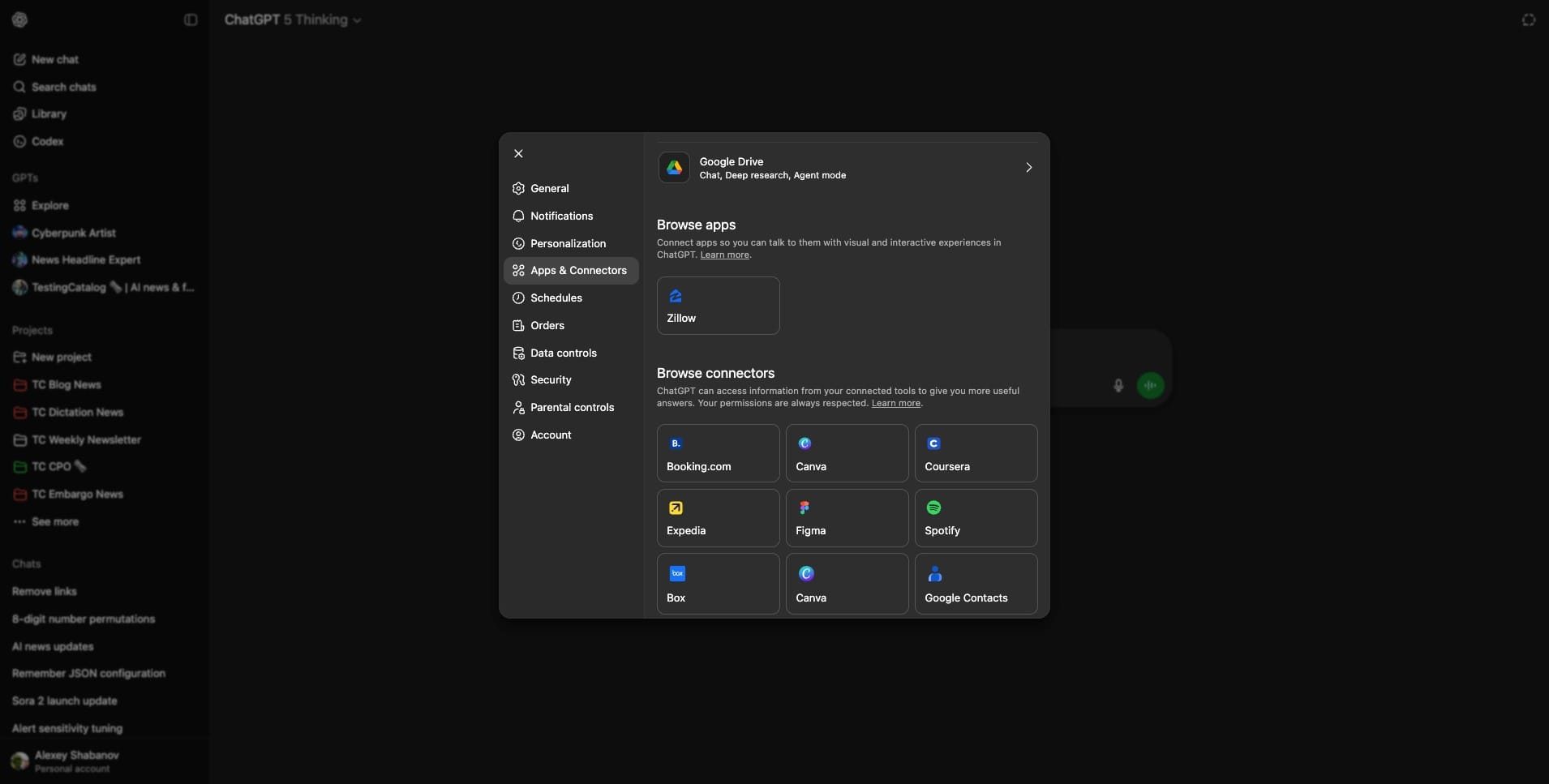
For developers, the Apps SDK is available in preview. It builds on the Model Context Protocol, is open source, and allows teams to define both chat logic and interface while connecting to their own backends. Testing can be conducted in Developer Mode, with submissions opening later this year. Safety rules require developers to be verified, have clear privacy policies, and ensure minimal data collection.
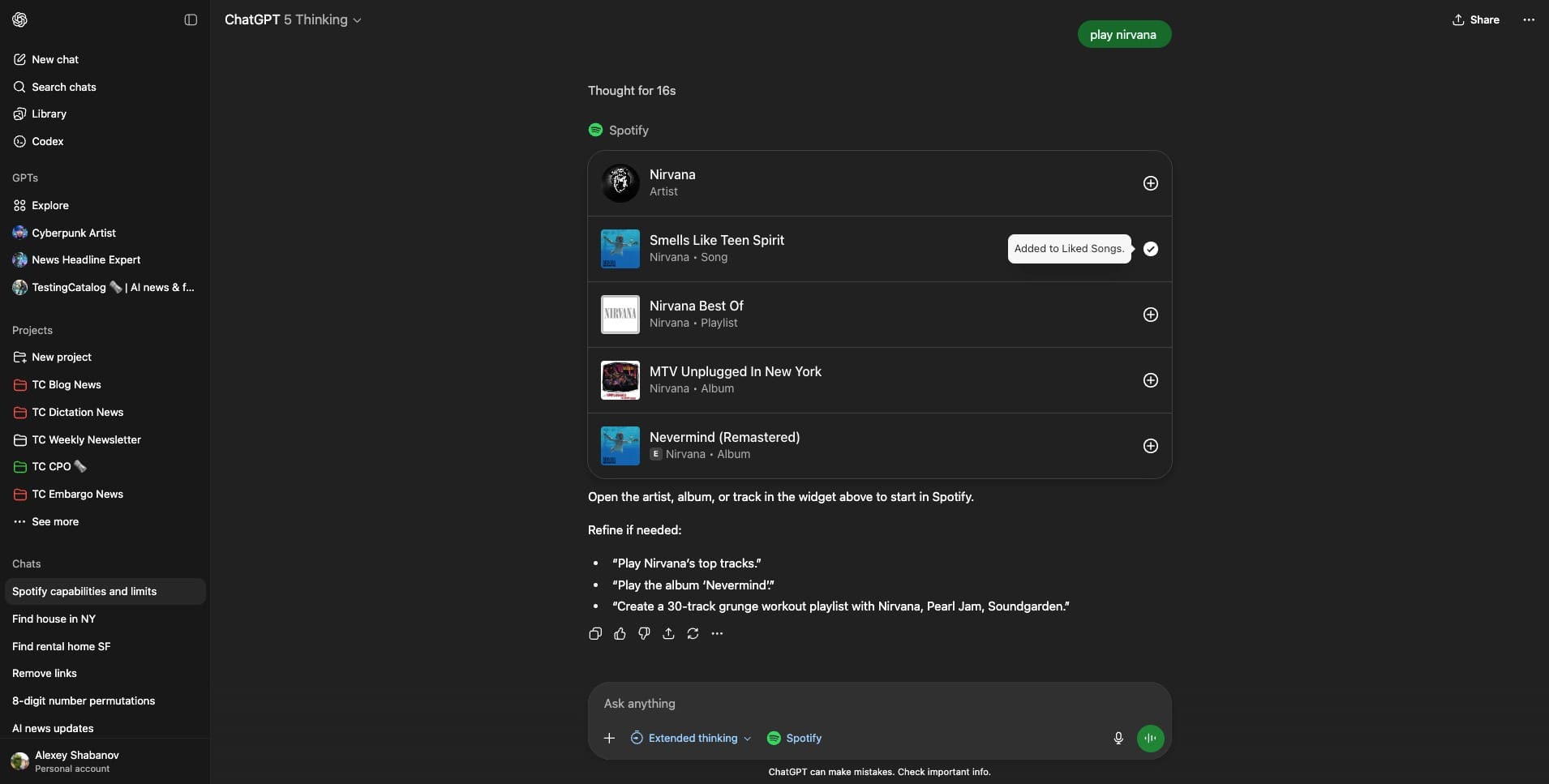
This development marks a shift from the 2023 plugins and early GPTs. Apps introduce portable MCP-based user interfaces inside ChatGPT and are linked to forthcoming monetization and listings. Commerce flows are connected to OpenAI’s Agentic Commerce Protocol and Instant Checkout.
Feedback from early partners has been instrumental in shaping the SDK. For instance, Zillow describes the ChatGPT experience as a groundbreaking approach for real estate discovery, indicating a strong pull in this category.
OpenAI is positioning ChatGPT as a universal app front end. This rollout aligns with recent platform developments such as MCP support across APIs, the Responses API for agentic workflows, and ACP for transactions within chat.


