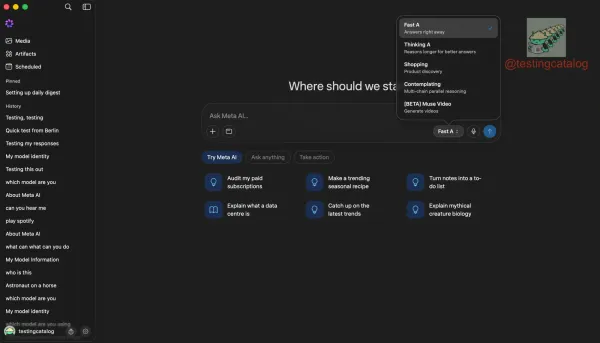

OpenAI is working on a new Scratchpad feature for Codex, which will allow users to trigger multiple Codex tasks in parallel from a new Scratchpad UI. It will become very instrumental in the upcoming Codex Superapp, where you will be able to trigger a broader range of tasks to achieve your goals.
OpenAI is working on a new experimental feature for Codex called Scratchpad.
— TestingCatalog News 🗞 (@testingcatalog) April 11, 2026
Users will be able to start multiple Codex chats from a TODO list view, which will be executed in parallel.
It will become very instrumental in the upcoming Codex Superapp, where you will be able to… pic.twitter.com/YFquUwwRMx
Besides that, OpenAI is moving toward consolidating its product lineup into a single unified application built on top of Codex, its most recent desktop app. Code references discovered within the existing Codex client point to expanded capabilities that go well beyond software engineering tasks, suggesting the app could eventually absorb ChatGPT and Atlas browser into one platform. Among the most notable findings is a heartbeat system, a mechanism for maintaining persistent connections with long-running tasks, which closely mirrors infrastructure already used by OpenClaw.
small part of the big plans
— Tibo (@thsottiaux) April 10, 2026
The presence of heartbeat references is particularly telling because it implies OpenAI may be building support for managed agents: autonomous processes that can run in the background, check in periodically, and execute multi-step workflows without constant user input. Anthropic is already developing its own managed-agent system under the codename Conway, designed to let Claude handle complex tasks autonomously within its desktop app.
Still at the office. pic.twitter.com/zbhqhUeSr6
— jason liu (@jxnlco) April 11, 2026
OpenAI adopting a comparable approach would represent a natural competitive response, especially given the fact that OpenClaw's founder joined the company. For developers and power users who currently juggle multiple OpenAI products, a single surface that handles chat, code generation, and web research through persistent agents could drastically reduce friction.
Things are about to get wild ❄️
— pash (@pashmerepat) April 10, 2026
Separately, OpenAI employees have been posting snowflake emojis on social media, fueling speculation about a model release codenamed Glacier, believed to be GPT-5.5. If the super app launch coincides with a new model, OpenAI could deliver both a platform and capability upgrade simultaneously, a pattern the company has used before to maximize impact.
Super
— jason liu (@jxnlco) April 10, 2026
Given OpenAI's tendency toward rapid, sometimes surprise releases, a rollout could come as soon as the coming days. The broader strategic picture is clear: the AI industry is converging on all-in-one desktop applications powered by autonomous agents, and OpenAI does not intend to fall behind.