
Mistral AI has announced the launch of Forge, a specialized system designed for enterprises to build artificial intelligence models grounded in proprietary organizational knowledge. Forge is now available to select enterprise partners globally, including organizations such as ASML, DSO National Laboratories Singapore, Ericsson, the European Space Agency, HTX Singapore, and Reply. The target audience comprises large enterprises and institutions operating in sectors that require deep domain expertise, regulatory compliance, and secure handling of internal data.
Today, we’re introducing Forge, a system for enterprises to build frontier-grade AI models grounded in their proprietary knowledge.
— Mistral AI (@MistralAI) March 17, 2026
🌎 Forge bridges the gap between generic AI and enterprise-specific needs. Instead of relying on broad, public data, organizations can train models… pic.twitter.com/4YQ3ADvixr
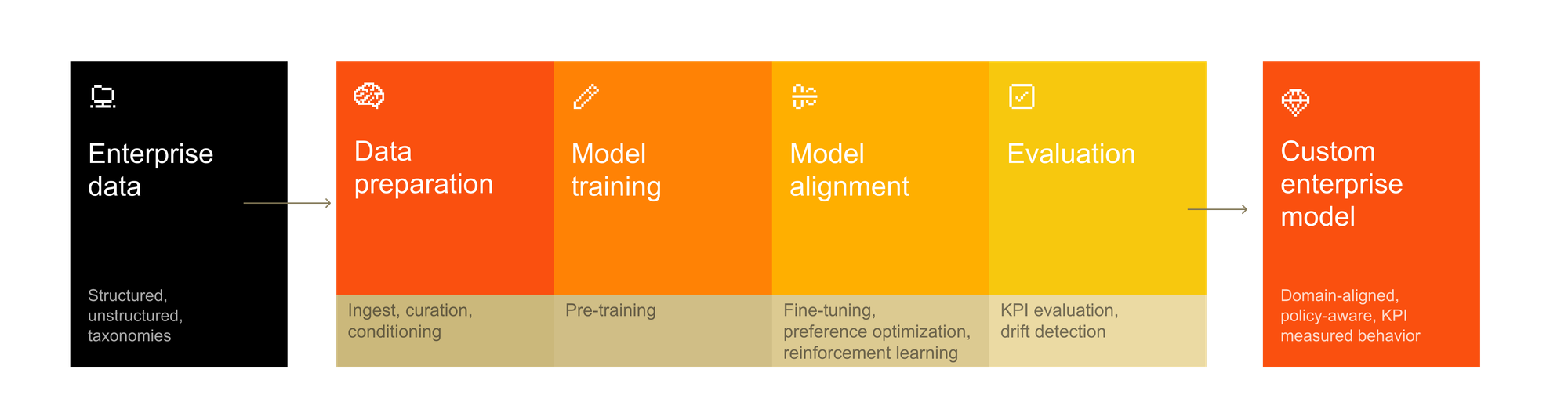
Forge is built to address the limitations of generic AI models that are primarily trained on public data. Instead, it provides the infrastructure for organizations to pre-train, post-train, and reinforce models on their proprietary documentation, structured data, codebases, and operational records. Technical features include support for both dense and mixture-of-experts architectures, enabling optimization for efficiency or scale, and multimodal input capabilities to handle text, images, and other data formats. The system is agent-first, allowing both human teams and autonomous agents to customize and fine-tune models using plain English, with built-in evaluation and reinforcement learning pipelines that ensure models stay aligned with evolving internal standards and benchmarks.
Mistral AI, the company behind Forge, is recognized for developing advanced large language models and AI infrastructure tailored for enterprise and government applications. By providing Forge, the company aims to give organizations control over their AI systems, ensuring compliance, operational alignment, and autonomy. Early users from regulated and technical industries are piloting Forge to address complex challenges in engineering, compliance, and operations, with feedback highlighting its alignment with internal knowledge and operational needs.


