
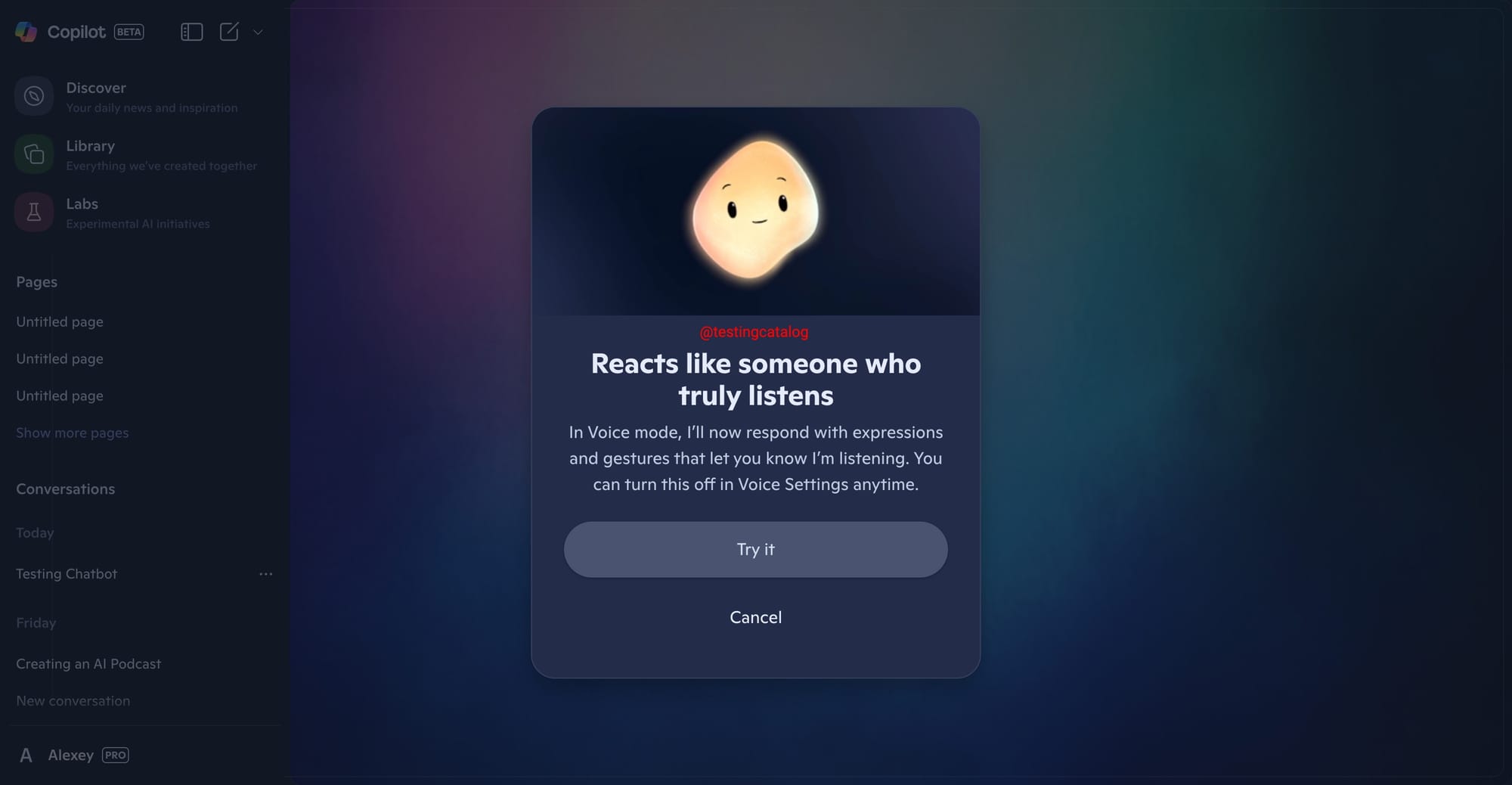
Microsoft is progressing with further UI refinements for Copilot, now testing a layout where the profile menu shifts to the lower left sidebar—exactly mirroring the design trend already seen in ChatGPT, Gemini, Grok, and Claude. This move further illustrates the ongoing consolidation of user interface conventions across major AI platforms, where even profile menu placement becomes nearly identical. Such changes help users quickly adapt when switching between tools but also highlight how little differentiation remains at the UI level.
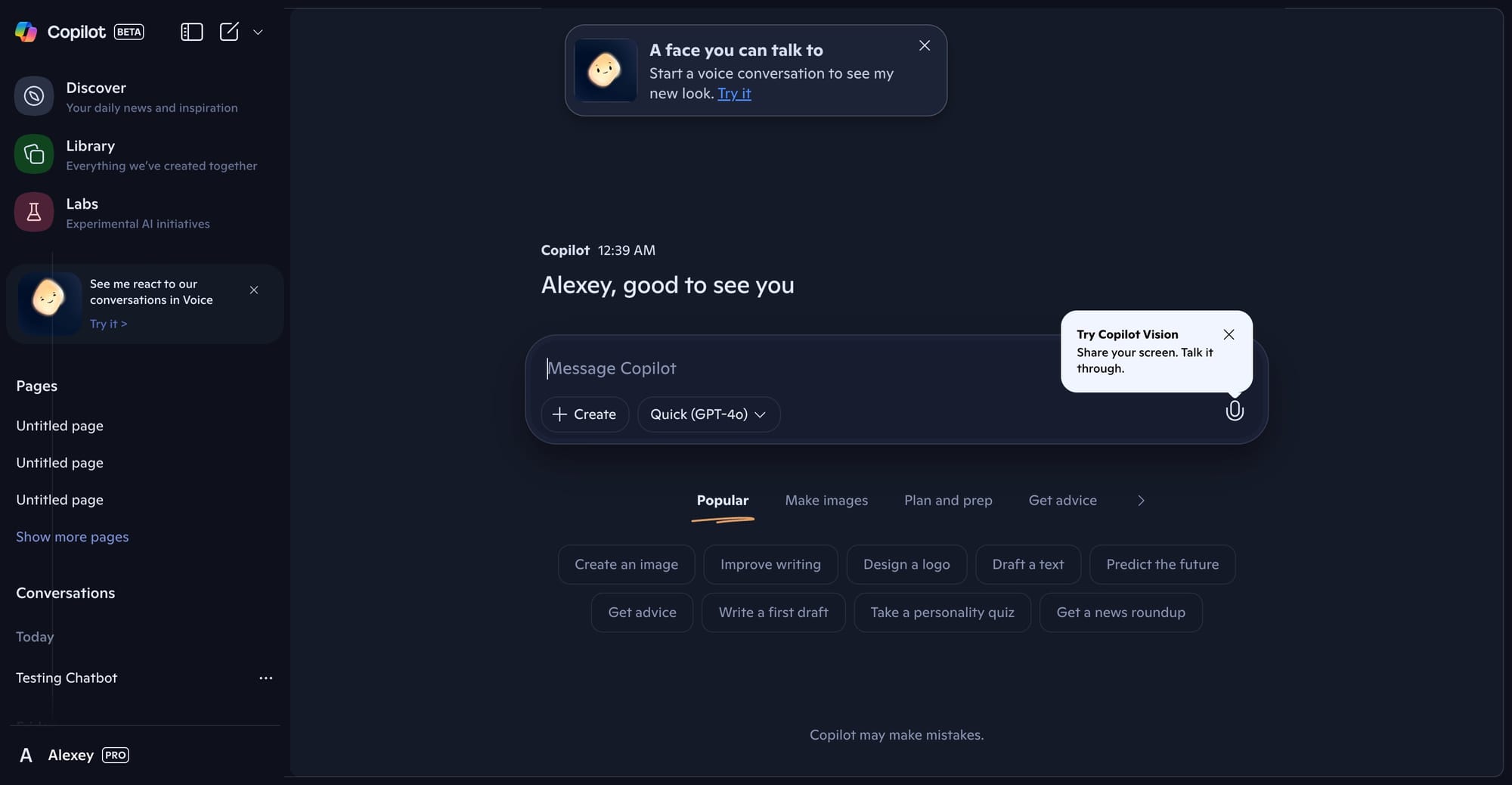
A new Copilot appearance is also being prepared for wider release. Currently limited to experimental access within Copilot Labs and only available to select US users, this feature allows toggling a voice mode with a responsive avatar. At the moment, the avatar shows up in blue, but leaks suggest a yellow version may arrive when the feature exits beta, aligning with Copilot’s branding. The experience is still in early testing, and its broader utility will depend on how users respond once it’s available to more people.
Previous work on Copilot “Characters” - custom personas or visual avatars - hasn’t surfaced in recent builds, leading to speculation that the project is either on hold or being developed in isolation. There’s no evidence of imminent launch, but the possibility of a surprise reappearance can’t be ruled out.
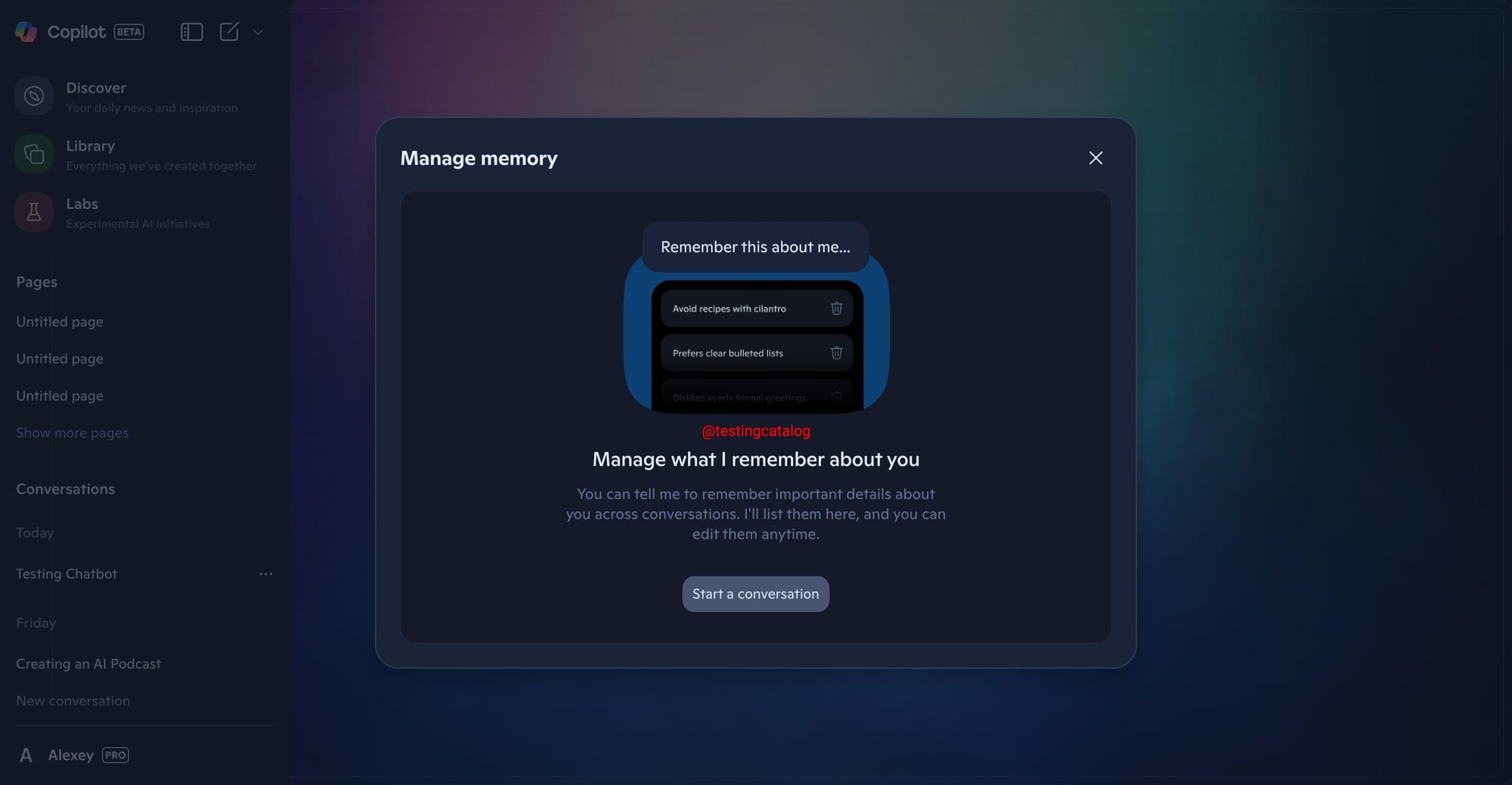
Microsoft is also expanding memory controls, allowing users to review and delete what Copilot remembers about them, similar to features already found in ChatGPT. This is likely to be important for those concerned with privacy and data retention. No public timeline is confirmed, but such controls will likely be standard as Copilot aims to match competitors on user autonomy.
These updates fit Microsoft’s broader strategy of aligning Copilot with leading AI assistants on both usability and trust, even if it means their products feel increasingly similar at the surface level. As always, TestingCatalog will continue to track rollout progress and look for any official announcements or emerging feedback from early testers.


