
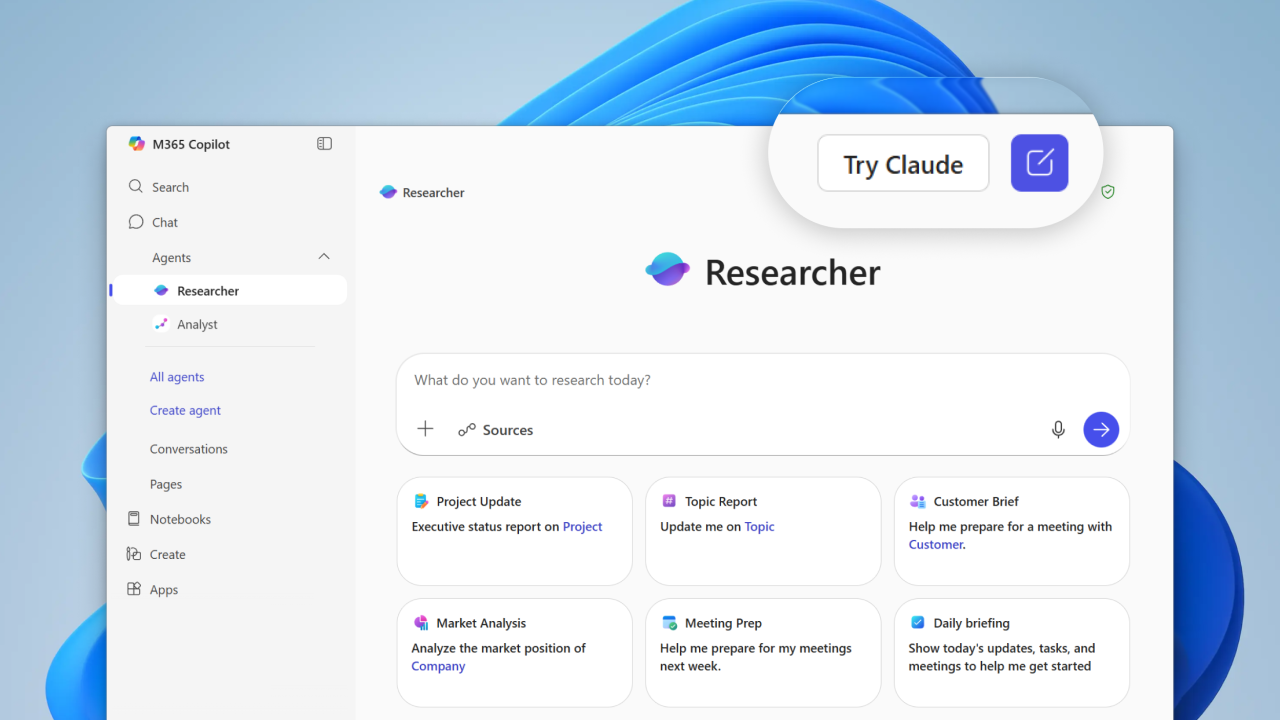
Microsoft is introducing Claude Sonnet 4 and Claude Opus 4.1, developed by Anthropic, to Microsoft 365 Copilot, impacting millions of enterprise users who rely on Microsoft’s productivity suite. This launch specifically targets organizations using Microsoft 365 Copilot, offering them additional AI model options for tasks that require deep reasoning, research, and workflow automation. The rollout begins today through the Frontier Program for customers with Copilot licenses, who must opt in to access these models. Availability is currently limited to organizations enrolled in this program.
Today we’re expanding Microsoft 365 Copilot with the addition of Anthropic’s Claude models. Customers can now use both OpenAI and Claude — starting in Researcher and Copilot Studio, and coming to more experiences soon.
— Satya Nadella (@satyanadella) September 24, 2025
Our multi-model approach goes beyond choice. It's all about… pic.twitter.com/IwHQfczs86
Claude Sonnet 4 and Opus 4.1 are known for their advanced language reasoning capabilities and have been recognized for handling complex, multi-step research and data analysis. Compared to previous options in Copilot, these models offer a new level of flexibility, allowing users to select the model that best fits their work—from creating market strategies to automating workflows. In Copilot Studio, users can now build, orchestrate, and manage enterprise agents powered by these Anthropic models, supporting specialized and multi-agent tasks.
Microsoft’s partnership with Anthropic reflects a strategy to expand AI model choice within its enterprise ecosystem. Microsoft continues to integrate top-tier AI models from across the industry to give business users greater control and customization. These models are hosted outside Microsoft’s environment and governed by Anthropic’s terms, which has prompted discussions among IT administrators regarding compliance and security. Early feedback from enterprise technology teams points to the value of increased model diversity, though some are closely monitoring data privacy implications.


