
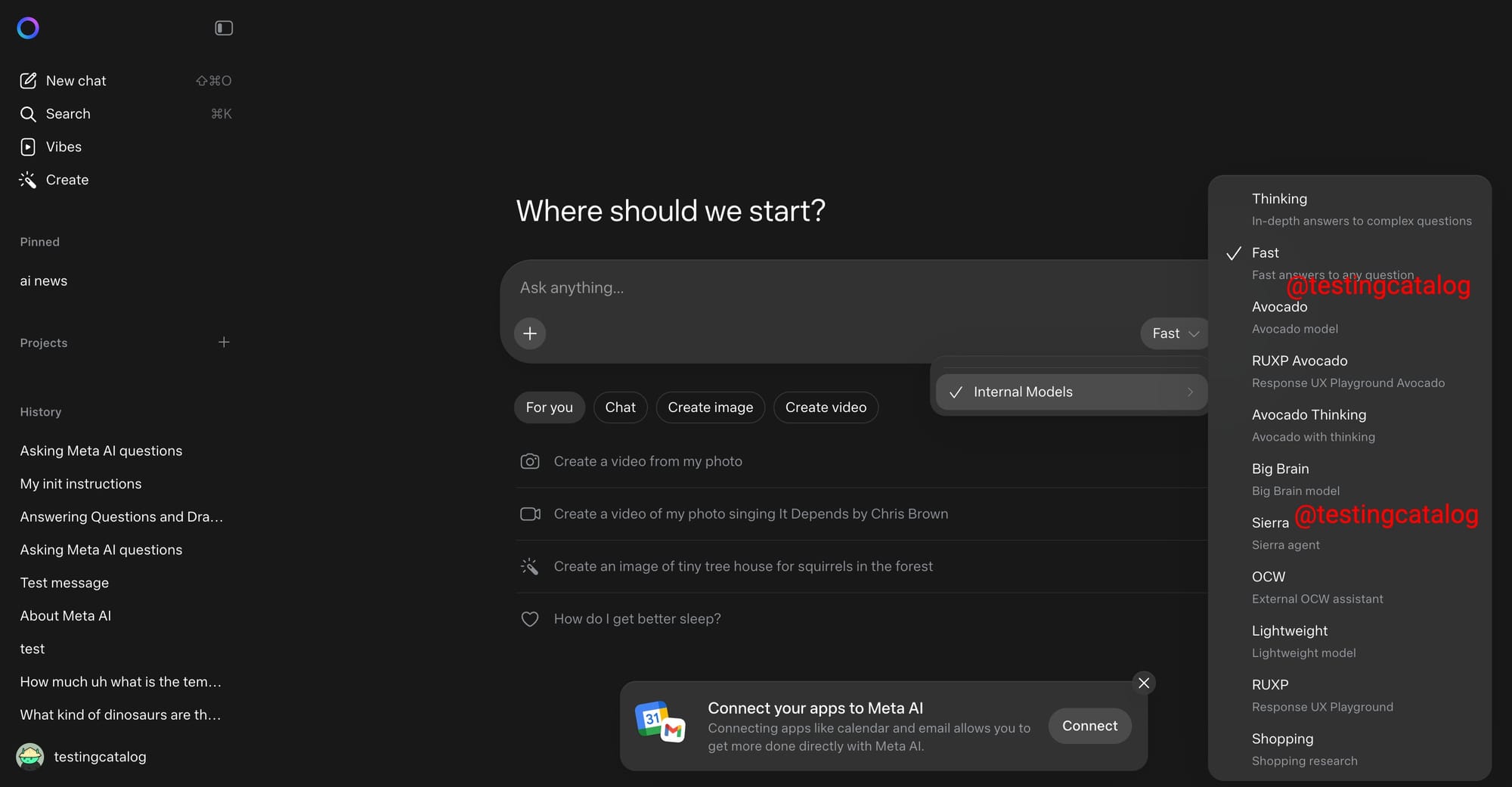
Meta AI is reportedly preparing to release new models named Avocado. Recently, Meta refreshed its website and shipped an app update where users have seen a new effort selector to choose between Fast and Thinking modes. On the web, some users have also spotted a new widget prompting them to connect apps like Gmail and Google Calendar. Notably, Microsoft Outlook and Outlook Calendar appear as options too.
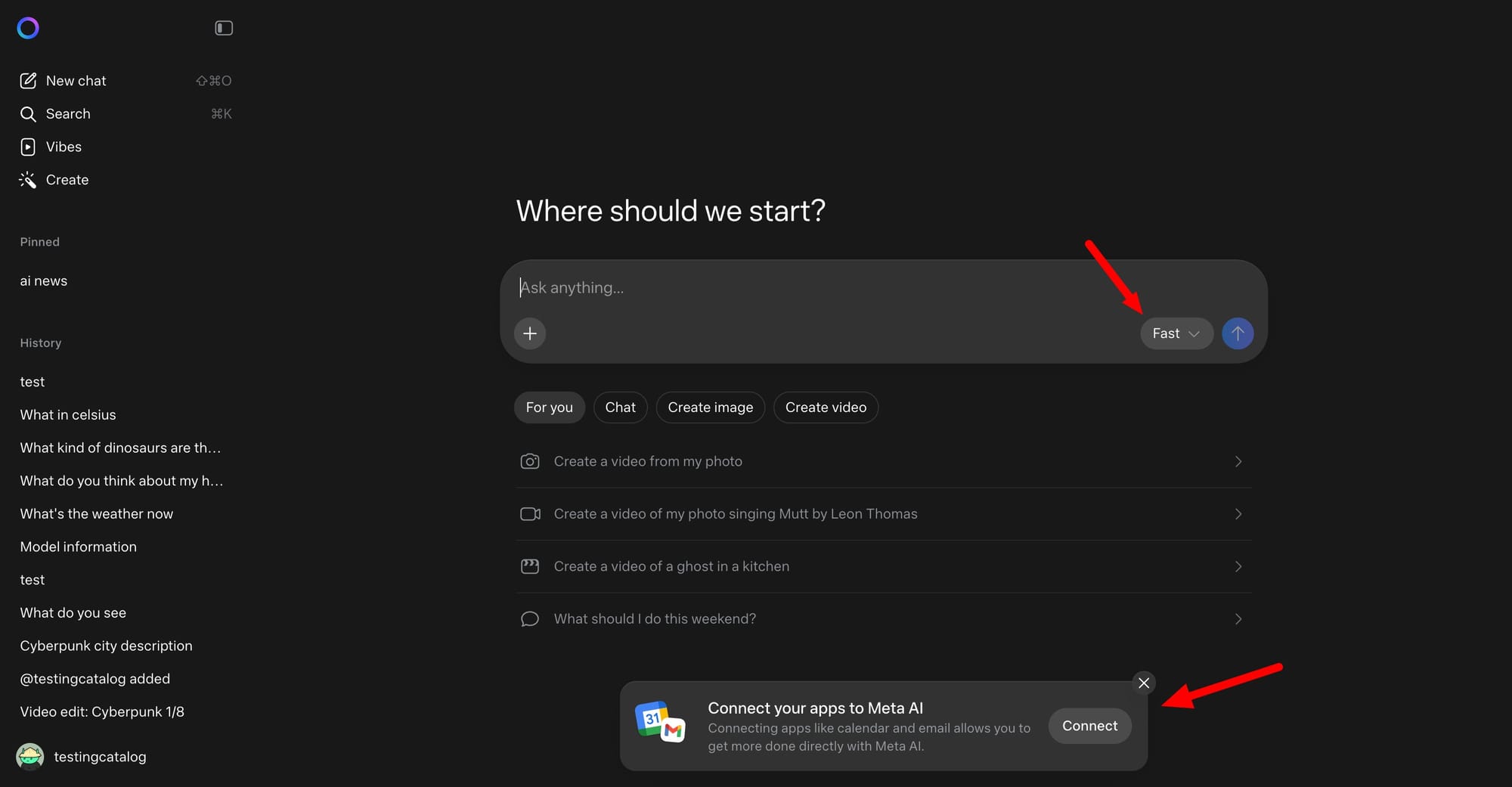
This looks similar to connectors in other apps: integrations that would let Meta AI pull information and operate tools via MCPs. If that reading is correct, it would mean MCP support is finally coming to Meta AI. A Memory section has been added to the settings menu as well, and Meta AI users should already be able to see and test all these features.
What’s also notable is that Meta seems to have revamped, or possibly rebuilt, the website, and the new build appears to include a lot of additional functionality.
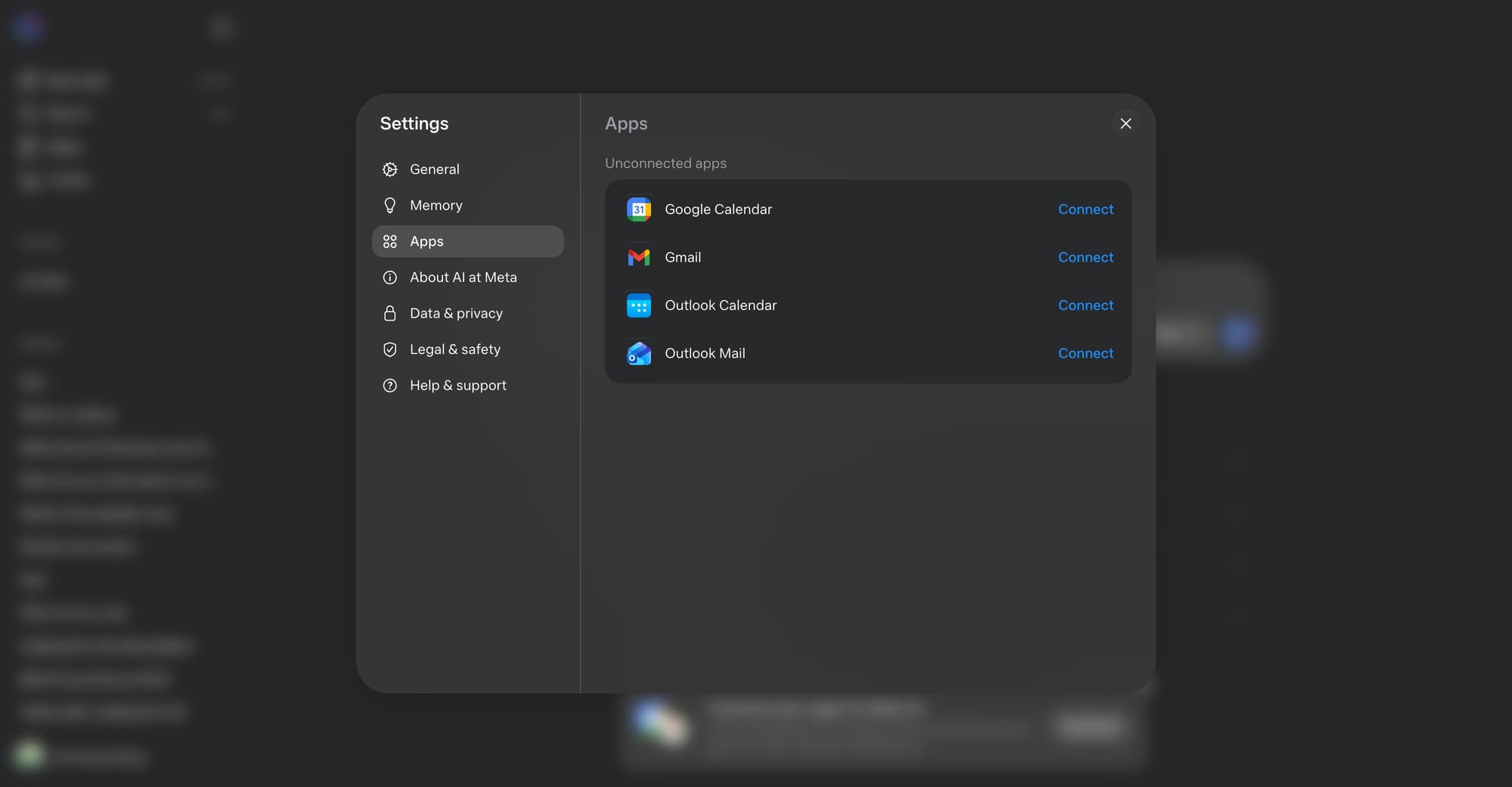
First, as we know, Meta acquired Manus AI recently, and there are mentions of a Manus AI agent and a browser agent being in the works. That suggests Manus-style agents could come directly to Meta AI. There is also a new menu in development called Tasks, where users would be able to schedule recurring executions of Meta AI, similar to scheduled prompts in other tools. In other words, scheduled tasks seem to be on the roadmap, letting users run prompts recurrently. Code traces also suggest they are working on voice agent support.
These voice agent experiences appear to reference a previous implementation of Meta AI agents. Interestingly, for testing, they were using the personality of Mark Zuckerberg. However, it also looks like the voice and browser agent features are not at a final stage of implementation yet.

Another detail tied to the Manus AI integration is that Meta AI appears to be testing top models from other labs, including Gemini, ChatGPT, and Claude. These models reportedly show up in the code and are being used internally for testing.
Now to the more interesting part: there seem to be multiple internal modes used for development and testing. Beyond Fast and Thinking, there are traces of a new Avocado model, shown in two forms: Avocado and Avocado Thinking. Only Avocado is responding currently. The responses so far are not great, but it’s unclear whether these answers are coming from an existing model via routing or from the actual new model. If it is the new model, then Meta would be in a very bad position and should not release it.
BREAKING 🚨: META AI IS PREPARING TO GET NEW AVACADO MODELS, MANUS BROWSER AGENT AND INTEGRATION WITH OPENCLAW!
— TestingCatalog News 🗞 (@testingcatalog) February 8, 2026
What’s new?
- Meta AI website got migrated to the new stack while retaining the same user experience.
- New effort selector, email, and calendar connectors are… pic.twitter.com/zSCN3WxUgg
It’s also unclear whether Meta is preparing to release these models around February. That seems plausible given that the revamped UI has already shipped, and the remaining step could be powering it with the new Avocado model.
Referencing the Manus browser agent, a model called Sierra appears to represent the browser agent. That makes it likely we’ll see it shipped soon, possibly at the same time as the rest of the models. Overall, Meta AI seems to be aiming to rebrand and expand the experience to close the feature gap with competitors, and browser agents could be part of that.
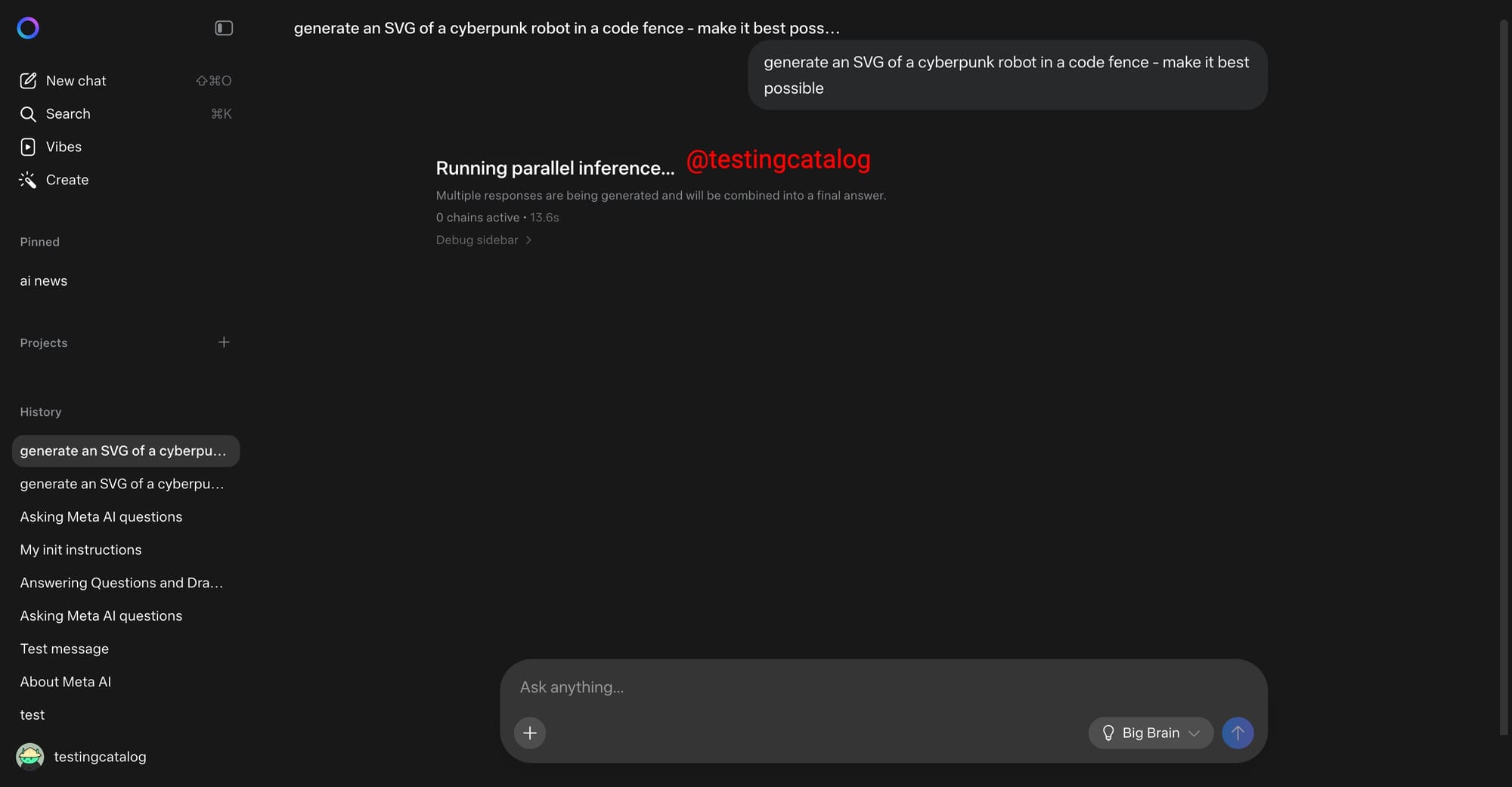
Another model referenced is Big Brain. This does not necessarily look new, since Meta previously had plans to implement something similar last year alongside Llama models. Conceptually, it resembles Grok Heavy: multiple model agents run in parallel, and the best output is selected as the response. If the upcoming Avocado model is actually good and this mode is powered by it, that could be a meaningful capability.
Beyond models, there are also test placeholders for UX called RUX Playground. These are likely used to test widget responses and UI layouts, especially since Meta AI appears to be building card-like UI elements similar to other chatbots (for example, weather or stock-market cards).
Meta products already support web search, and there also appears to be a shopping assistant in development. It’s not functional yet, but it’s evident that Meta AI is working on a shopping experience. That could be significant given Meta’s position across Facebook and Instagram, where people already buy and sell products.
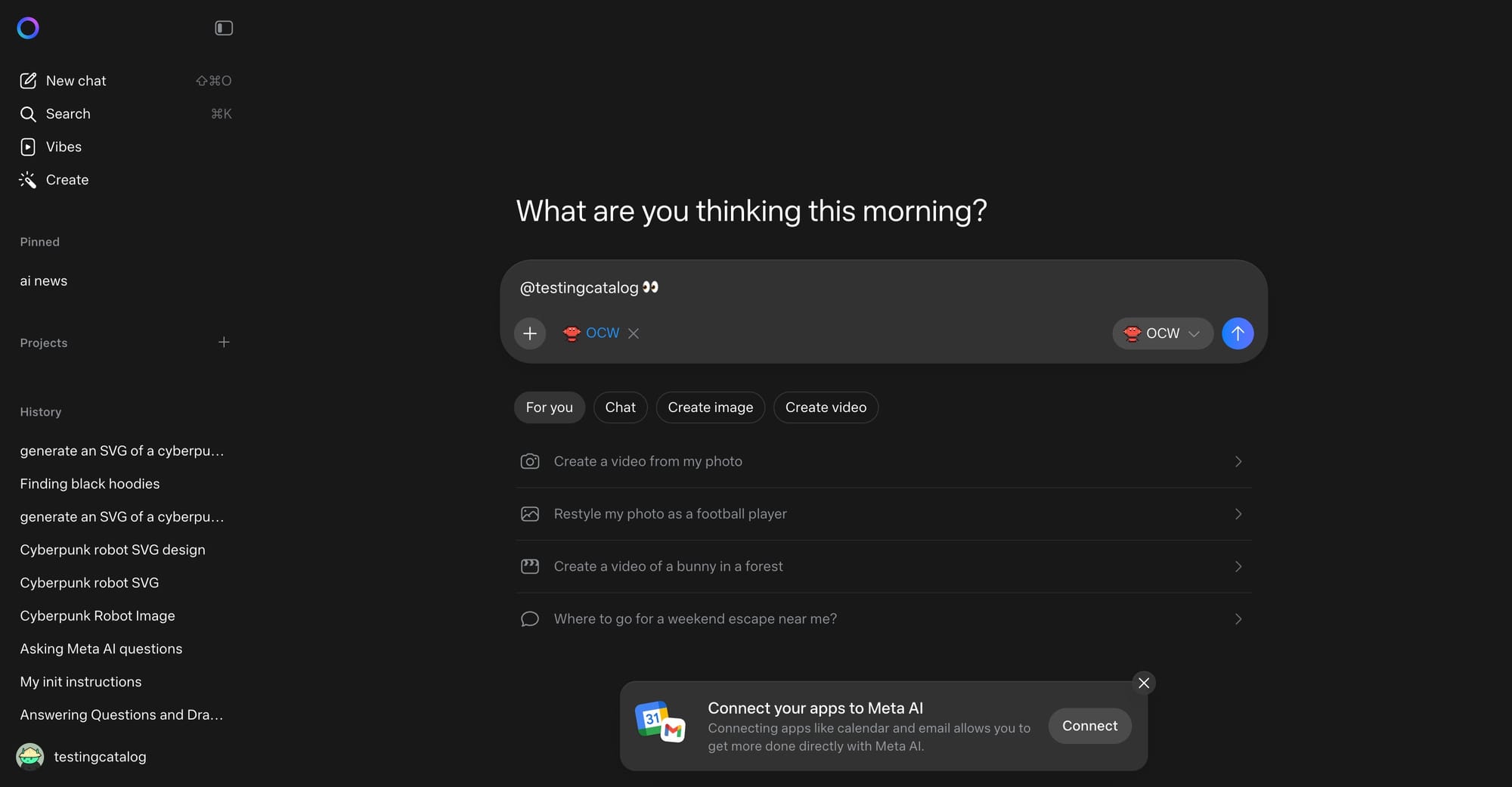
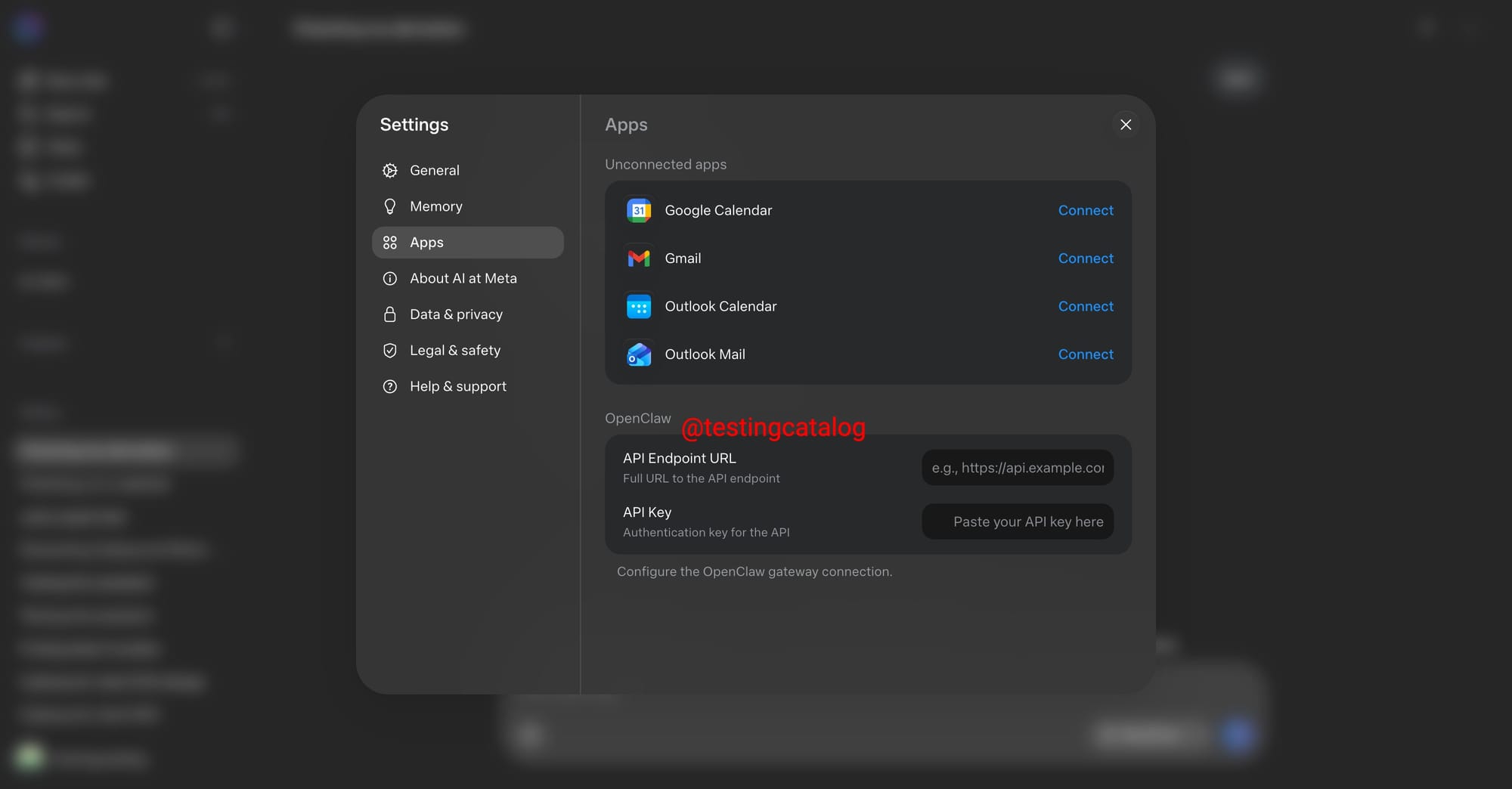
Finally, Meta AI appears to be working on something close to an OpenClaw integration. In particular, this mode would allow you to use any model with your own API key, a bring-your-own-key experience, potentially living inside app connectors. Across the code, it’s referenced as an OpenClaw agent. That could be a big deal given Meta’s history of open source, even if they no longer plan to open-source their proprietary Avocado model. It may also indicate they are preparing something for the open-source community, such as letting people power Meta AI with their own models, or offering tighter integration with OpenClaw bots that are currently growing quickly.
It’s still unclear whether we’ll see any Super Bowl ads from Meta today, and when exactly these new experiences and the Avocado model will ship. Still, there’s a high chance it happens very soon. Considering it was recently reported that Avocado was the best model among current top models, it might have strong chances. At the same time, we just got Opus 4.6 and GPT 5.3 Codex, so it’s possible that upcoming releases could overshadow what Meta has lined up. We’ll see!


