
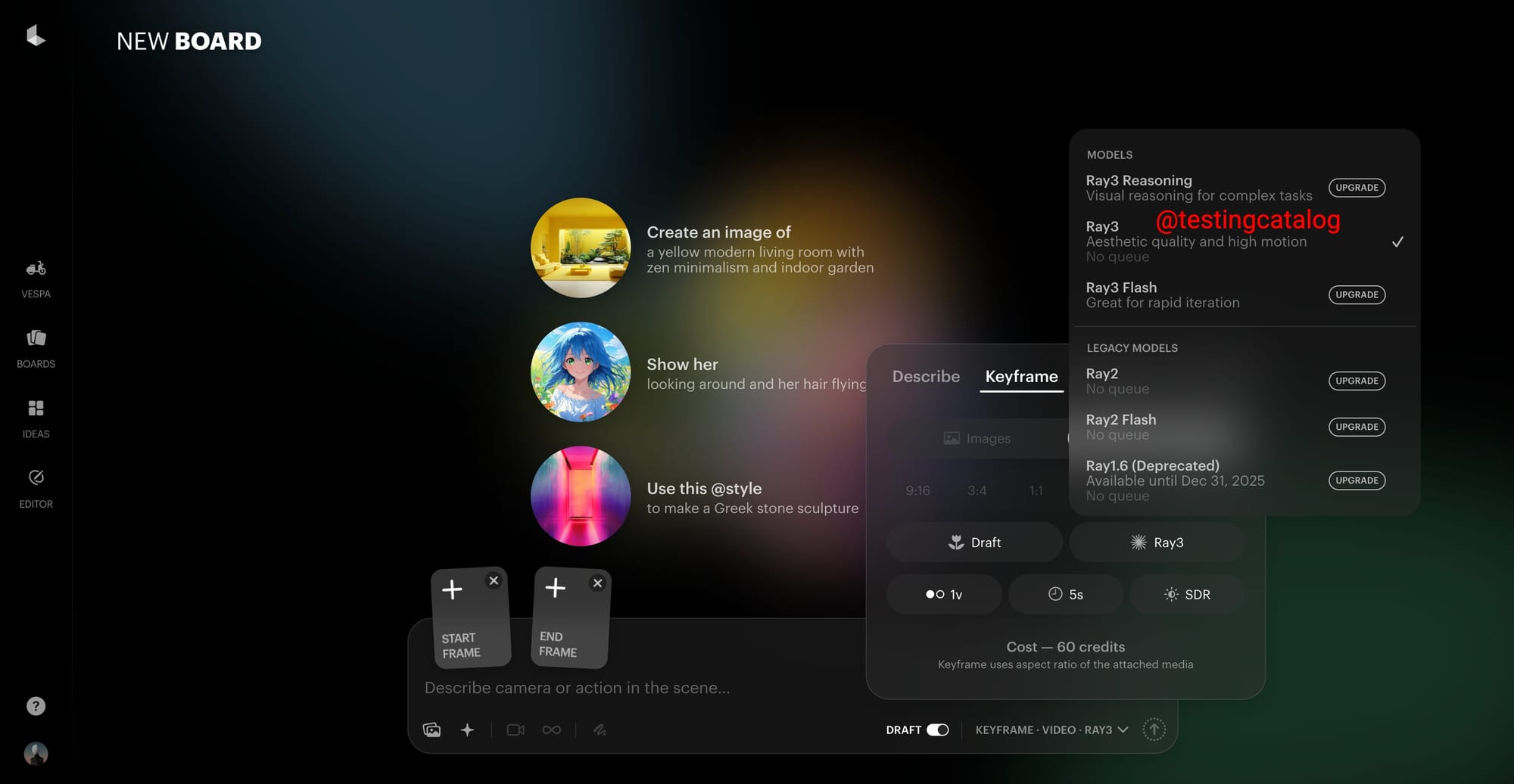
Luma Labs is moving forward with new unreleased AI models, including Ray 3 Reasoning (Already available) and Ray 3 Flash. These seem to be distinct variants of their Ray 3 model, targeting either rapid response or deeper, more complex reasoning tasks. While there is no official timeline, signs point to these models likely becoming available via API access, targeting users and developers who need either faster or more advanced generation modes for their projects.
Stop guessing. Start directing. Ray3 Modify is now in Dream Machine. Edit and reimagine videos with all-new precise keyframe and character reference controls. Your vision, reimagined. Supercharge your production with rapid retouching, precise element swapping, and scene redesign. pic.twitter.com/g1Z0Dh9oTO
— Luma AI (@LumaLabsAI) December 18, 2025
Within Luma Labs’ platform, the image model selector currently features their Atom model, but a new “Image V2” is also visible in the interface, though not yet accessible. The origins and architecture of Image V2 are still undetermined; speculation remains as to whether this is Luma’s own next-generation model or an integration of an external model, possibly from OpenAI, given the naming convention. If the latter, the choice of “V2” rather than “1.5” raises further questions about the underlying technology.
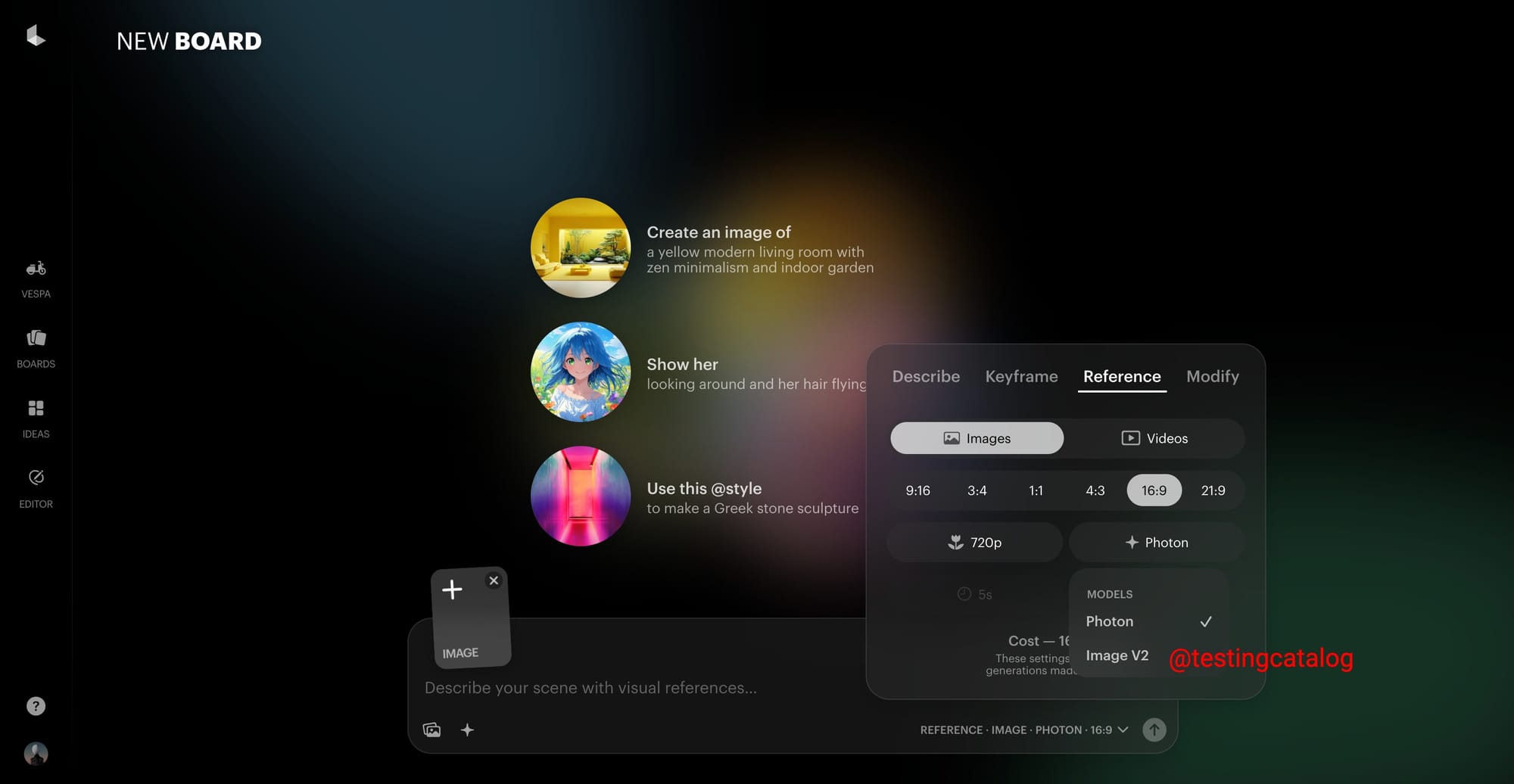
A newly discovered, but restricted, Vespa section in the UI leads to a Realm management interface. This area appears positioned for broader functionality than Luma’s current project-based grouping, possibly hinting at an upcoming “World model.” Such a feature could enable users to construct interactive, navigable environments with character placement and potentially scene recording, pushing Luma further into advanced video and environment generation. While access to realms is not yet enabled, it suggests Luma Labs is exploring new territory beyond simple collections, possibly to offer immersive content creation capabilities.
The development aligns with Luma Labs’ recent focus on video and generative AI, aiming to expand use cases for both developers and creative professionals. If realized, these additions would further position Luma as a significant player in generative video, interactive content, and world-building models.


