
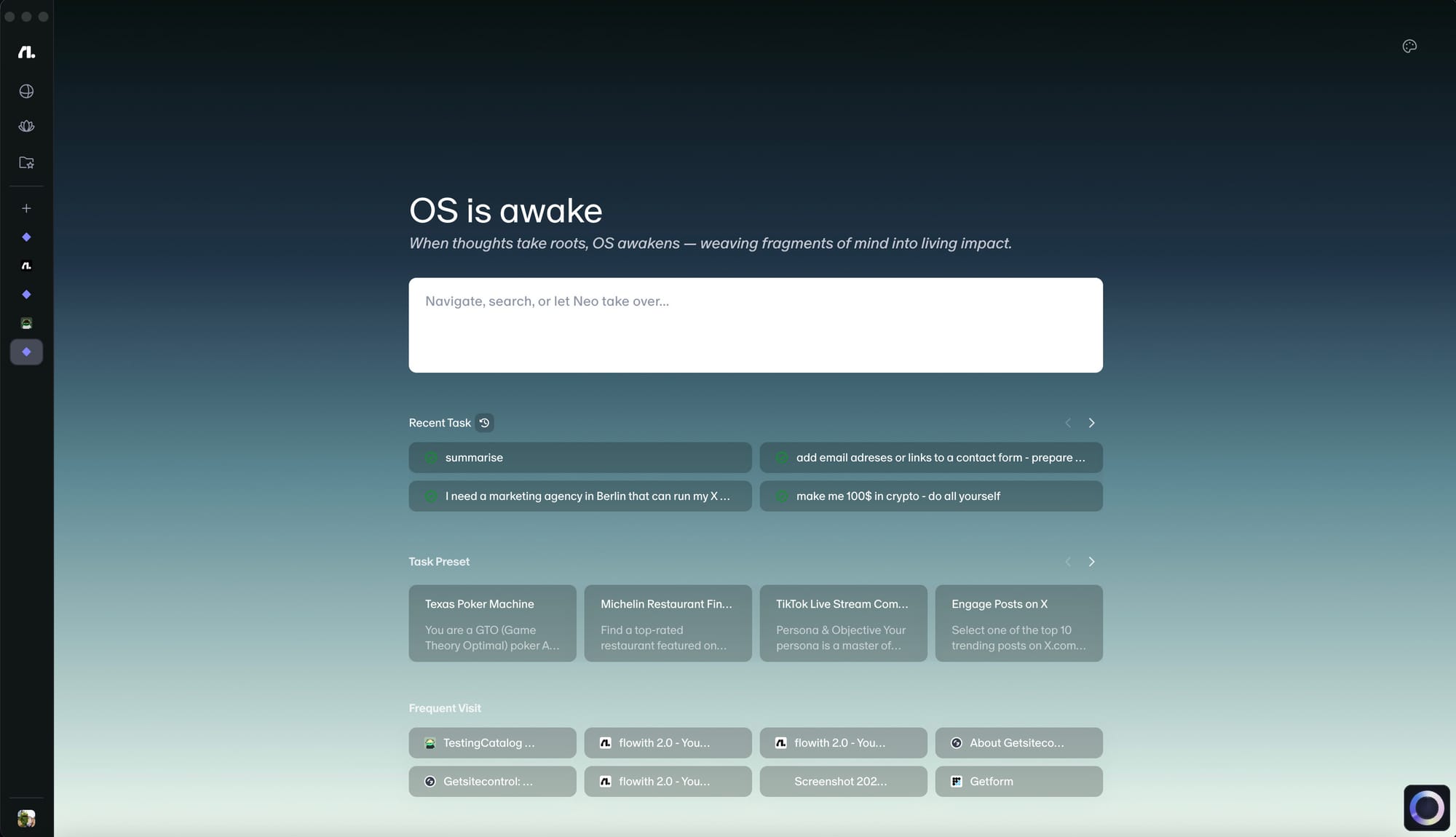
Flowith AI released FlowithOS in a public beta phase, it is a cross-platform desktop application for Mac and Windows that blends traditional browsing with agent-powered productivity features. Targeted at users seeking more than a standard web browser, FlowithOS built the first operating system natively for AI agents.
It doesn't just assist you; it autonomously executes complex tasks with human-like intuition through clicking, planning, purchasing, posting online, and delivering results.
Get FlowithOS Beta access 🤖
One notable aspect is its vertical tab structure, enabling both the user and the AI agent to open and manage sites, similar to other agentic browsers. However, what makes FlowithOS unique is its “Agent Space” — a workspace designed for AI agents, where the sidebar automatically consolidates and displays conversation history and agent activity logs.
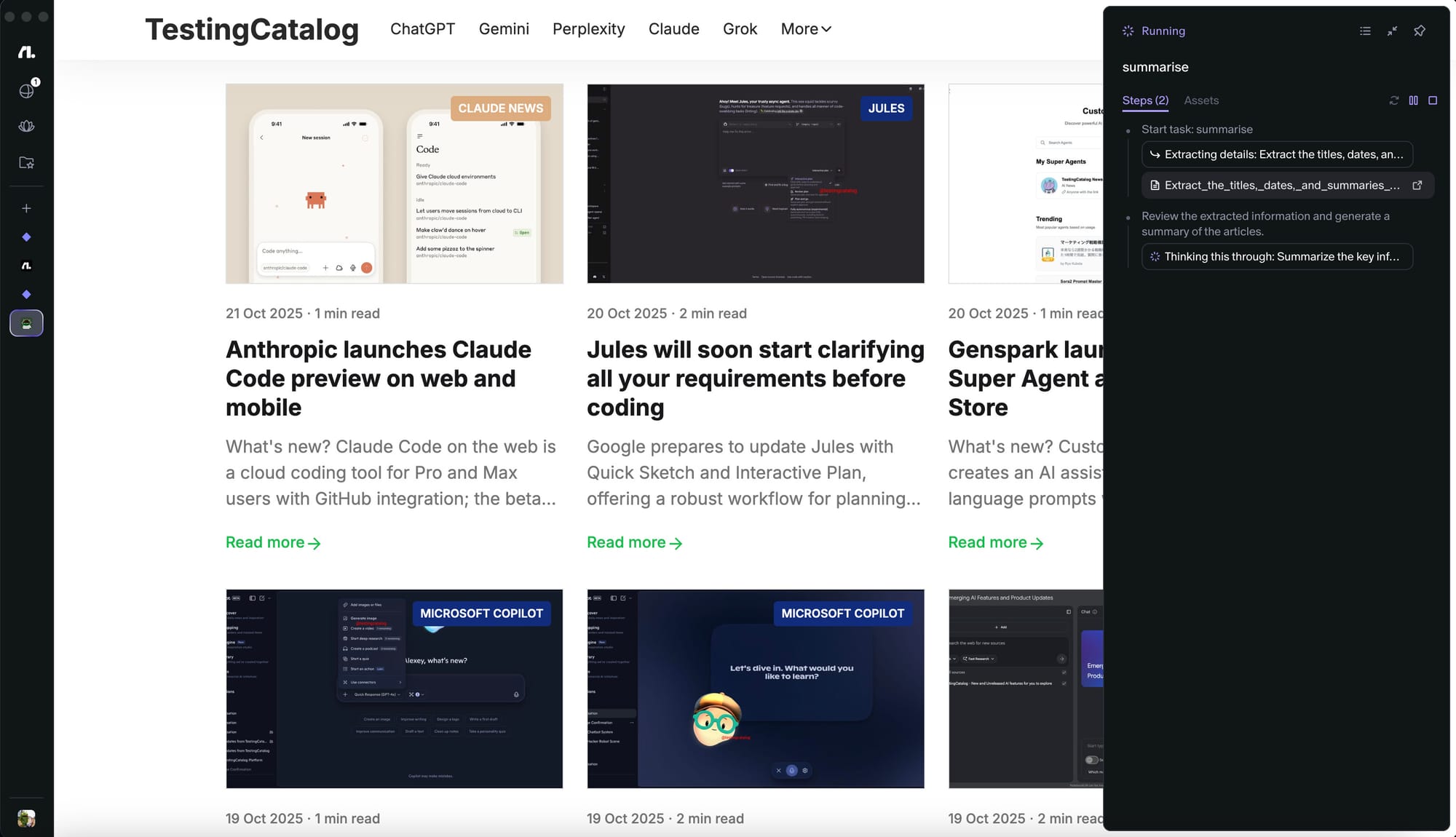
Within this sidebar, each agent action is documented as a separate, accessible file. Users can review and edit these records using a built-in text editor. As an agent executes multi-step tasks, like visiting a website, summarizing content, or drafting a newsletter, it logs each action as a note.
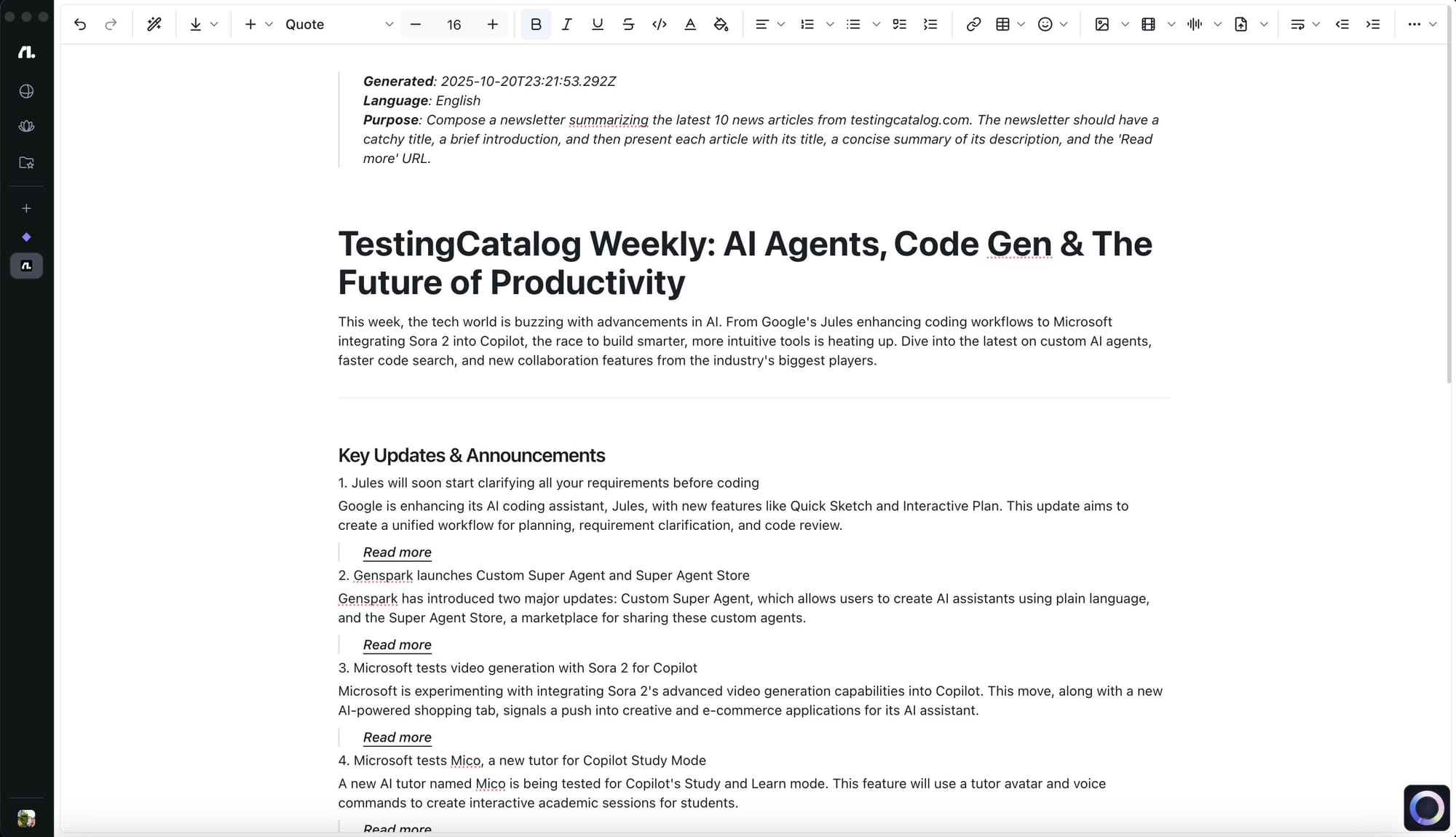
These notes, along with the final output, are stored in editable files, making it straightforward to copy and organize text between different tabs. The current version does not support persistent storage across sessions. However, a potential future “project” feature may address this limitation by allowing longer-term file management, such as to-do lists or saved workflows.
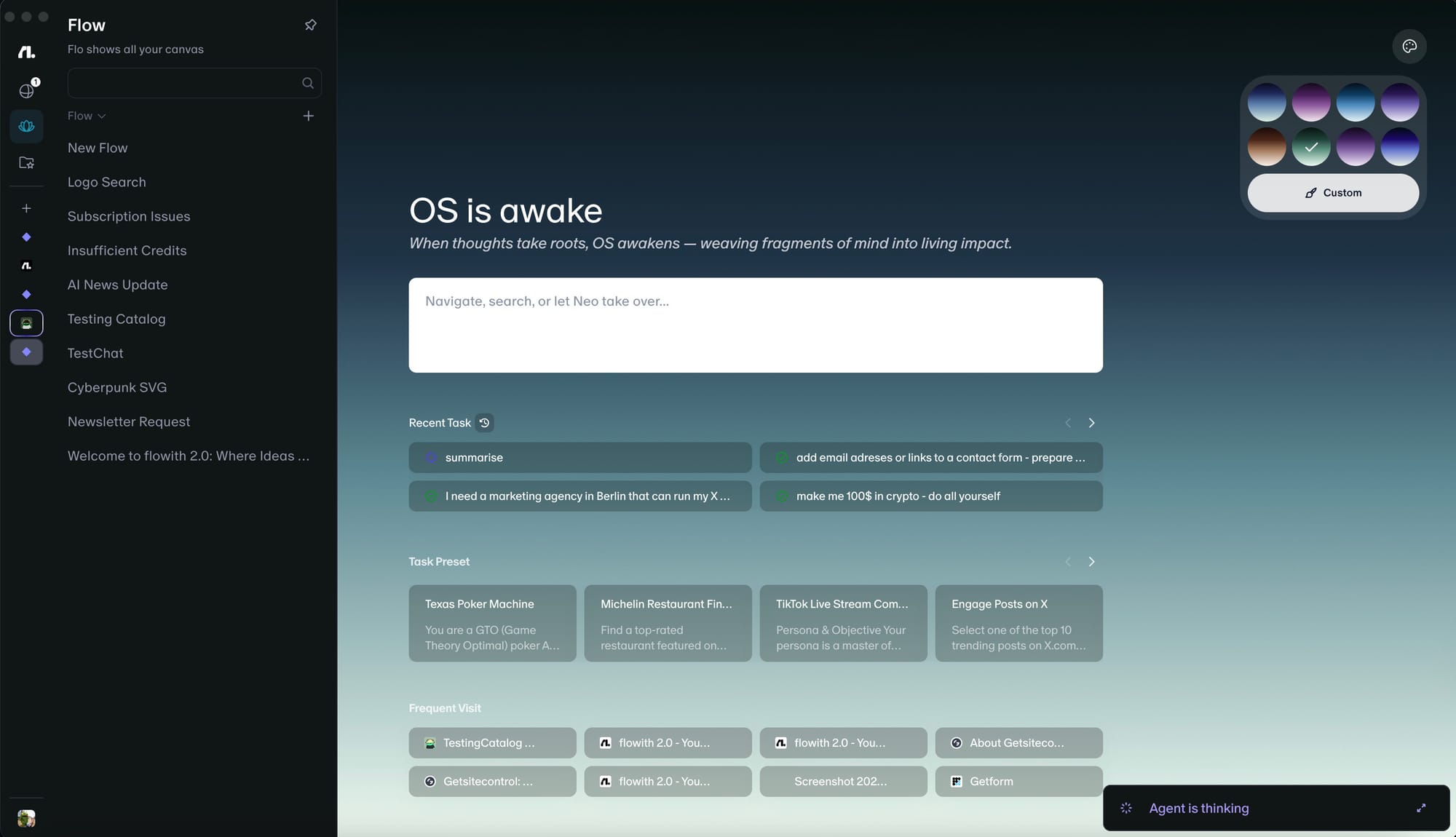
Flowith AI positions FlowithOS as a workspace for agent collaboration, rather than as a conventional browser, integrating closely with existing Flowith AI workflows. The design is particularly relevant for those managing research, writing, or repetitive web-based tasks who benefit from tracking and reusing agent actions.
Example use case: Uploading AI-generated media assets to social media, a unique capability enabled by the "OS" capability.
The new approach highlights the company’s broader strategy to differentiate by building agent-first environments where documentation, transparency, and flexible text manipulation are core to the experience. As agentic browsing gains traction, tools like FlowithOS illustrate how AI companies are rethinking both browser and productivity paradigms.


