
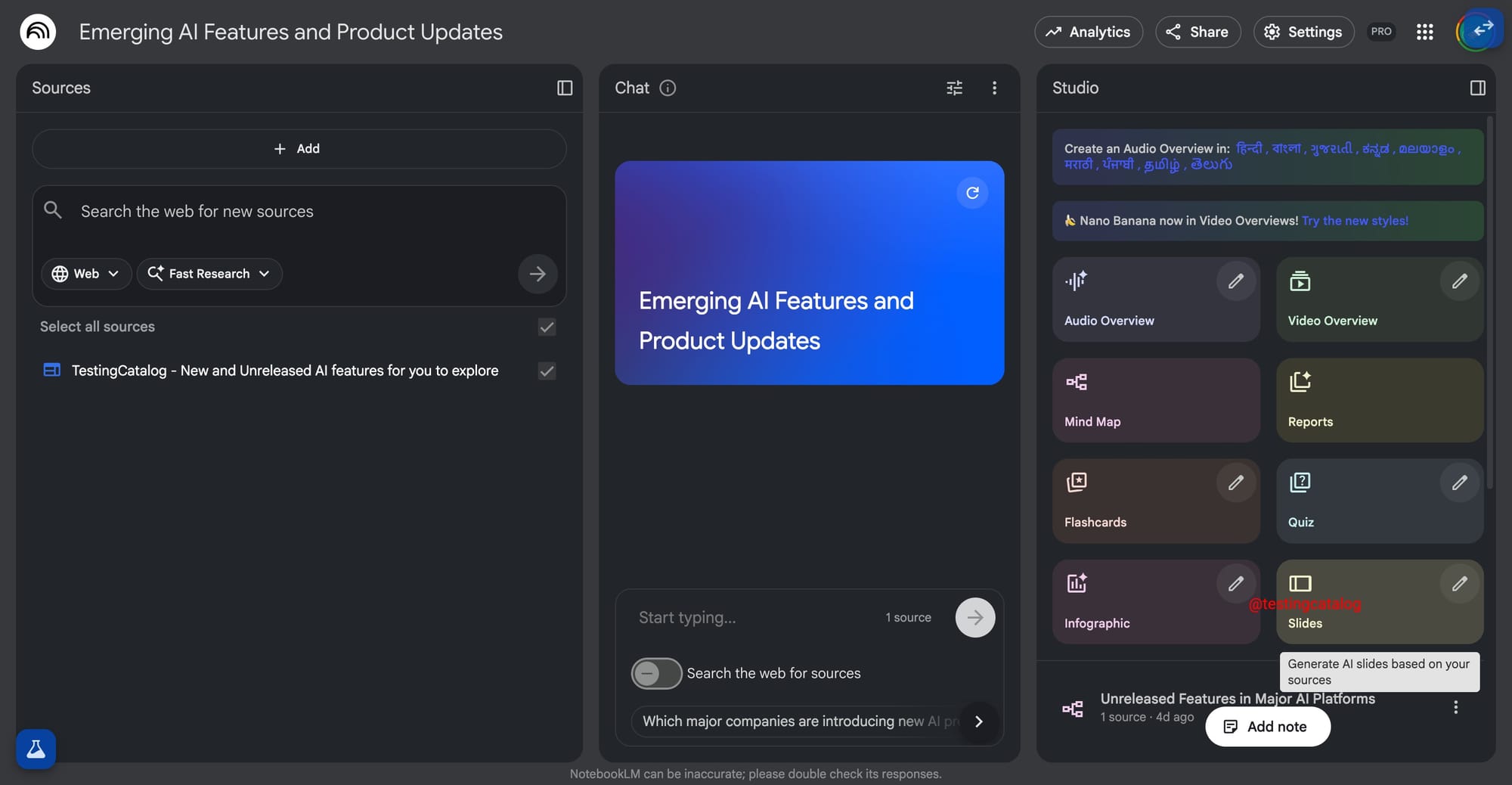
Google is quietly preparing a set of new features for its NotebookLM platform, aiming to bring presentation and infographic generation directly into the workflow. The most notable addition is the unreleased "Slides" option, which appears to integrate Google Slides functionality for automated presentation creation using information pulled from user-provided sources. This capability is still in development, with customization features not yet active, but the presence of this option suggests that users will eventually be able to tailor slide decks based on their documents. The potential user base includes Enterprise clients and knowledge workers who regularly need to convert reports or research into presentations, a group that is already targeted by a wave of AI-powered presentation startups.
The leaked "Slides" feature seems to align with Google's broader move to embed generative tools across Workspace apps, building on current capabilities in Docs, Sheets, and the emerging AI-driven features of Gemini. NotebookLM's new image generation for presentations is expected to rely on Google's Nano Banana model, previously demonstrated for video visuals, but likely adjusted for still images within slide decks. This could streamline the process of adding unique images to presentations without leaving the NotebookLM interface.
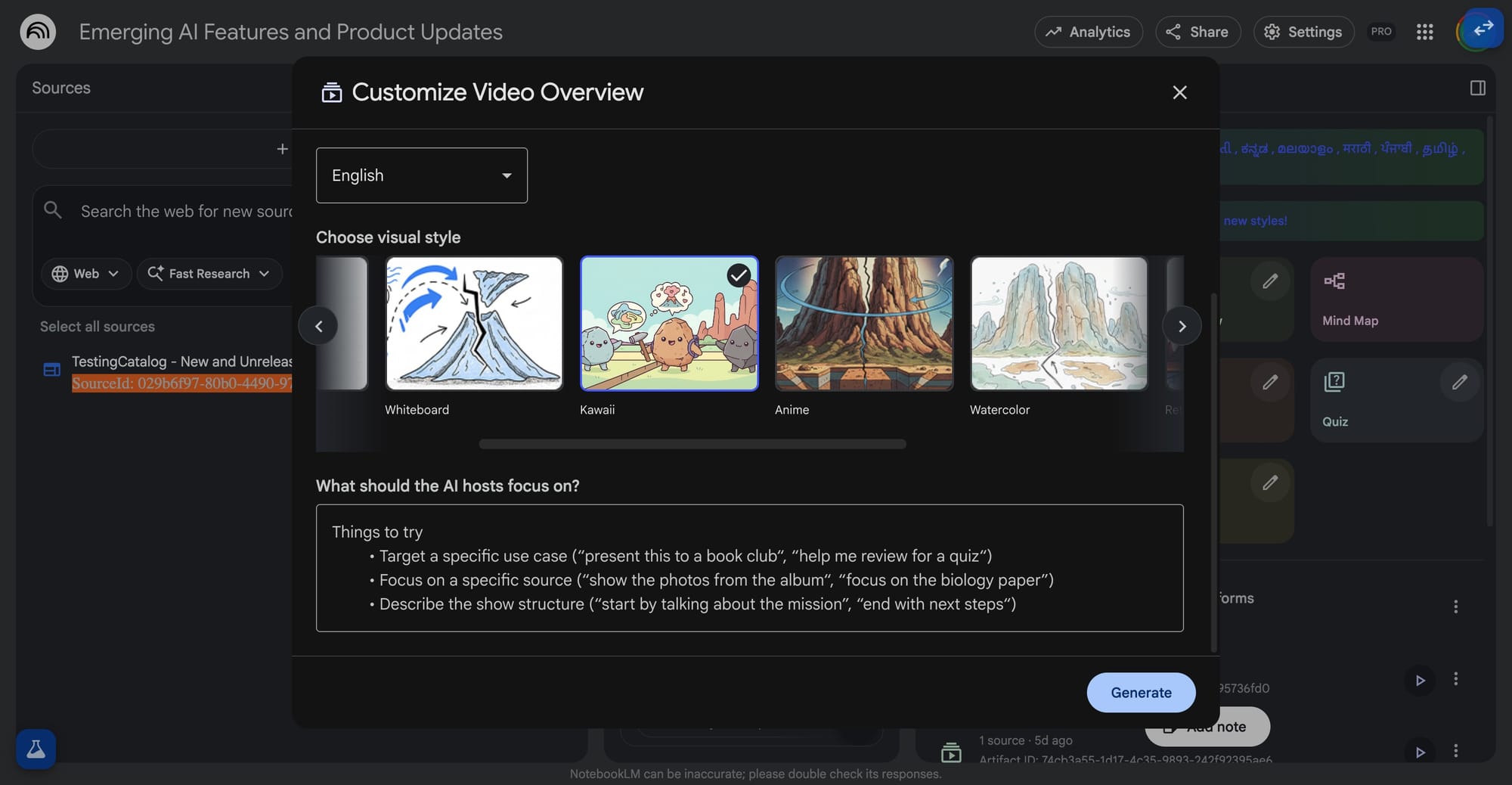
Google is working on a new "Kawaii" style for Video Overviews.
— TestingCatalog News 🗞 (@testingcatalog) October 19, 2025
"Kawaii is a Japanese term that translates to "cute" and refers to a Japanese culture of cuteness that is expressed through fashion, art, and behaviour"
Here is an example video 👀 pic.twitter.com/u6jOK4VvJf
In addition, the Infographics generator is evolving, with the square format joining landscape and portrait options, reflecting user demand for social media-friendly visuals. Hidden in recent Video Overviews, a new Kawai style is also being developed, focusing on bold and colorful designs. These features, once fully available, would further position NotebookLM as a multi-modal content creation platform for both internal business use and individual productivity.
Google’s strategy for NotebookLM remains centered on integrating generative AI into productivity tools, reducing the friction between knowledge management and content production. These latest discoveries highlight the company's intent to close feature gaps with standalone AI competitors and consolidate more use cases within its own ecosystem.


