
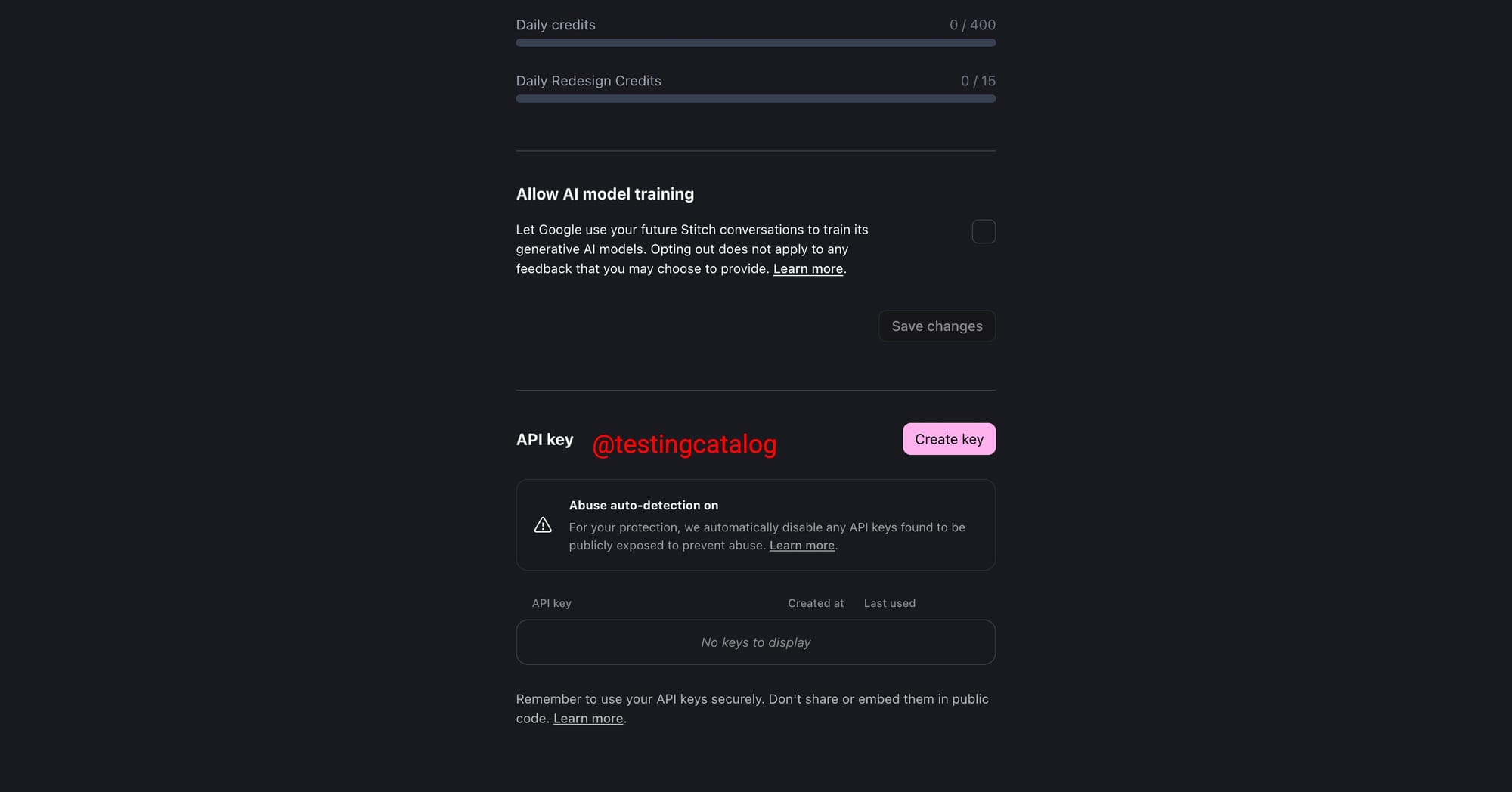
Google’s Stitch design agent continues to evolve, now offering users the option to create and manage API keys directly within its settings. This approach reflects the system seen in Google AI Studio, suggesting a shift towards more customizable integrations. With the addition of API keys, users may be able to leverage Gemini models, such as Nano Banana Pro, to generate higher-resolution images, including potential 4K output directly within their design workflows. The final impact on cost and access remains uncertain, as monetization through API usage could introduce new expenses for higher quality or advanced capabilities that are not available in Stitch’s current feature set (Speculation).
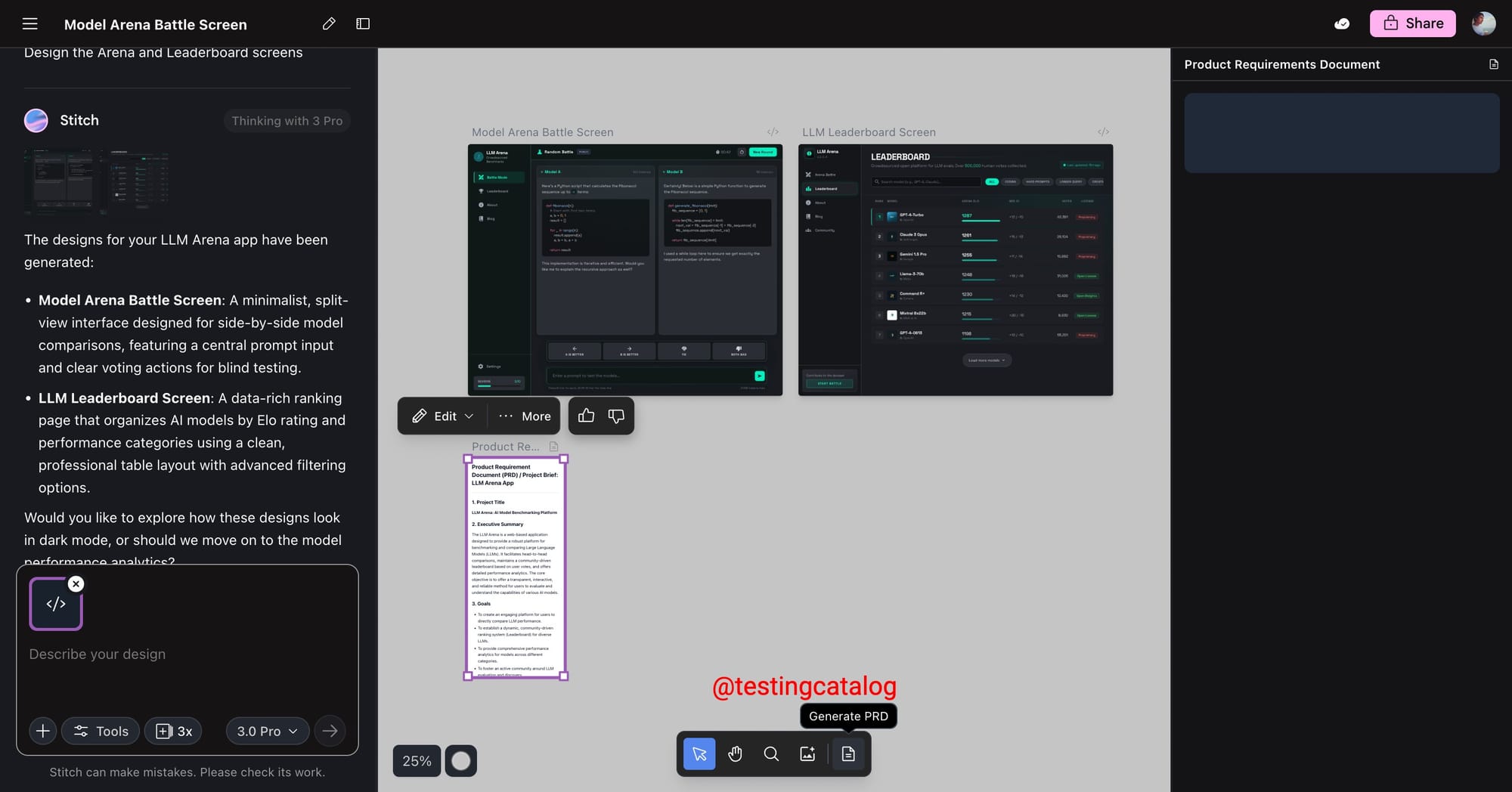
Alongside these backend enhancements, a new feature titled Generate PRD is in the works. This tool would let users automatically generate a product requirements document based on their existing design within Stitch. The generated PRD would contain a summary of key features, project goals, and technical context, designed for straightforward sharing with product teams. This is positioned to help product managers move more efficiently from ideation to documentation, reducing manual effort and enabling a tighter link between design assets, prototypes, and project planning. While there is no clear timeline for when these features will roll out, the focus appears to be on making Stitch more practical for product teams managing the entire lifecycle of digital products.
These updates align with Google’s broader strategy of deepening AI-driven automation in its product development toolchain, aiming to bridge the gap between design, technical specification, and team collaboration. If executed well, this could position Stitch as a more central component for product and design professionals, especially in environments already invested in Google’s ecosystem.


