

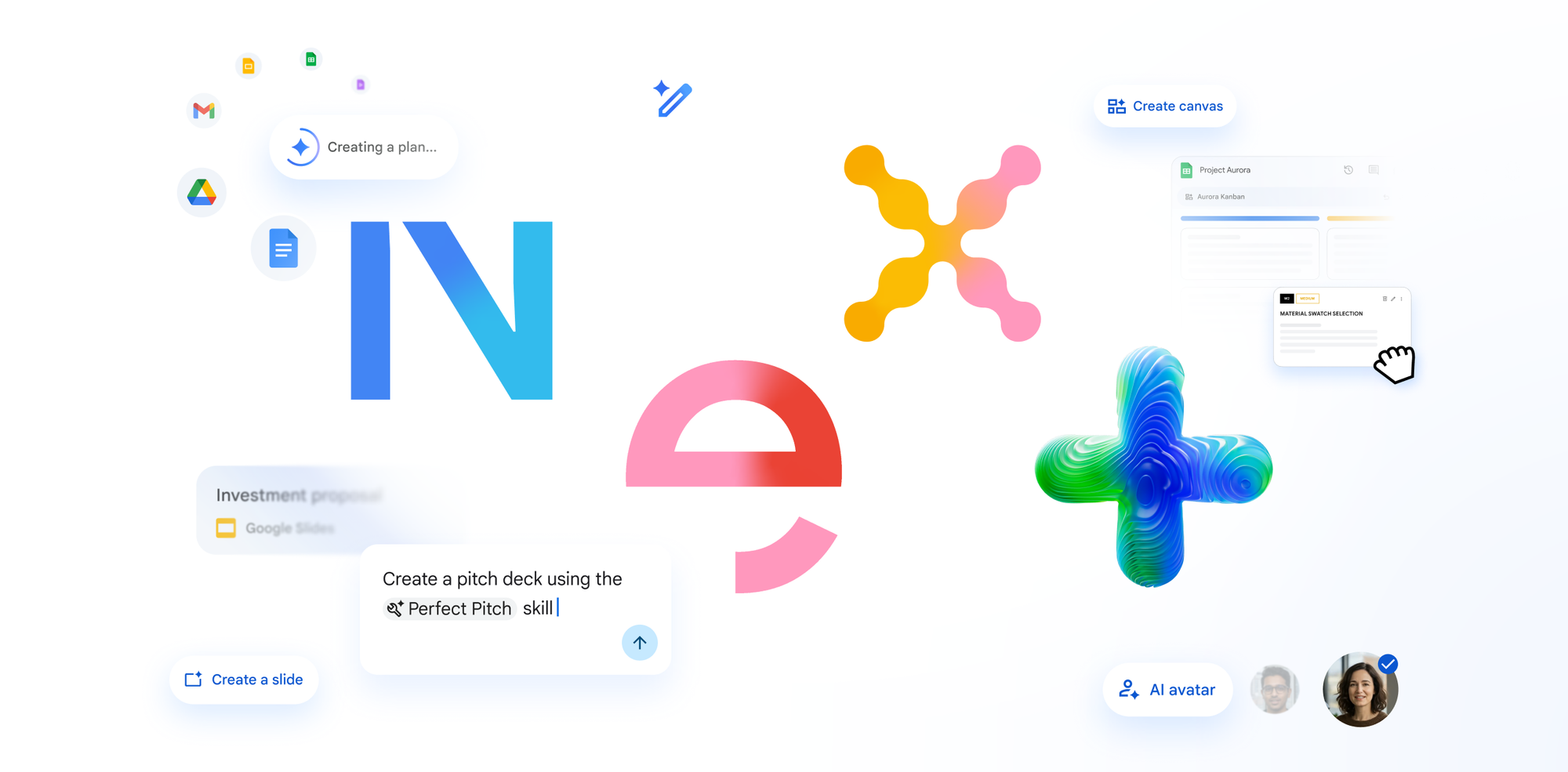
Google has launched a broader version of Gemini Enterprise, positioning it as a single system for building, running, and governing AI agents across large organizations. Announced at Google Cloud Next on April 22, 2026, the portfolio brings together the Gemini Enterprise app, the new Gemini Enterprise Agent Platform, and a partner marketplace that lets companies deploy third-party agents from vendors including Oracle, Salesforce, ServiceNow, Adobe, and Workday inside the same governed environment.
The core change is that Google is no longer presenting enterprise AI as a set of separate tools for chat, model access, and workflow automation. Gemini Enterprise is now described as an end-to-end platform for the agentic era, aimed at developers, IT teams, and knowledge workers who need to build, supervise, and scale agents that can handle multi-step business work. Google says the system connects company data, employees, apps, and agents into a single operational layer, with support for both Google Workspace and third-party systems through connectors and BYO-MCP integrations.
At the center of the launch is Gemini Enterprise Agent Platform, which replaces Vertex AI as Google’s main destination for enterprise agent development. Google says all Vertex AI services and roadmap updates will now flow through Agent Platform rather than continue as a separate standalone service. The platform includes access to more than 200 models through Model Garden, including Gemini 3.1 Pro, Gemini 3.1 Flash Image, Lyria 3, Gemma 4, and third-party models such as Anthropic’s Claude Opus, Sonnet, and Haiku. Google is also adding Agent Studio for low-code development, a graph-based Agent Development Kit for multi-agent systems, Agent Runtime for long-running agents, Memory Bank and Memory Profiles for persistent context, plus Agent Simulation, Agent Evaluation, Agent Observability, and Agent Optimizer for testing and refinement.
Google is also putting governance at the center of the pitch. New controls include Agent Identity, which gives each agent a cryptographic ID, Agent Registry for approved tools and agents, and Agent Gateway for policy enforcement across environments. The company says Model Armor is part of that layer, with protections aimed at prompt injection, tool poisoning, and data leakage. Security Command Center also feeds into a new dashboard for vulnerability and threat analysis, while anomaly detection is meant to flag suspicious reasoning or malicious activity such as reverse shell behavior and connections to bad IPs.
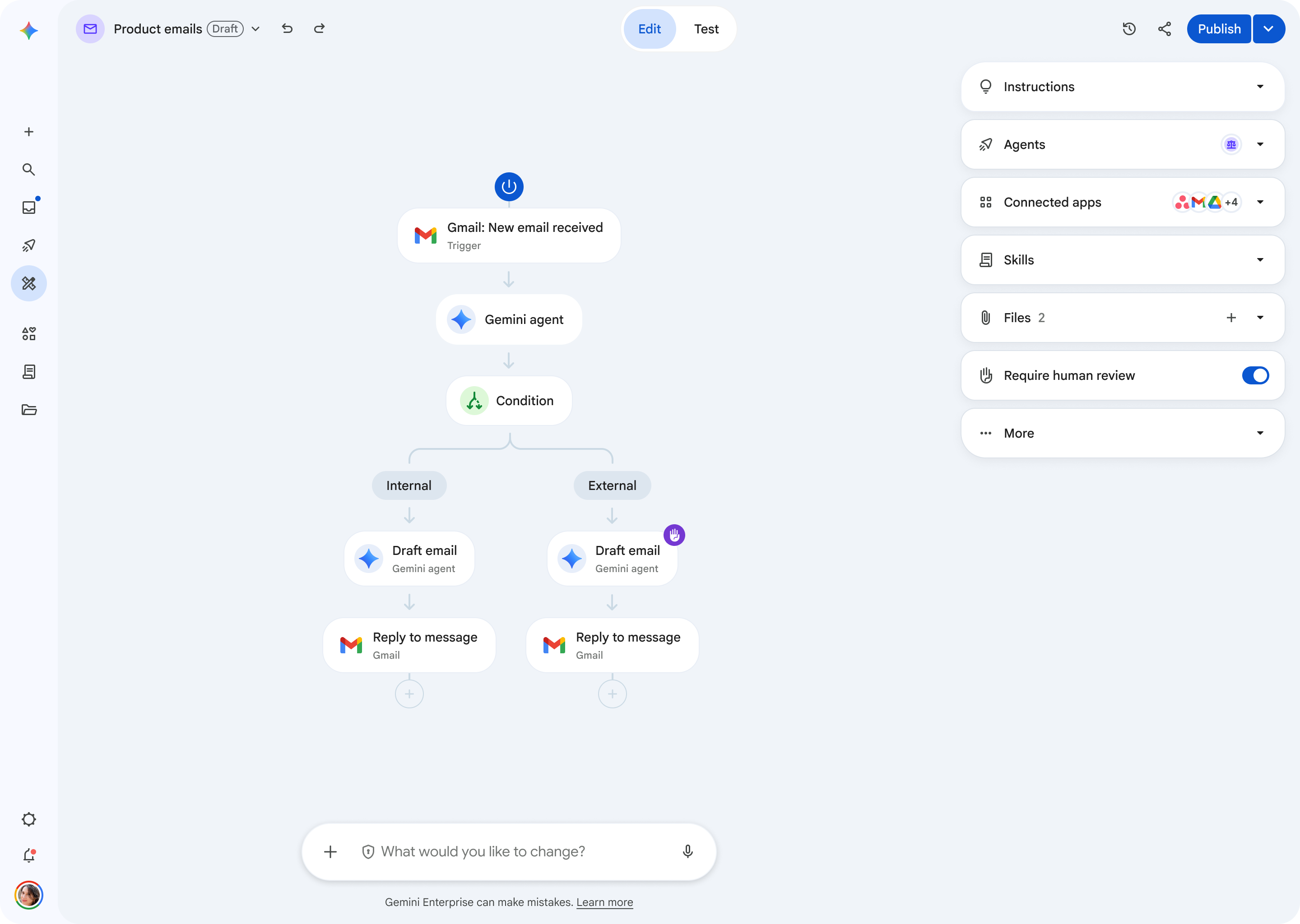
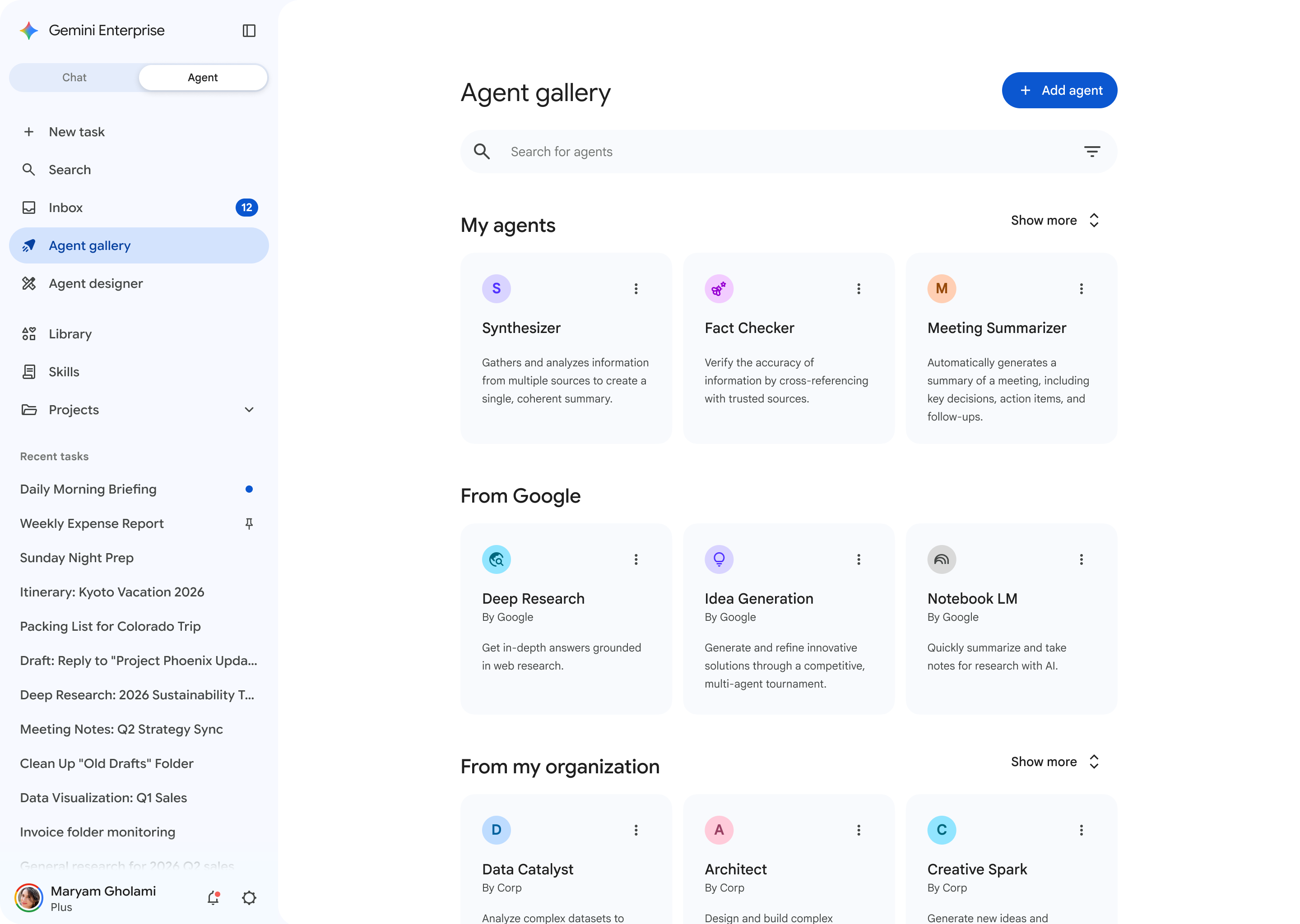
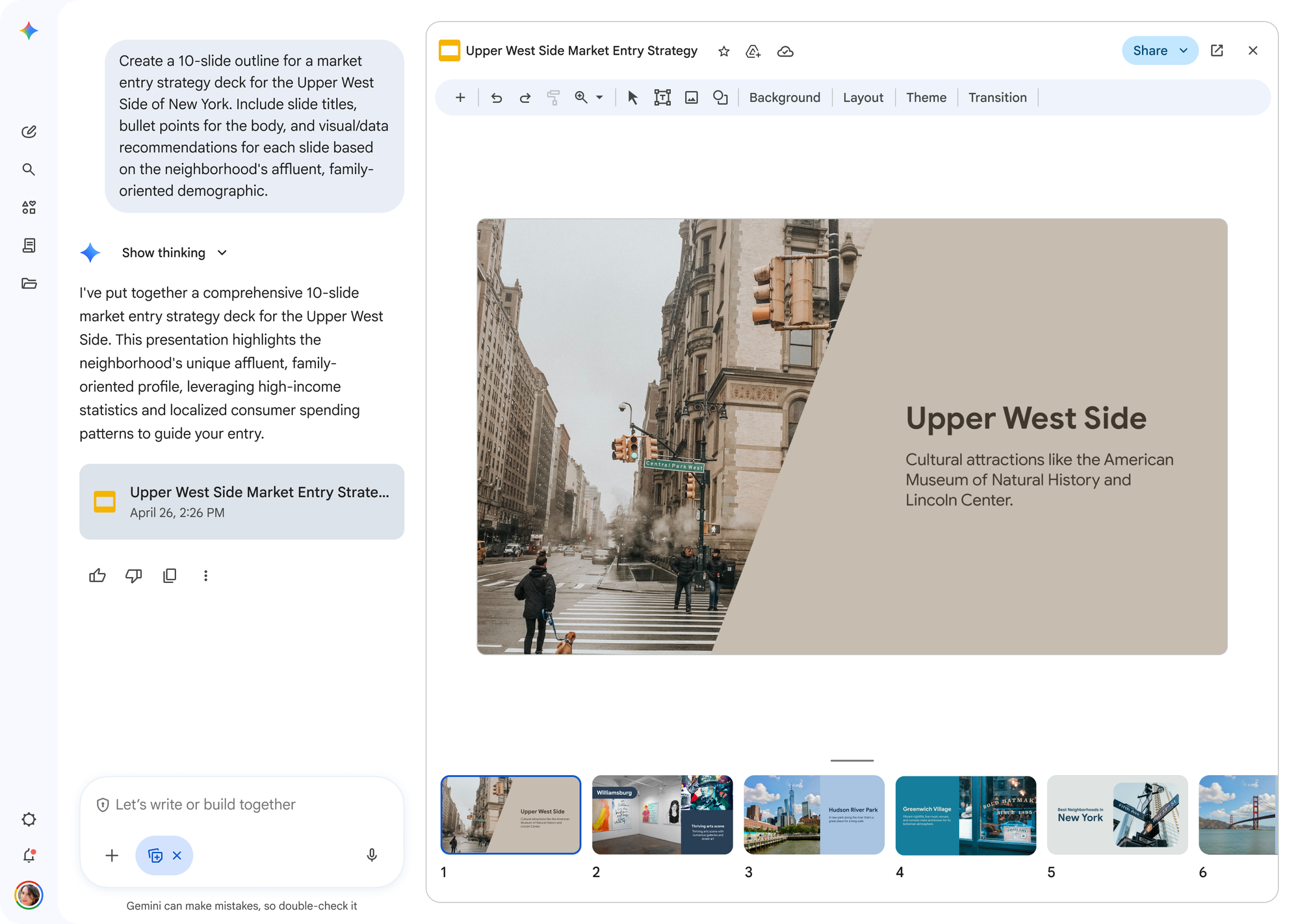
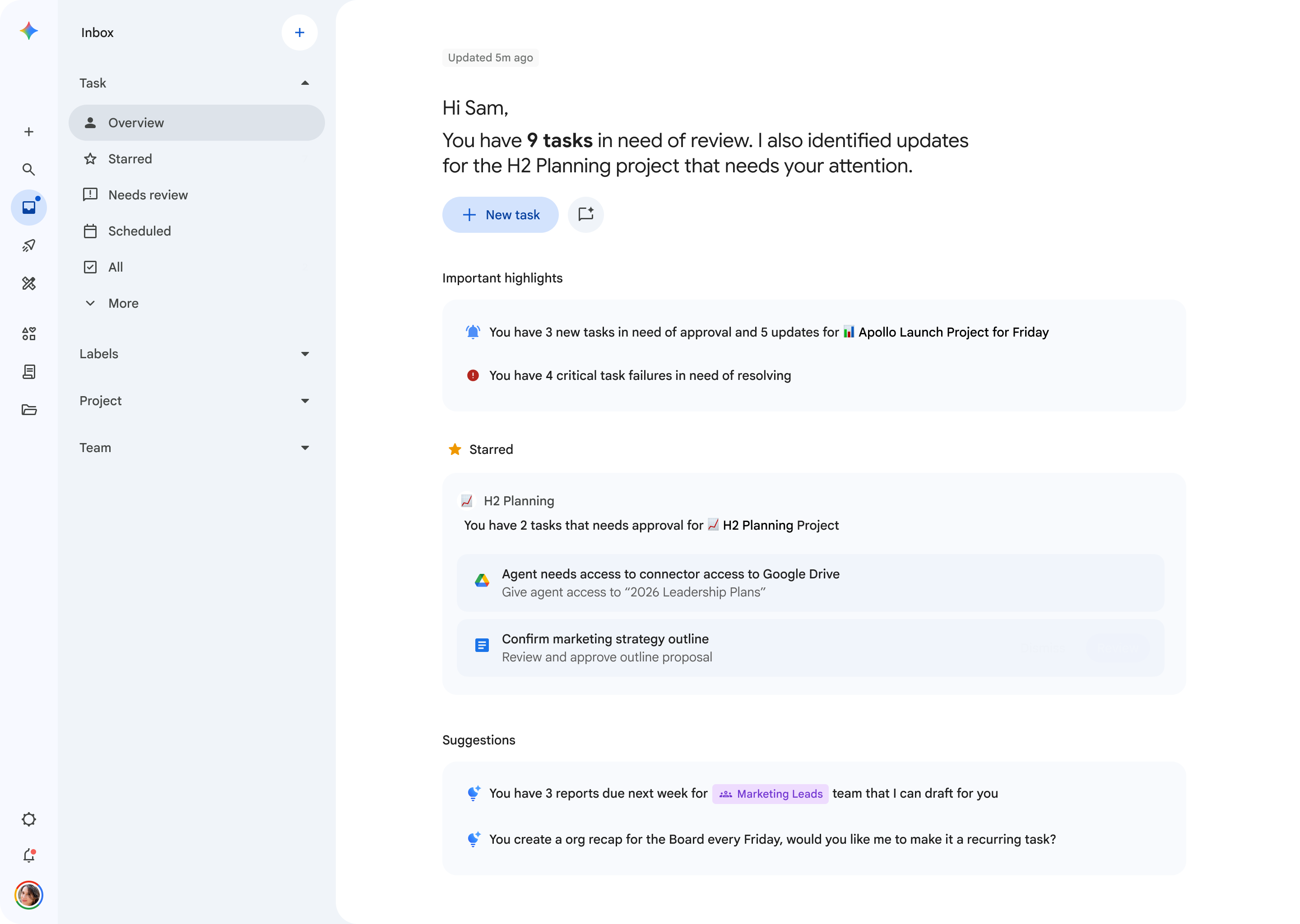
On the employee side, the Gemini Enterprise app is being framed as the front door to AI inside a company. Google says teams can discover, create, share, and run agents in one place, with built-in governance, security, and identity controls inherited from Agent Platform. New additions include no-code agent creation through Agent Designer, a unified Inbox for monitoring active and long-running agents, Projects for shared team memory and persistent context, and Canvas for co-creating documents and slides. Canvas also supports export into Microsoft Office formats, while the broader app now works across Google Workspace, Microsoft 365, and other connected business systems.
Several features suggest Google is pushing Gemini Enterprise beyond assistant-style chat and deeper into operational software. The platform now supports long-running agents that can run for hours or days, reusable Skills for recurring workflows, A2UI support so agents can render structured UI components inside the app, and a native Data Insights agent that combines structured and unstructured enterprise data to generate queries, visualizations, and business analysis. Google is also widening the role of Deep Research, which can now synthesize open web and internal company data in the background to produce reports and executive summaries.
For Google, this launch is also about turning a fragmented enterprise AI market into a governed platform business. Rather than asking companies to stitch together models, orchestration layers, security tooling, and app integrations on their own, Google is trying to package those layers under Gemini Enterprise while still keeping an open ecosystem around it. The target audience is clear: enterprise developers who need production-grade agent tooling, IT leaders trying to contain AI sprawl, and business teams that want automation without writing code.
Google says the new Gemini Enterprise features will roll out over the coming months. The company is presenting the launch as a foundation for organizations that expect to manage not just a handful of copilots, but fleets of agents operating across workflows, departments, and partner systems.
Source: Google


