
Google is gearing up for a major overhaul of the Build feature in AI Studio, with signs pointing to a release as early as next week. The update is expected to transform AI Studio's vibe coding environment from a simple app prototyping tool into a more capable platform for building full-stack, multiplayer applications with proper authentication and deeper Google service integrations. Logan Kilpatrick, who leads developer relations for Google's AI products, has recently teased the upcoming changes publicly.
Google AI Studio
— Logan Kilpatrick (@OfficialLoganK) February 20, 2026
At the core of this update is a new authentication layer that will let developers add sign-in and user management directly within AI Studio-built apps. This is expected to tie into Firebase, though that connection isn't fully visible yet.
BREAKING 🚨: Google AI Studio is set to be powered by Antigravity to help users build full-stack applications.
— TestingCatalog News 🗞 (@testingcatalog) February 22, 2026
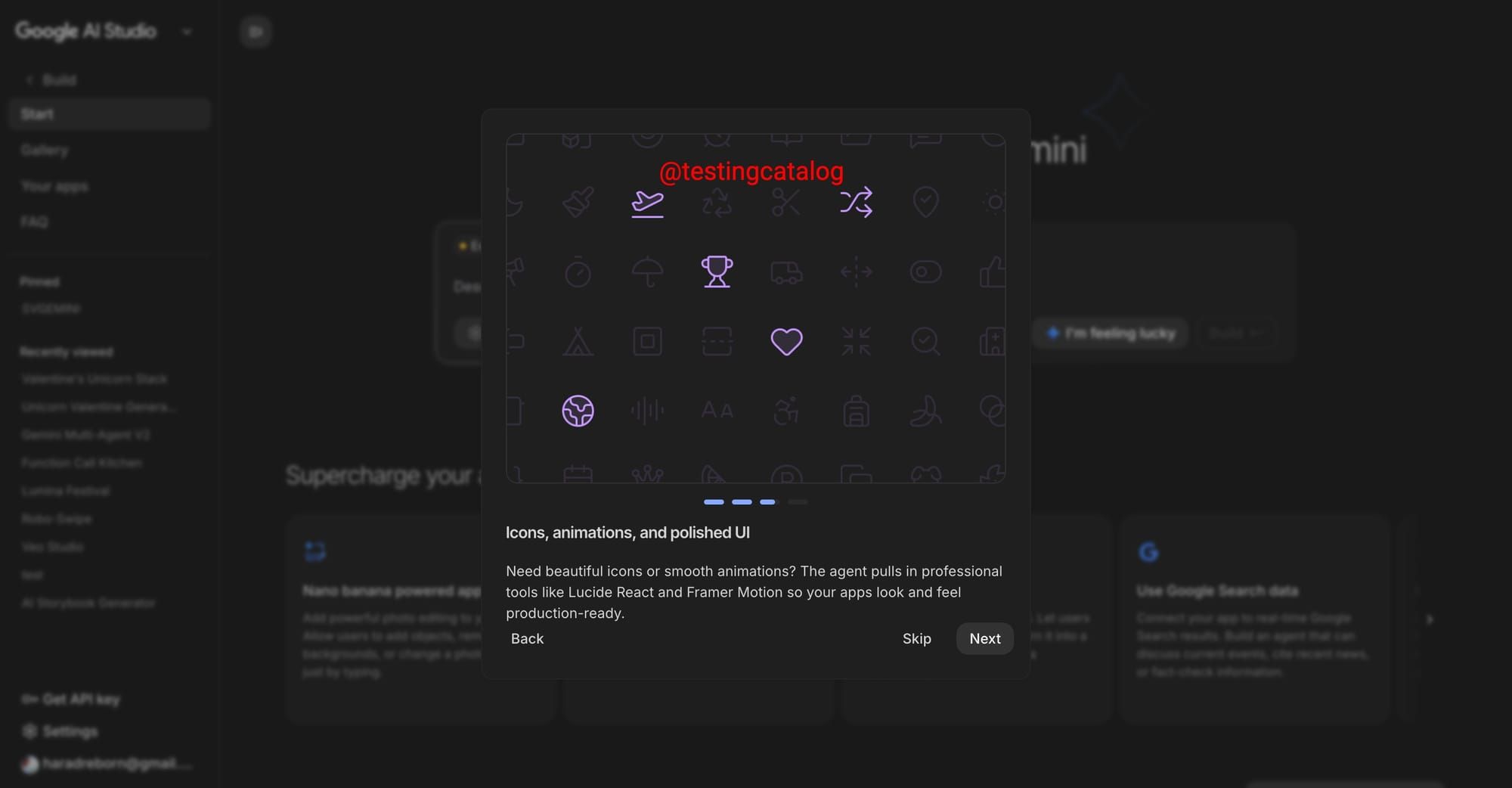
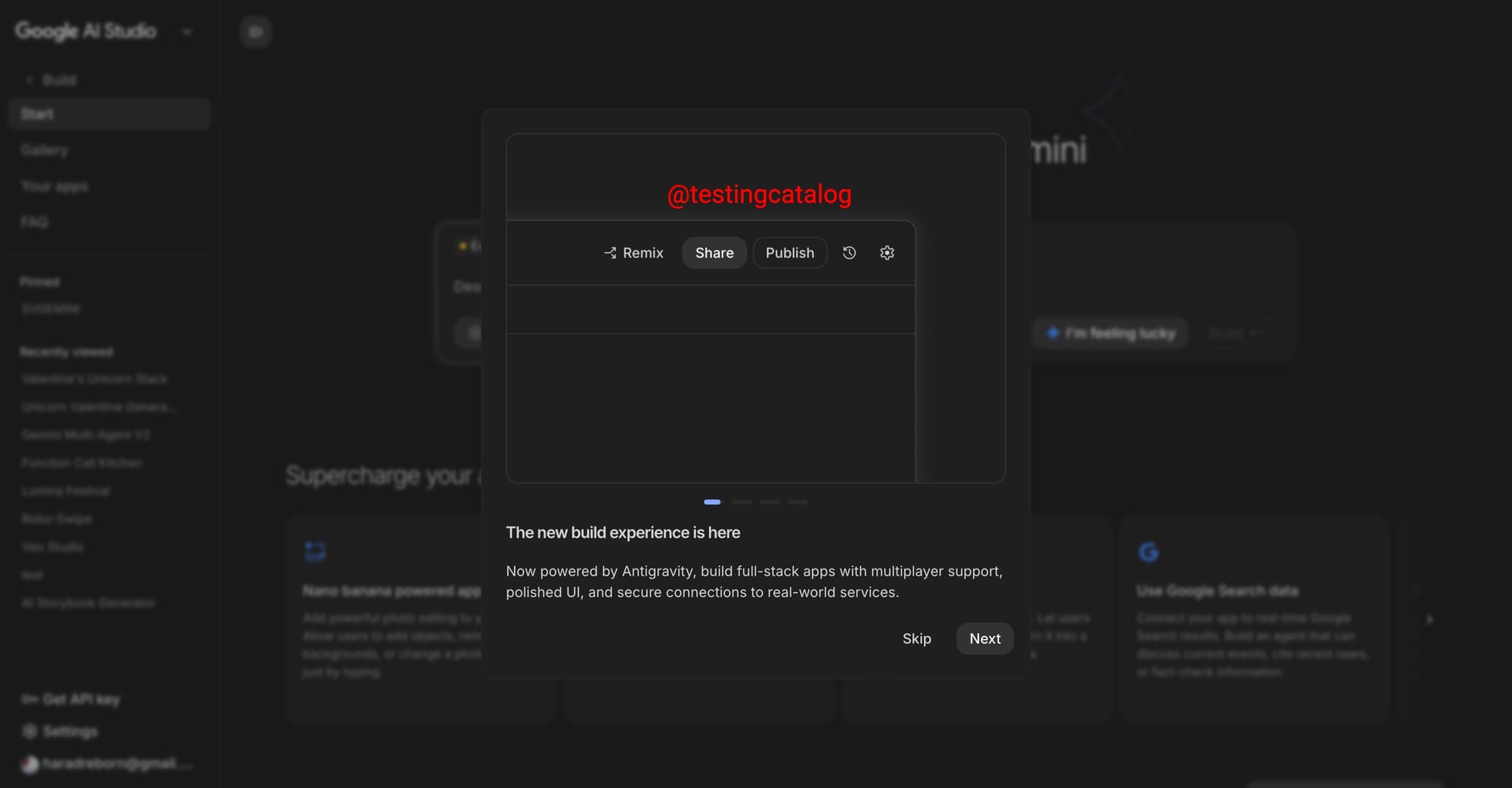
"Now powered by Antigravity, build full-stack apps with multiplayer support, polished Ul, and secure connections to real-world services."
"Need beautiful icons or… pic.twitter.com/9M5rnu1xVr
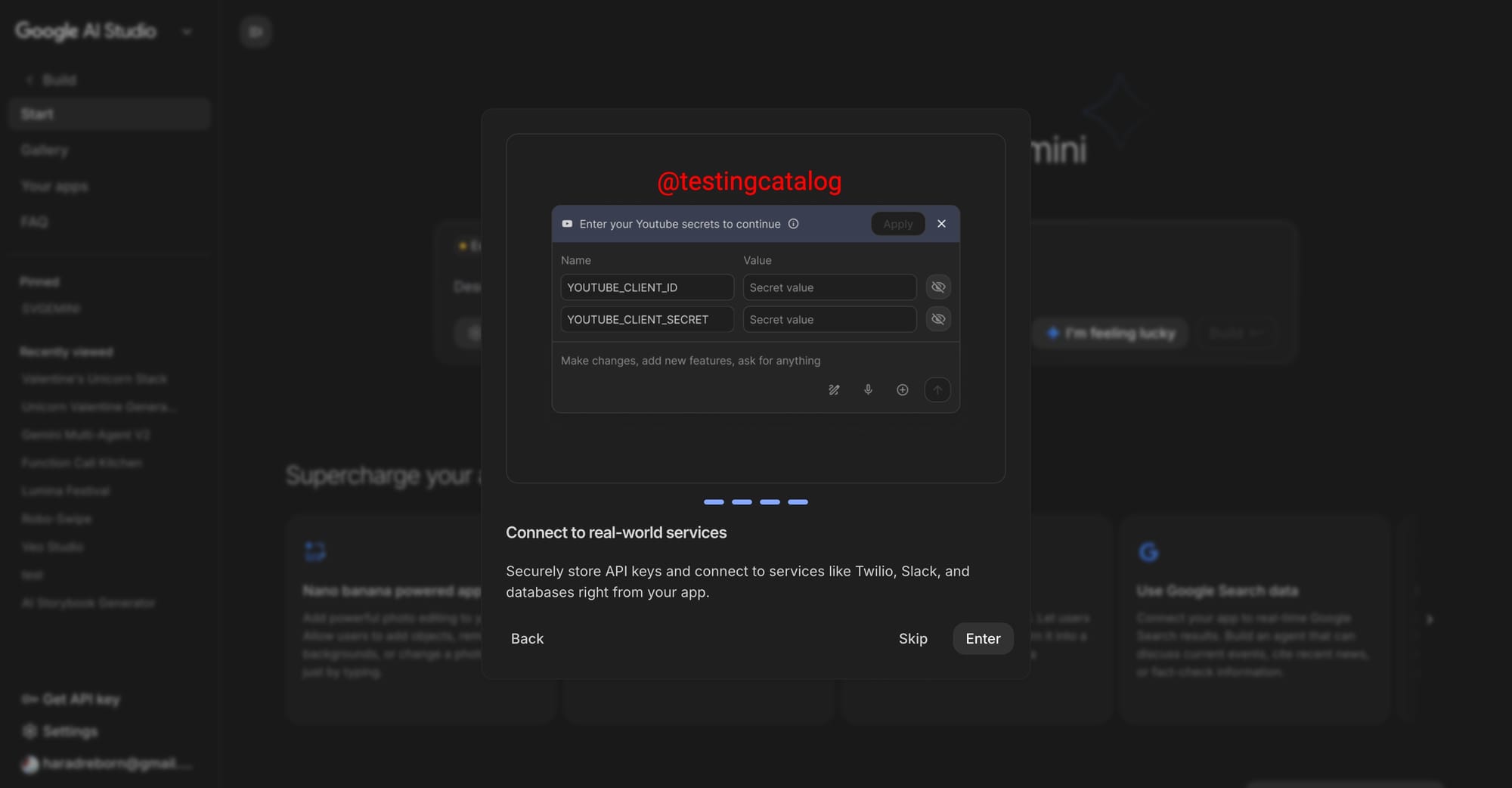
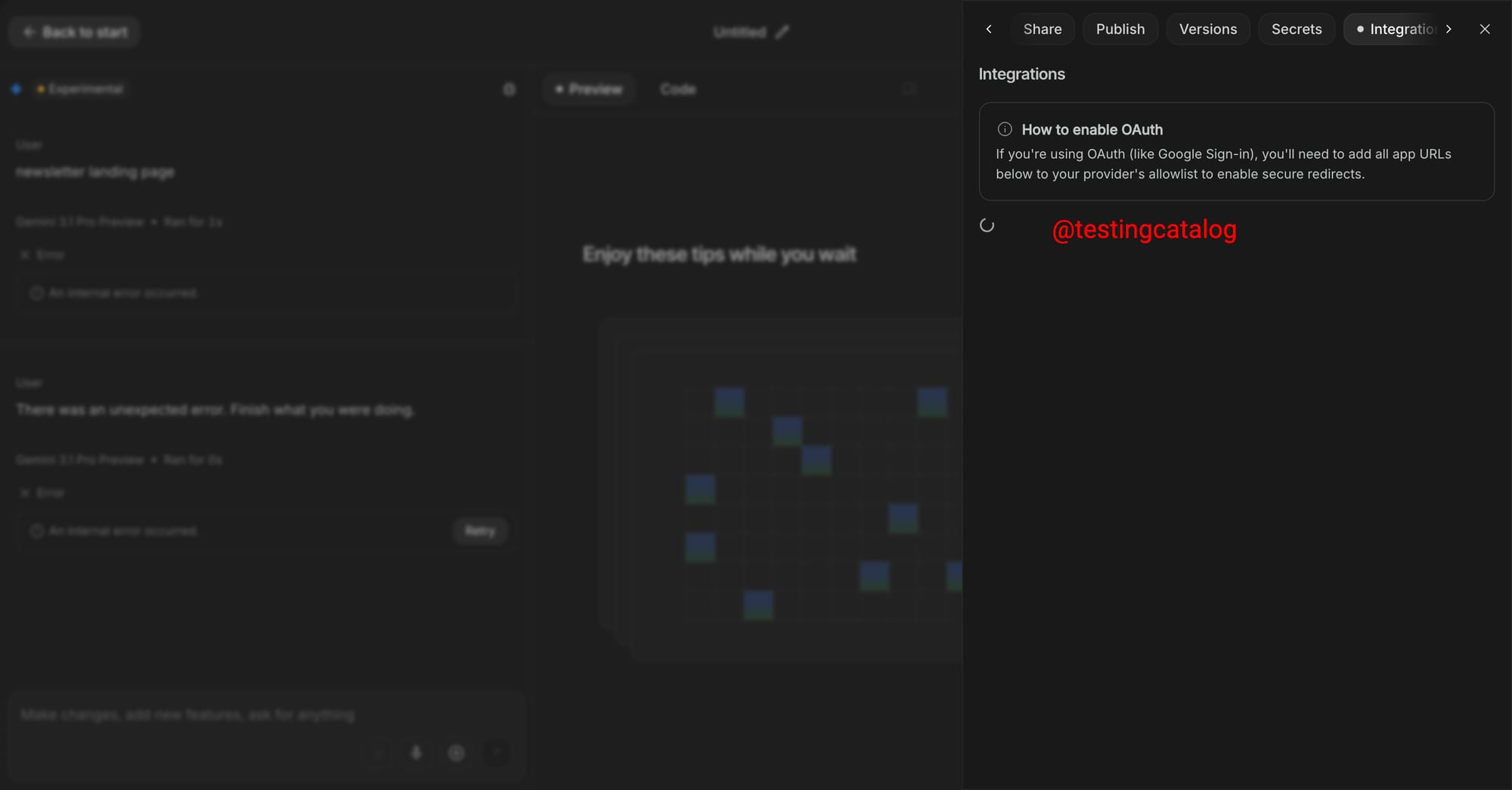
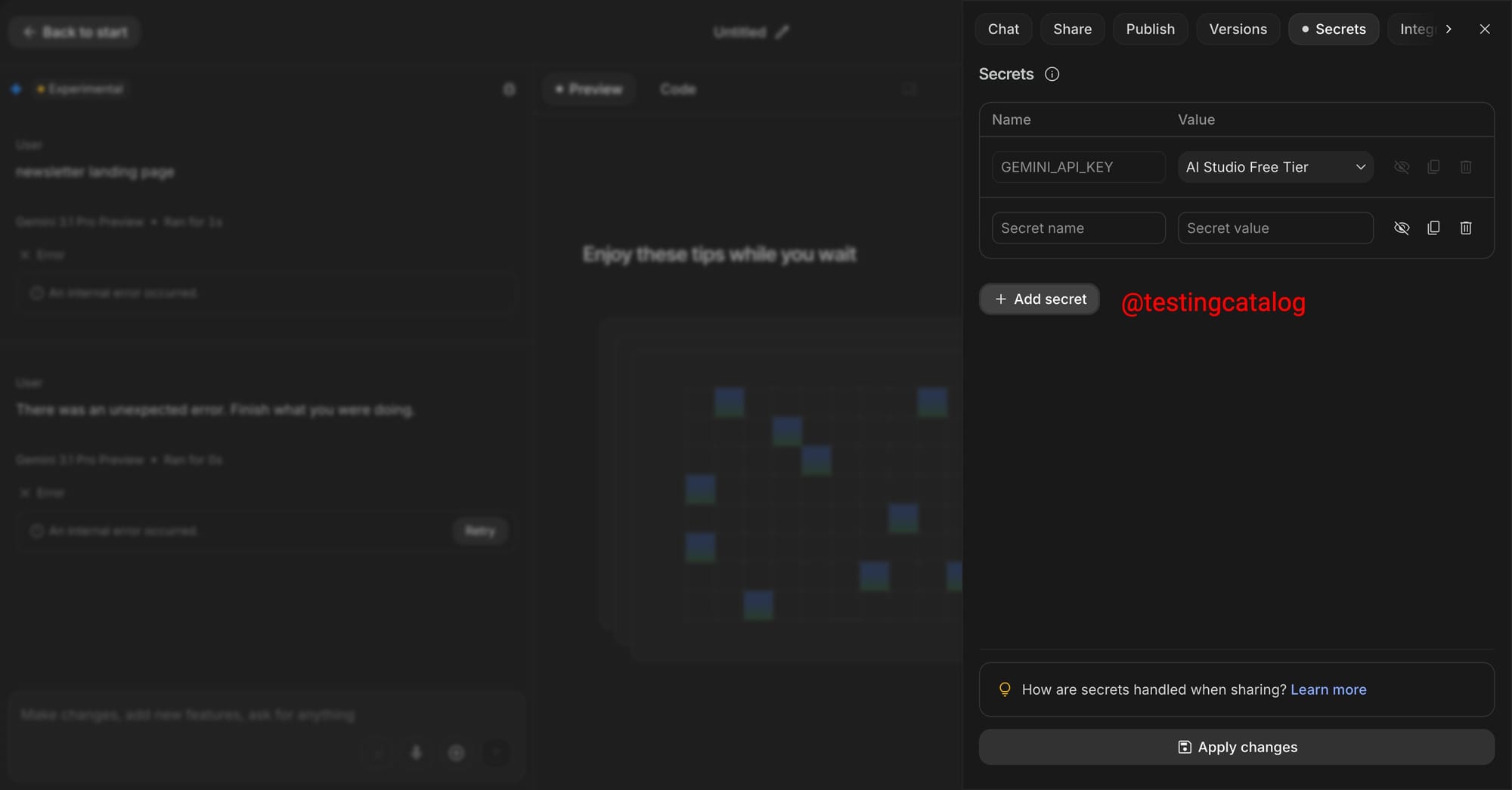
A dedicated integrations tab is being prepared to support OAuth and external API connections through a secrets management system, which would address one of the biggest limitations of AI Studio's current Build experience, the inability to create apps that require user accounts or access third-party services.
TestingCatalog first reported on early signs of this Firebase integration in late January, when references to native database and OAuth support began appearing in the AI Studio interface.
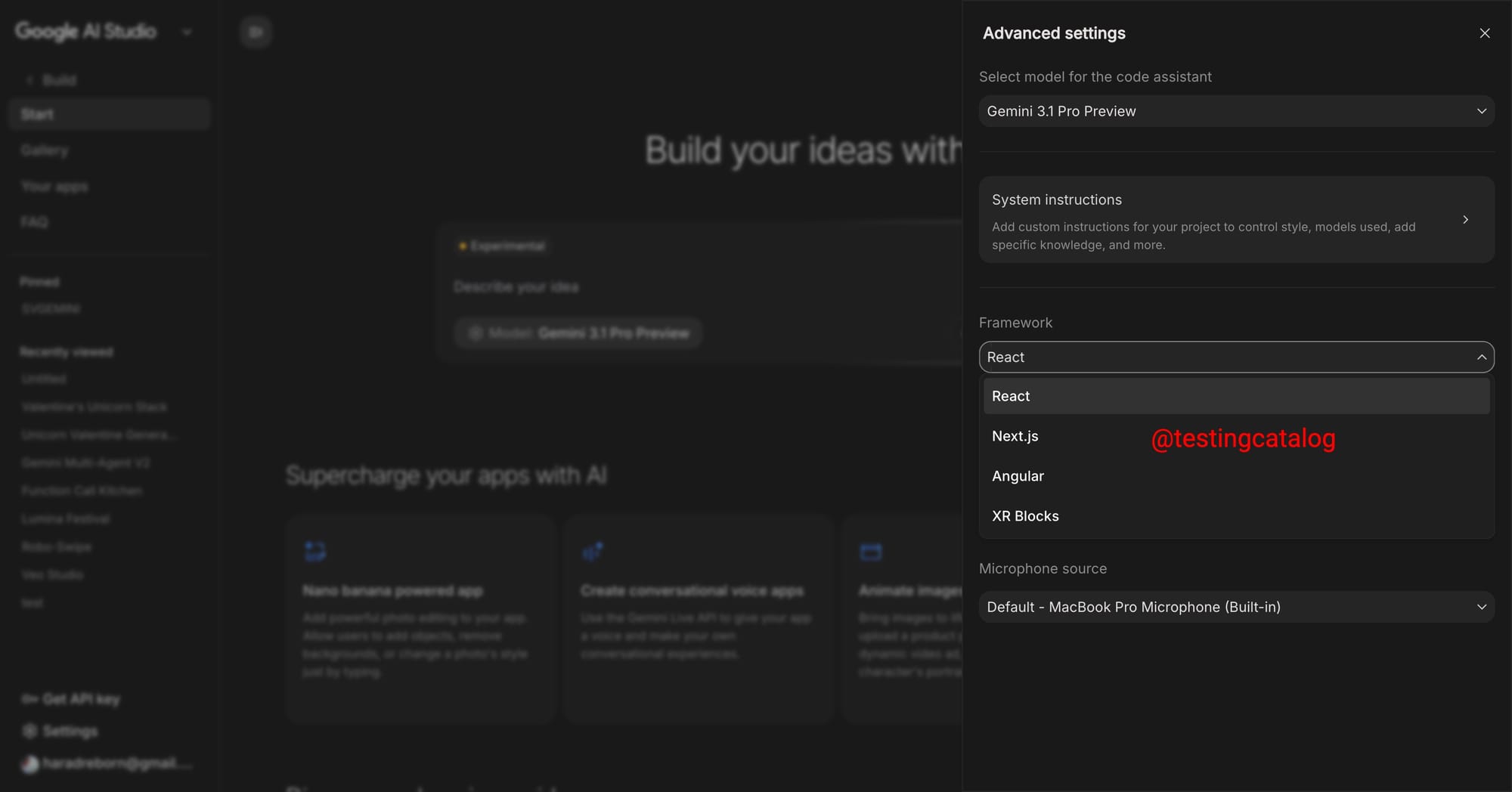
Framework support is also expanding well beyond the current JavaScript and React options. Next.js and several additional frameworks are being added, bringing AI Studio closer to the flexibility offered by Firebase Studio, which already supports Next.js, Angular, Flutter, and Go. This matters because developers have been asking for broader framework choices to match their existing workflows and production requirements.
Google has been steadily positioning AI Studio as the fastest on-ramp for building with Gemini models, and this update fits squarely into that strategy. Since Google I/O 2025, the company has been investing in making AI Studio a place where developers can go from prompt to deployed app with minimal friction.
The addition of authentication, external integrations, and framework variety would move AI Studio from a prototyping playground into something closer to a viable development platform, benefiting indie developers and small teams who want to ship real applications without juggling multiple Google Cloud services manually.


