
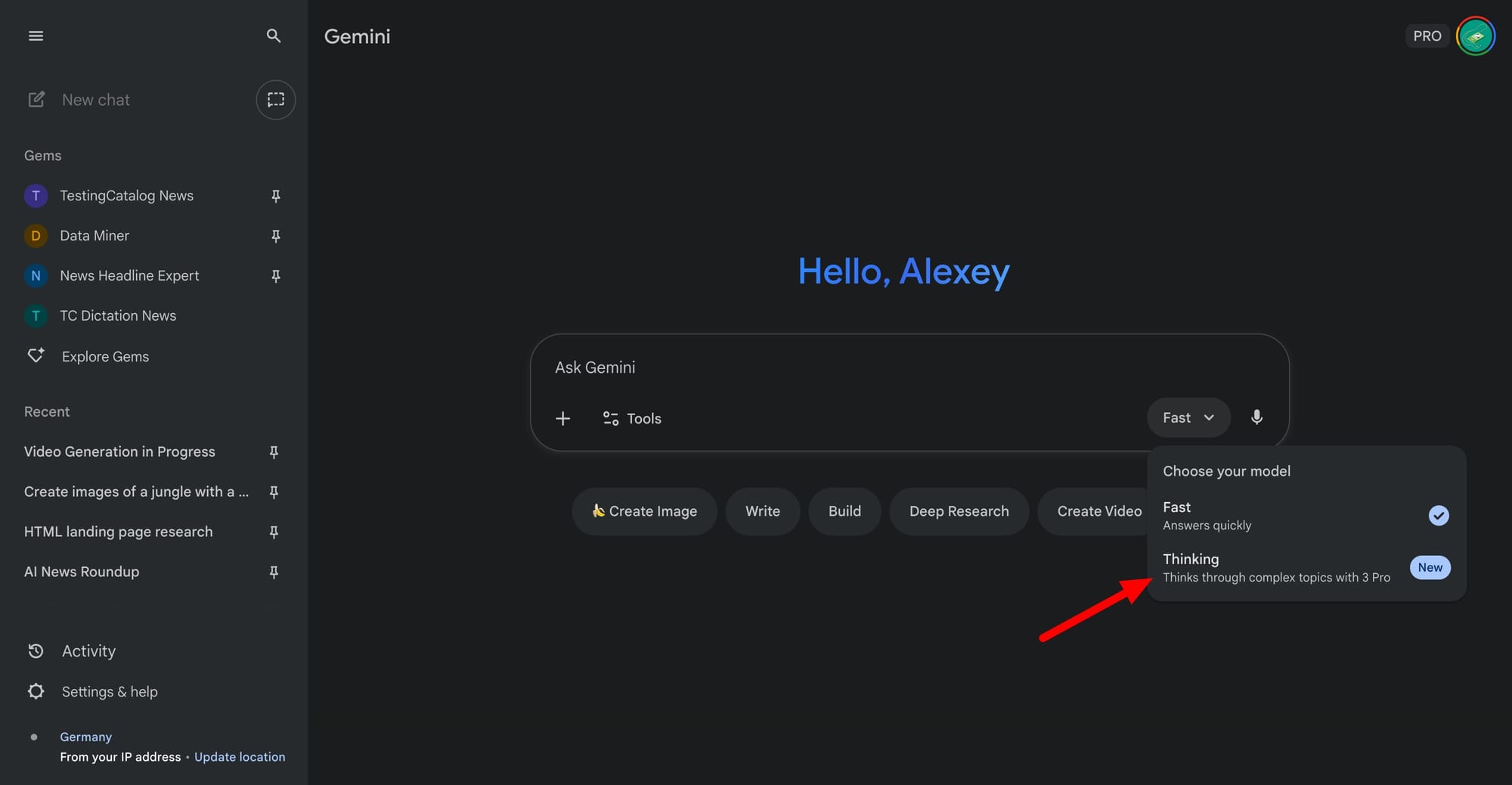
Google flips the switch on Gemini 3 inside the Gemini app today, making its top model the new default brain for consumer and subscriber plans. Gemini 3 Pro starts rolling out globally in the app under the “Thinking” mode, while Google AI Plus, Pro, and Ultra tiers keep higher limits. U.S. college students get a free year of Google AI Pro so they can use Gemini 3 without extra cost.
The model itself focuses on sharper reasoning, tighter formatting, and more concise replies. Google positions it as the strongest “vibe coding” model so far, powering richer app prototypes in Canvas. On the consumer side, the same model aims to handle tougher multimodal prompts, from photos of homework to long lecture notes that need summarizing and follow-up questions.
The Gemini app also receives a visual overhaul with a cleaner layout, faster access to new chats, and a “My Stuff” folder for images, videos, and reports created with Gemini. Shopping flows are rebuilt around Google’s Shopping Graph, pulling listings, comparison tables, and prices from tens of billions of products directly into the chat experience.
On top of that, Gemini 3 unlocks a new class of generative interface. One experiment, "Visual Layout", turns prompts such as a three-day trip plan into a magazine-style itinerary with tappable modules. A second experiment, "Dynamic View", codes a custom interface in real-time for prompts like museum guides, letting people scroll, tap, and explore instead of reading a flat wall of text. Users may initially see only one of these modes as Google runs its tests.
The headline feature for power users is Gemini Agent, an experimental system that connects to Gmail, Calendar, and other Workspace apps to carry out multi-step tasks. It can prioritize an inbox, draft responses for review, or assemble a car rental search using flight details from email while staying within a given budget.
Built on Project Mariner research and Gemini 3’s reasoning, the agent chains tools such as Deep Research, Canvas, and live browsing, always asking for confirmation before purchases or sending messages. It launches on the web first for Google AI Ultra subscribers in the U.S., and Google frames it as a concrete step toward a more personal and proactive assistant across its ecosystem.


