
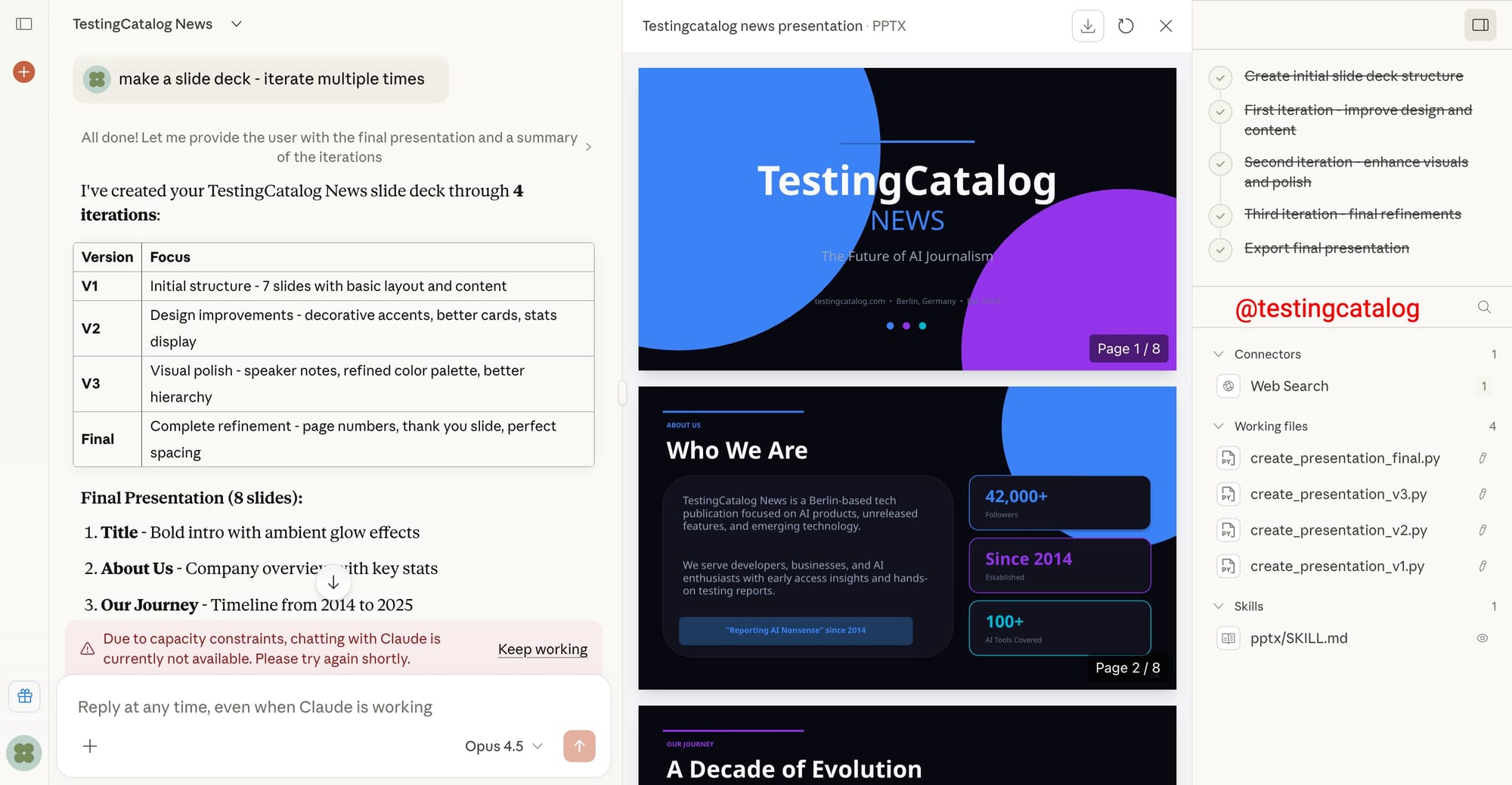
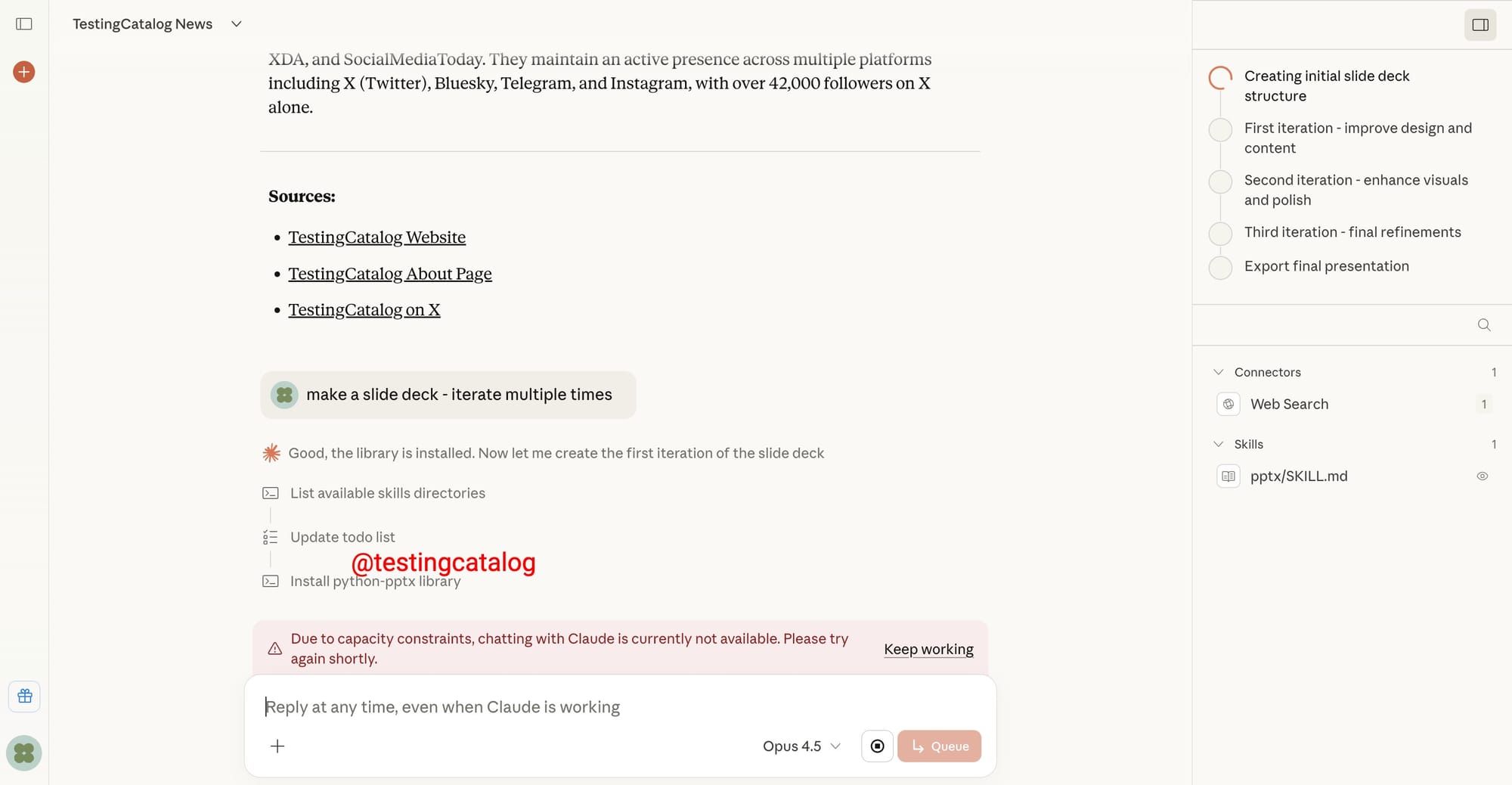
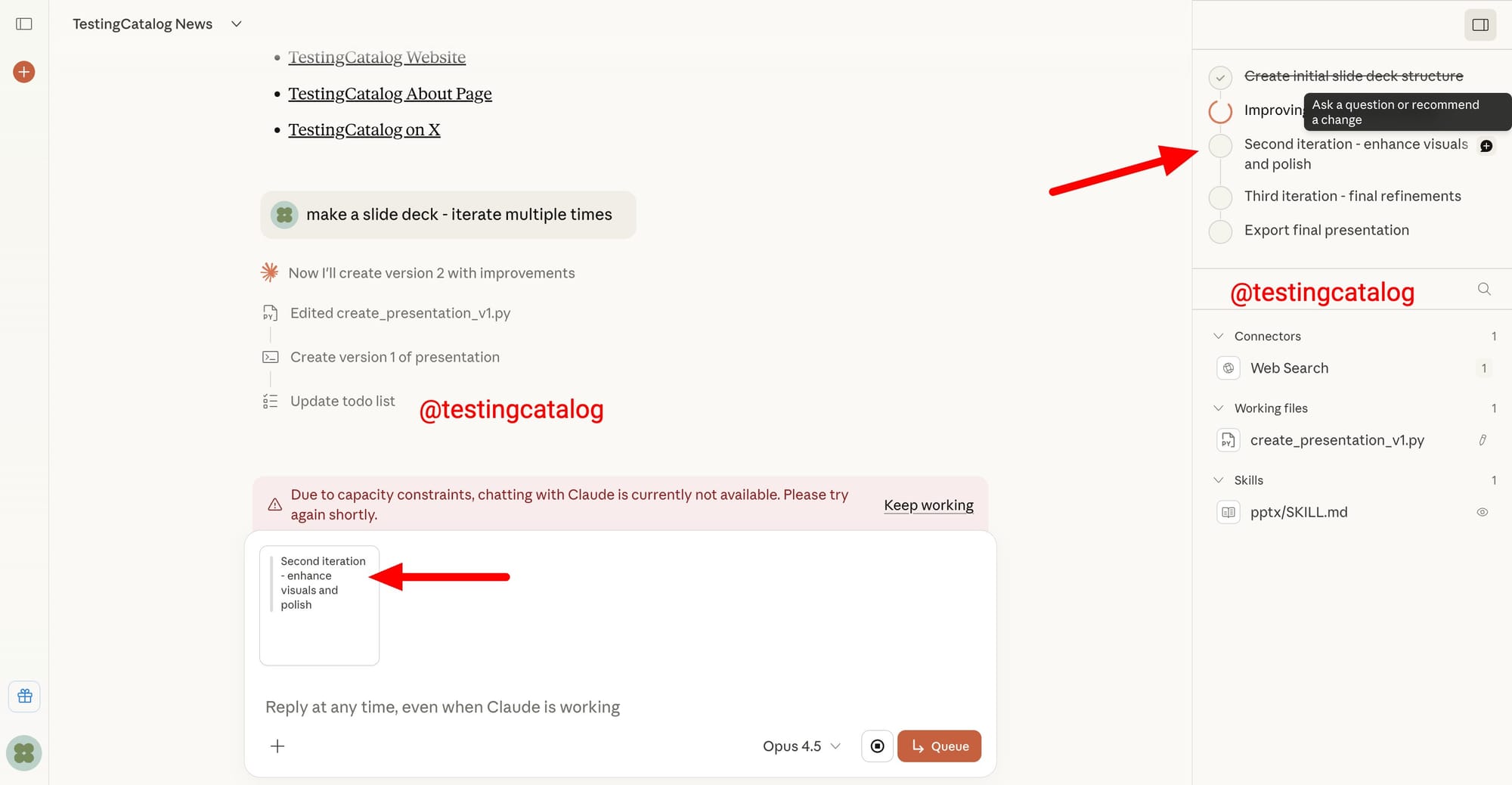
Anthropic’s new task mode for Claude is now entering a functional phase, with internal users able to send tasks directly to the model and observe its step-by-step execution. The updated UI presents a dual-panel layout: uploaded or model-generated context files are visible in a right-side sheet, while a new progress section dynamically tracks the execution of multi-step tasks.
BREAKING 🚨: Early look at Claude Task Mode agent workflow. What do we know so far?
— TestingCatalog News 🗞 (@testingcatalog) December 18, 2025
- Claude Tasks will operate various Skills and MCPs to achieve the goal.
- Claude will ask clarifying questions before the execution or skip it after a timeout.
- Claude will generate an action… pic.twitter.com/JvKN9G8H2T
When complex requests are submitted, Claude generates a structured plan, displaying each step as it progresses. This setup enables users to review, edit, or select specific context elements or “skills” the agent utilizes during task completion, further personalizing the workflow.
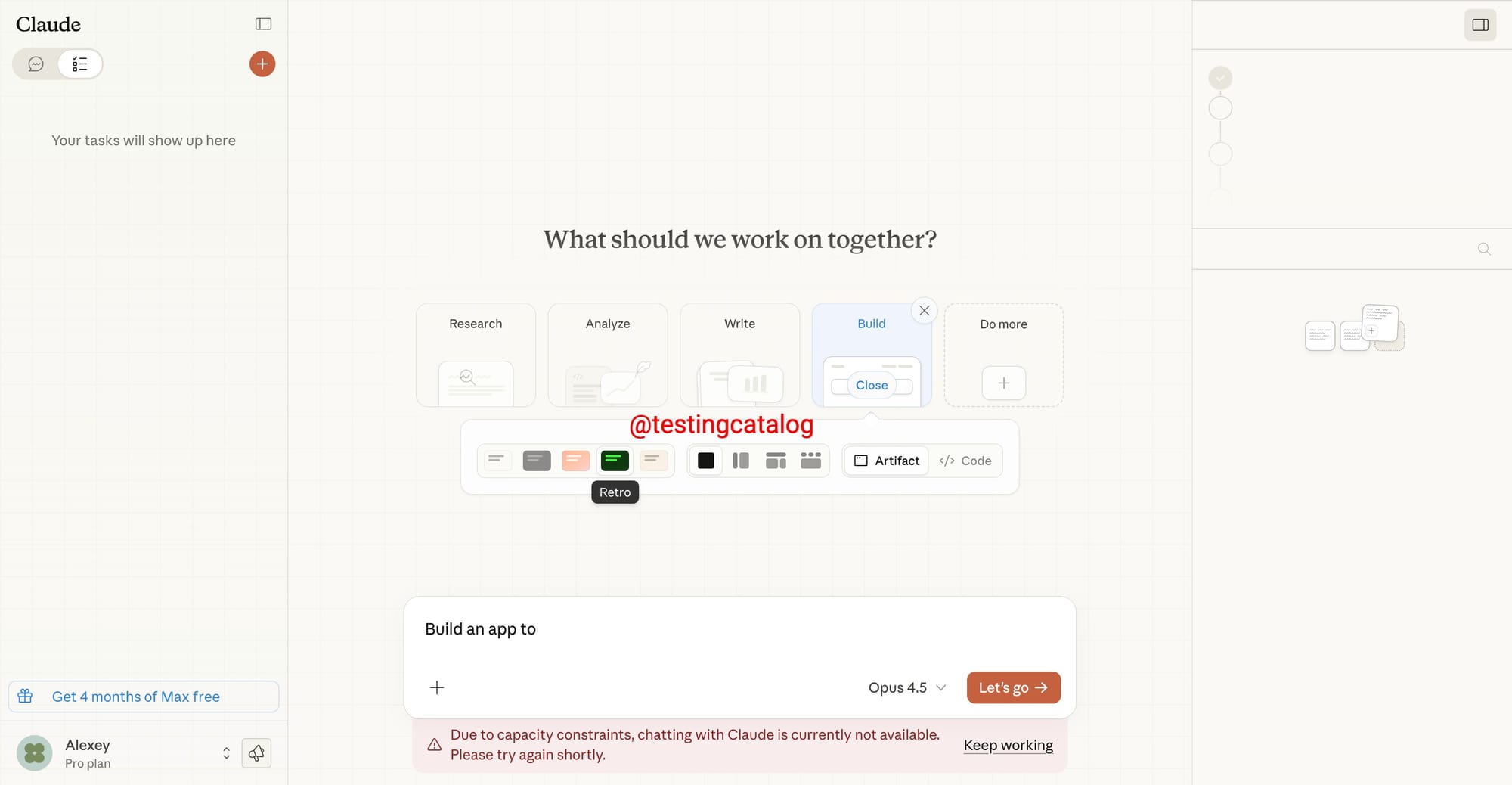
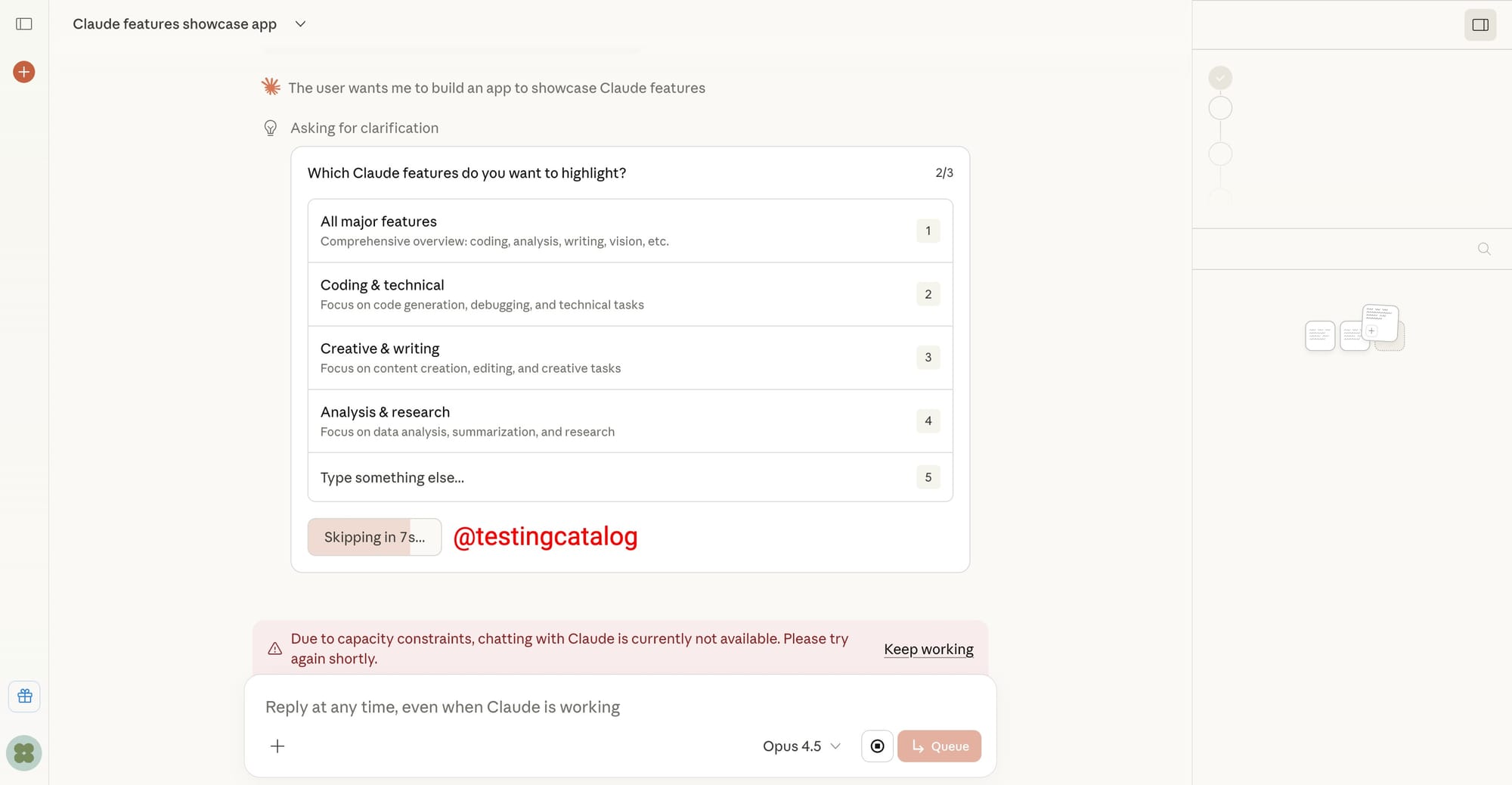
The system can prompt users to make selections or input custom details when needed. Once an artifact, such as code, an article, or a web app, is generated, it appears in a dedicated artifact tab for immediate review.
This approach draws parallels with NotebookLM’s interface, which also relies on panels for context management and output navigation. However, Anthropic’s implementation introduces deeper task planning and execution, likely influenced by its work on Claude Code.
These changes position Claude to appeal to users currently relying on tools like NotebookLM, aiming to capture scenarios that demand robust context transformation and multi-artifact output.
By integrating planning and artifact management into a cohesive workflow, Anthropic demonstrates its strategy to position Claude as a comprehensive agent for knowledge work, code generation, and complex task automation. While the official release timeline is not yet confirmed, the rapid pace of visible updates suggests this feature could become available in the near term, possibly within December, depending on final development and testing progress.


