
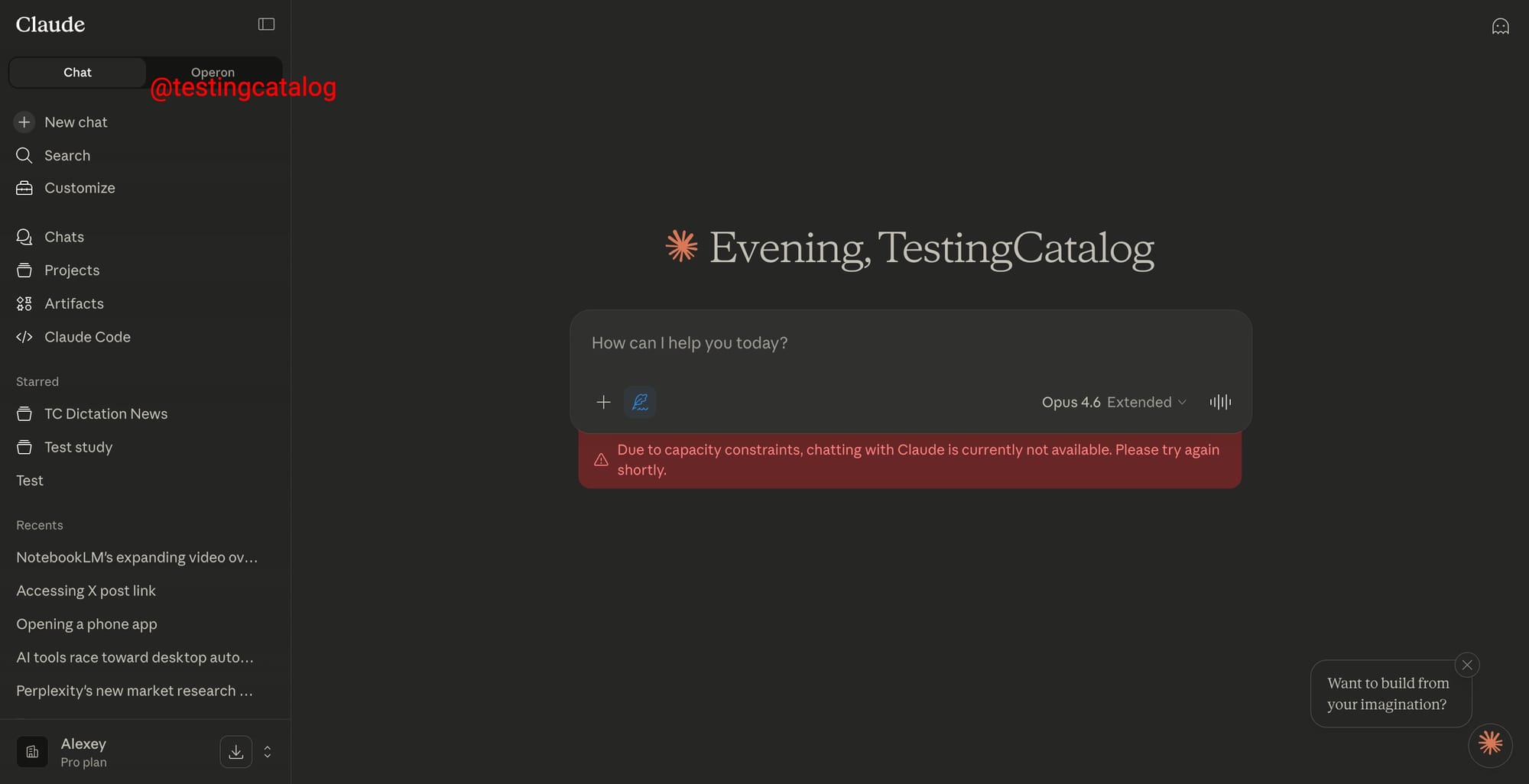
TestingCatalog has spotted traces of a new standalone mode within the Claude desktop app called "Operon." Unlike anything currently available in the Claude product lineup, Operon appears to be a dedicated workspace designed specifically for scientific research in biology and health, sitting alongside the existing Chat, Code, and Cowork modes as an entirely separate experience.
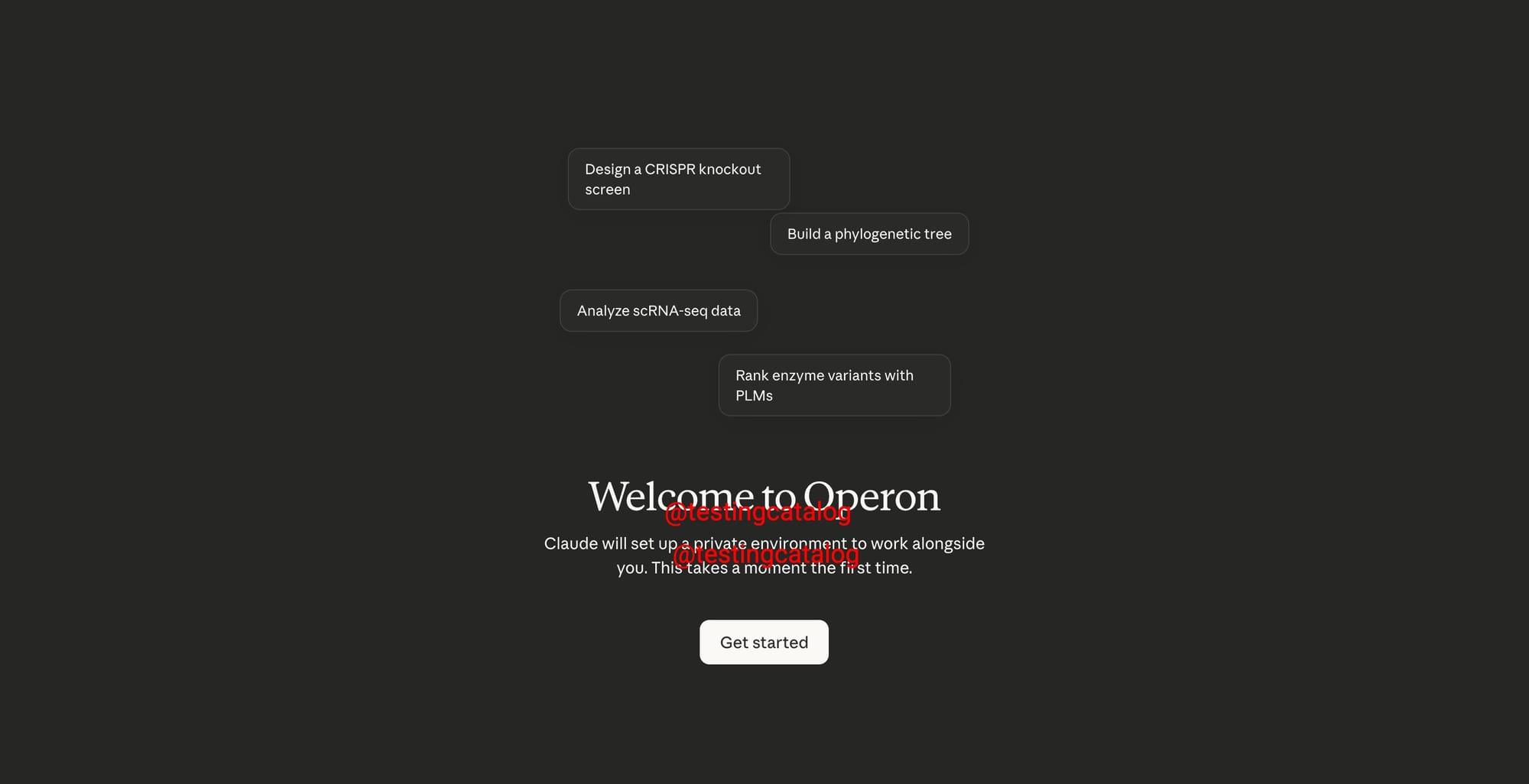
When users enter Operon for the first time, they are greeted with an onboarding screen titled "Welcome to Operon" that explains Claude will set up a private environment to work alongside them. The suggested tasks visible on this screen point squarely at computational biology workflows:
- Building phylogenetic trees
- Designing CRISPR knockout screens
- Analyzing single-cell RNA sequencing data
- Ranking enzyme variants using protein language models
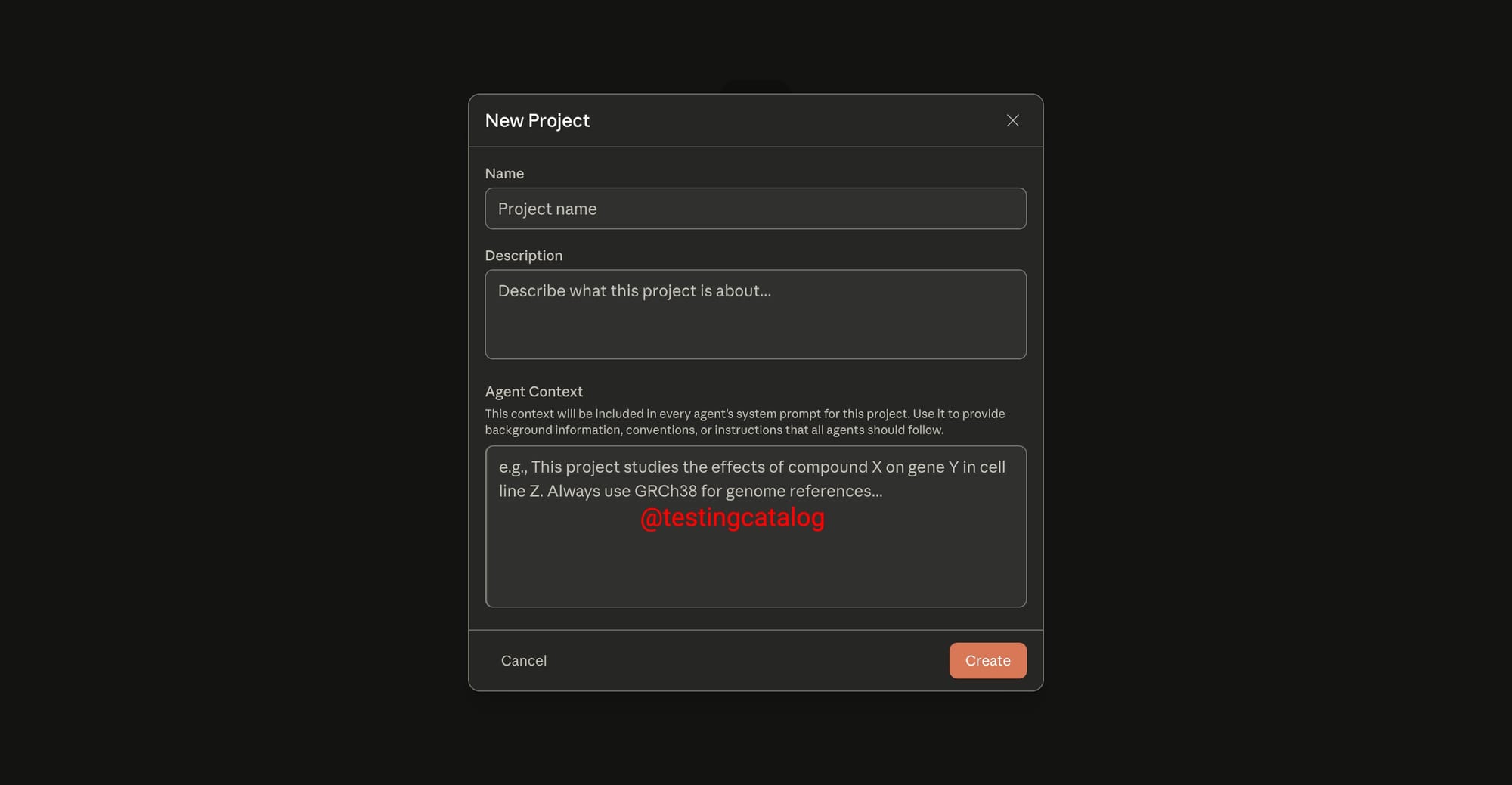
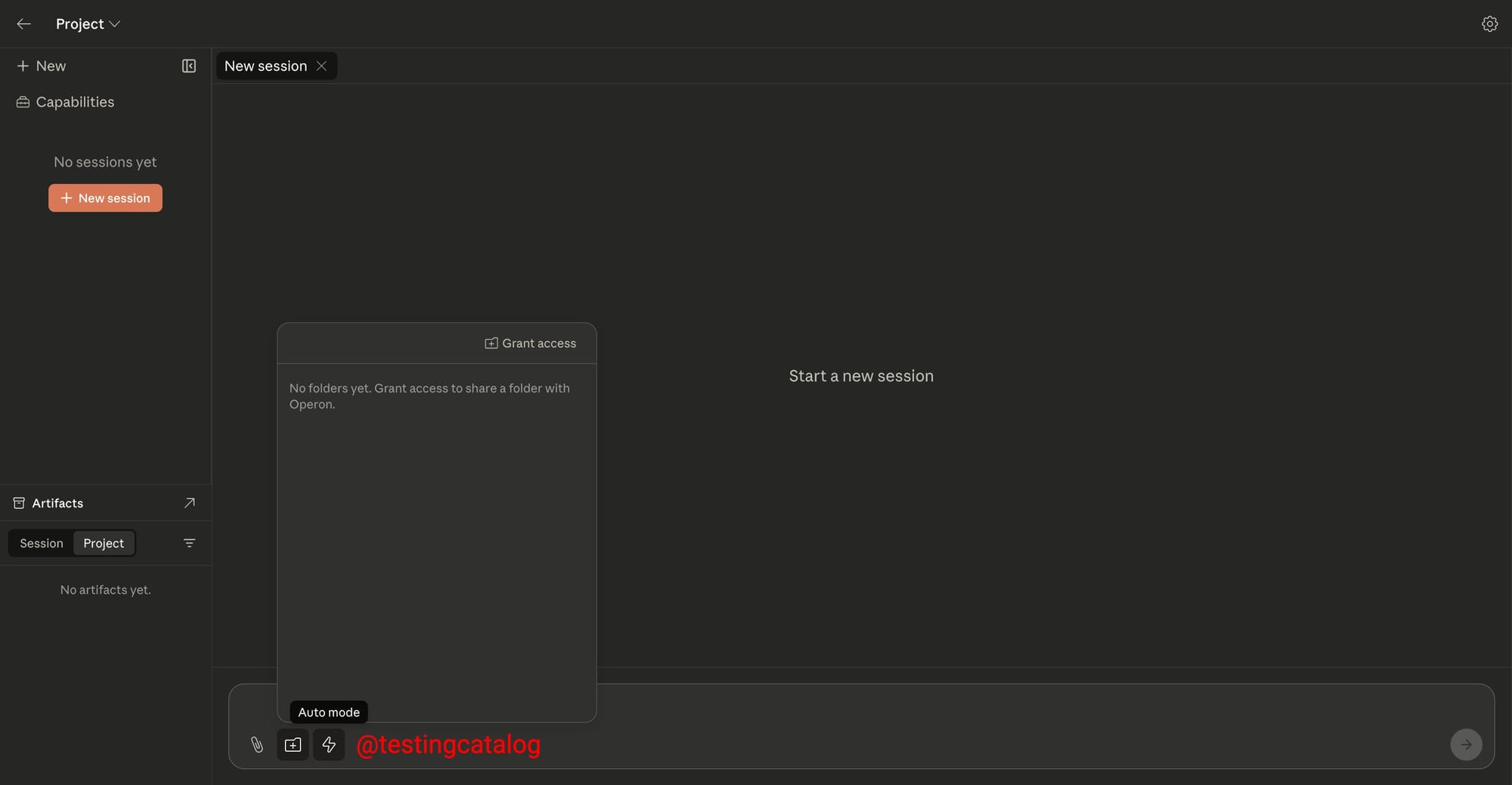
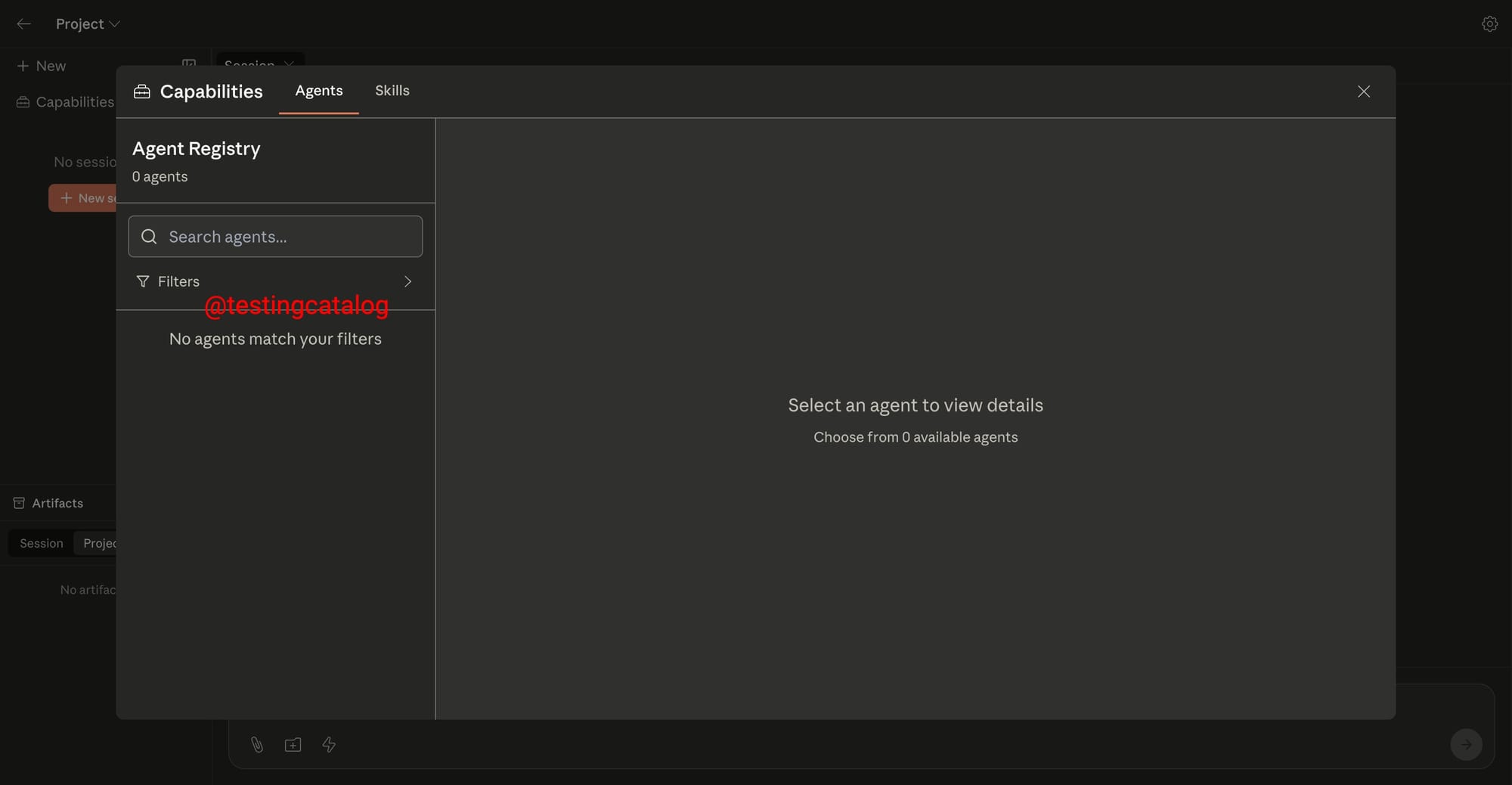
After onboarding, users are prompted to create a project with a system prompt applied across all sessions. The workspace itself features a distinct layout compared to standard Claude Chat, with support for managing multiple research sessions and generated artifacts. Borrowing from the Claude Code playbook, Operon includes both Plan mode and Auto mode, and users can grant it access to their local files and folders, a critical capability for researchers working with large datasets stored on institutional machines.
The name "Operon" itself is a nod to molecular biology; an operon is a cluster of genes transcribed together in bacterial DNA, which feels deliberately chosen for a tool aimed at life sciences professionals. Anthropic has been steadily building toward this kind of product.
Join community discussion on Dev Mode Discord!
The company launched its AI for Science program in mid-2025, offering API credits to biology researchers. By late 2025, it introduced Claude for Life Sciences with connectors to platforms like PubMed, Benchling, and 10x Genomics, and began developing scientific skills such as single-cell RNA quality control. In January 2026, the HIPAA-ready Claude for Healthcare followed.
BREAKING 🚨: Anthropic is preparing to release new models, Mythos and Capybara, where Mythos is a completely new tier of models, bigger then Opus.
— TestingCatalog News 🗞 (@testingcatalog) March 27, 2026
In the blog post, Anthropic also highlights that this model brings significant cybersecurity risks due to its capabilities. https://t.co/8XqSaIjlVb pic.twitter.com/lr3bGIWrfq
Operon appears to be the culmination of this trajectory, a purpose-built interface that goes beyond plug-in connectors and instead gives researchers a full computational environment. The timing also aligns with the recently leaked Mythos model, which Anthropic has described as a major capability leap. A tool like Operon, paired with a substantially more powerful model, could give Anthropic a distinct foothold in the computational biology market, a space where Google DeepMind and specialized biotech AI startups have been building momentum.


