
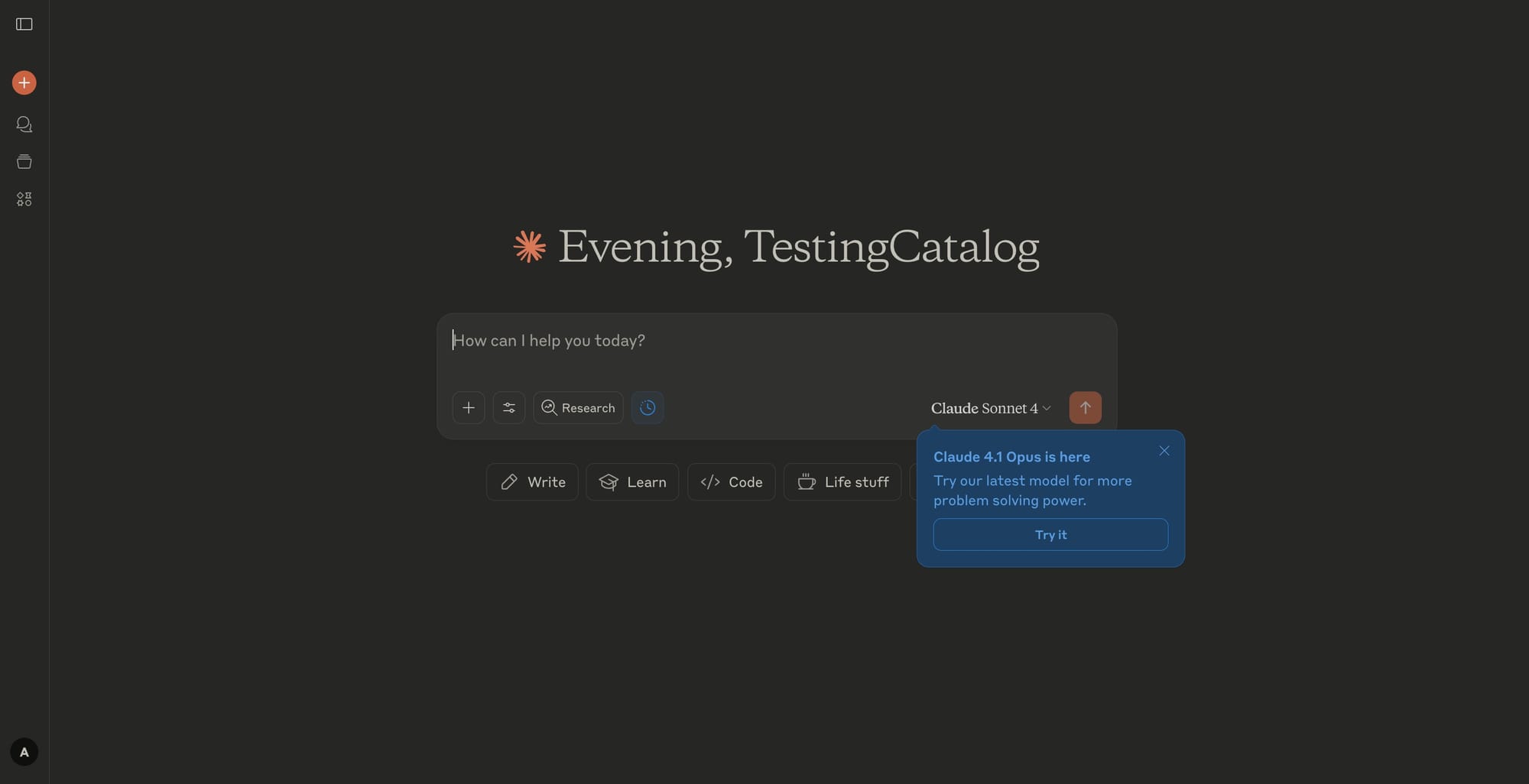
Anthropic has rolled out Claude Opus 4.1, a fresh iteration of its flagship language model, landing today, 5 August 2025. Paid Claude subscribers, Claude Code users, and developers on the Anthropic API, Amazon Bedrock, and Google Cloud Vertex AI can switch over now at the same rate charged for Opus 4.
Opus 4.1 lifts coding accuracy to 74.5% on the SWE-bench Verified benchmark, surpassing May’s Opus 4 and Claude Sonnet 3.7. The model keeps its 200,000-token context window and tackles multi-step agentic tasks with tighter error tracking; developers only need to change the model string to “claude-opus-4-1-20250805.”
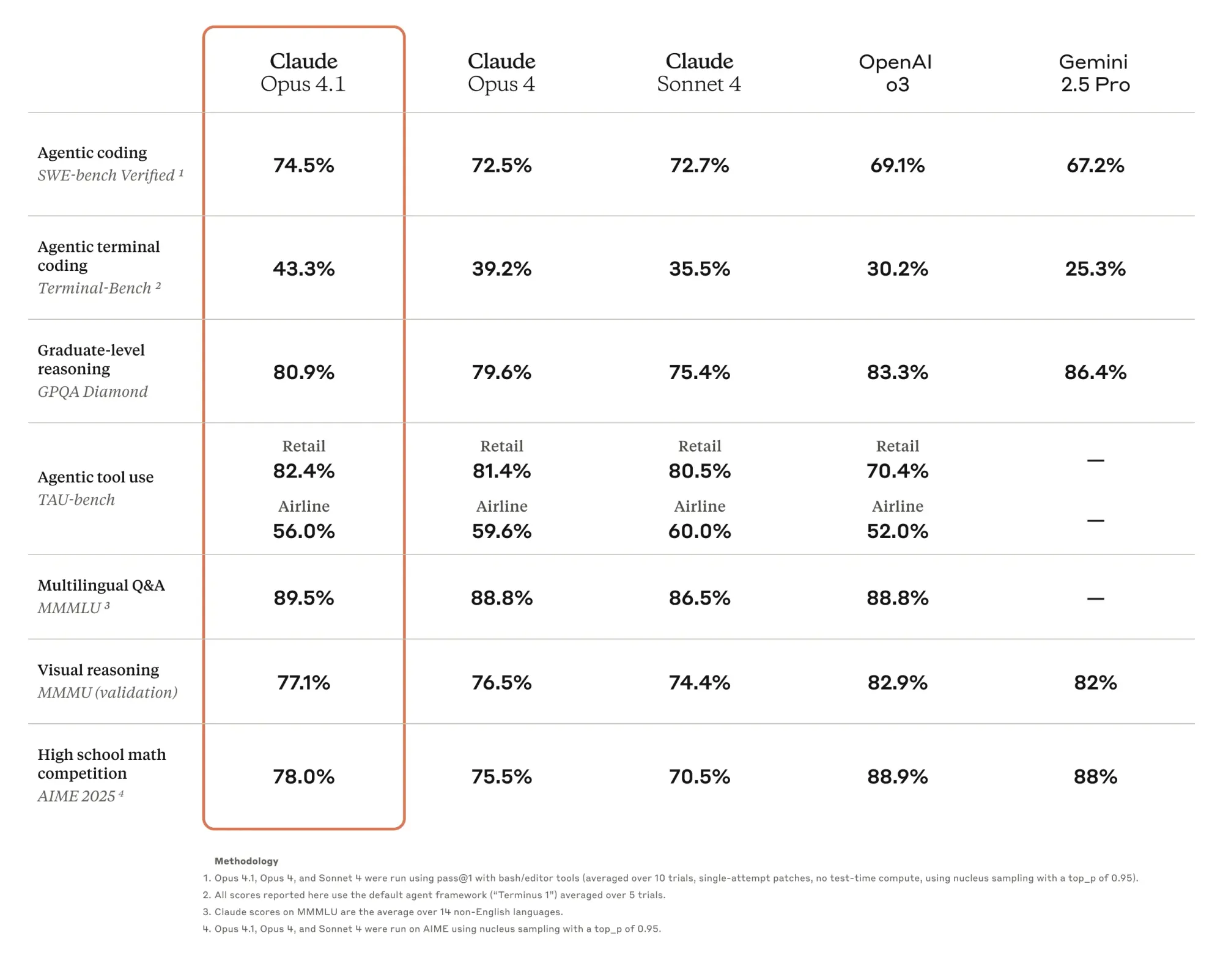
Early partners are already weighing in. GitHub cites “notable performance gains in multi-file code refactoring,” Rakuten engineers report pinpoint fixes inside vast codebases without collateral edits, and Windsurf measures a full standard-deviation leap over Opus 4 on its junior-developer benchmark.
Founded in 2021 by former OpenAI researchers, San Francisco–based Anthropic PBC promotes Claude as a safety-focused alternative to GPT-4 and Gemini. The public-benefit corporation, led by CEO Dario Amodei and President Daniela Amodei, has secured multi-billion-dollar backing from Amazon and Google while refining its Constitutional AI approach to align model behavior with policy limits.
We plan to release substantially larger improvements to our models in the coming weeks.
— Anthropic (@AnthropicAI) August 5, 2025
The company says Opus 4.1 is a “drop-in” advance ahead of “substantially larger improvements” promised in the coming weeks. Pricing stays flat at $15 per million input tokens and $75 per million output tokens, keeping costs steady for enterprises already wiring Claude agents into production workflows.


