

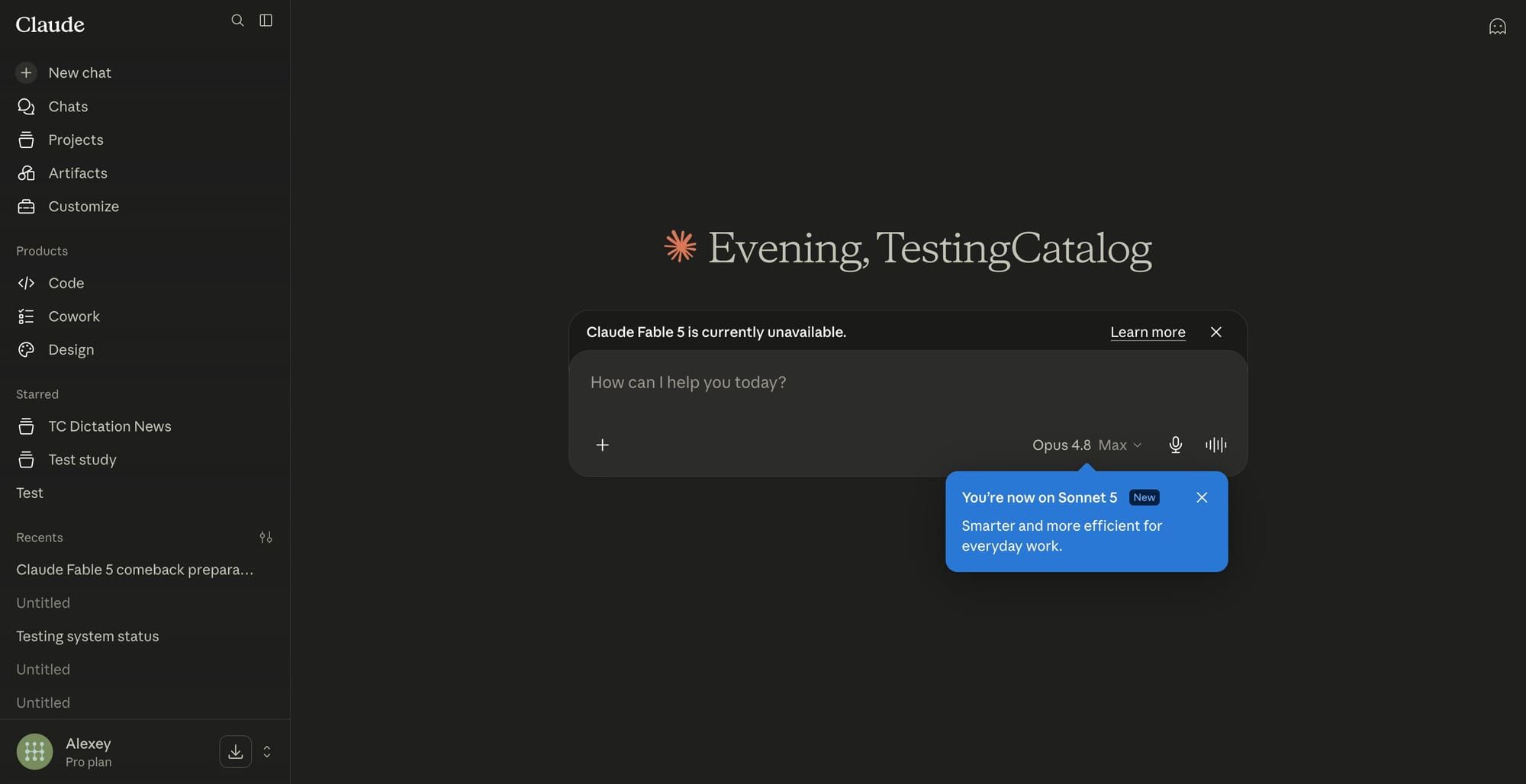
Anthropic has released Claude Sonnet 5, a new AI model designed to deliver advanced autonomous capabilities for developers and businesses. The model is available immediately for all users across Free, Pro, Max, Team, and Enterprise plans, as well as in Claude Code and on the Claude Platform. Pricing starts at $2 per million input tokens and $10 per million output tokens, with an increase scheduled after August 31, 2026. Sonnet 5 can be accessed via the Claude API, enabling developers to integrate the model into their workflows and applications worldwide.
Introducing Claude Sonnet 5, our most agentic Sonnet yet.
— Claude (@claudeai) June 30, 2026
It makes plans, uses tools like browsers and terminals, and runs autonomously at a level that just a few months ago required larger and more expensive models. pic.twitter.com/UKK8G7ww5h
Claude Sonnet 5 boasts substantial improvements in reasoning, tool use, coding, and knowledge work compared to its predecessor, Sonnet 4.6. Its agentic features enable it to plan and execute multi-step tasks, utilize web browsers and terminals autonomously, and complete projects that previously required more expensive models. Early access partners report that it performs reliably in complex technical tasks, follows through on multi-step assignments, and consistently refuses unsafe requests.
Claude Sonnet 5 is now available in Cursor.
— Cursor (@cursor_ai) June 30, 2026
On CursorBench, it's a meaningful step up from Sonnet 4.6: 57% vs. 49%. pic.twitter.com/AQVHzrvqcR
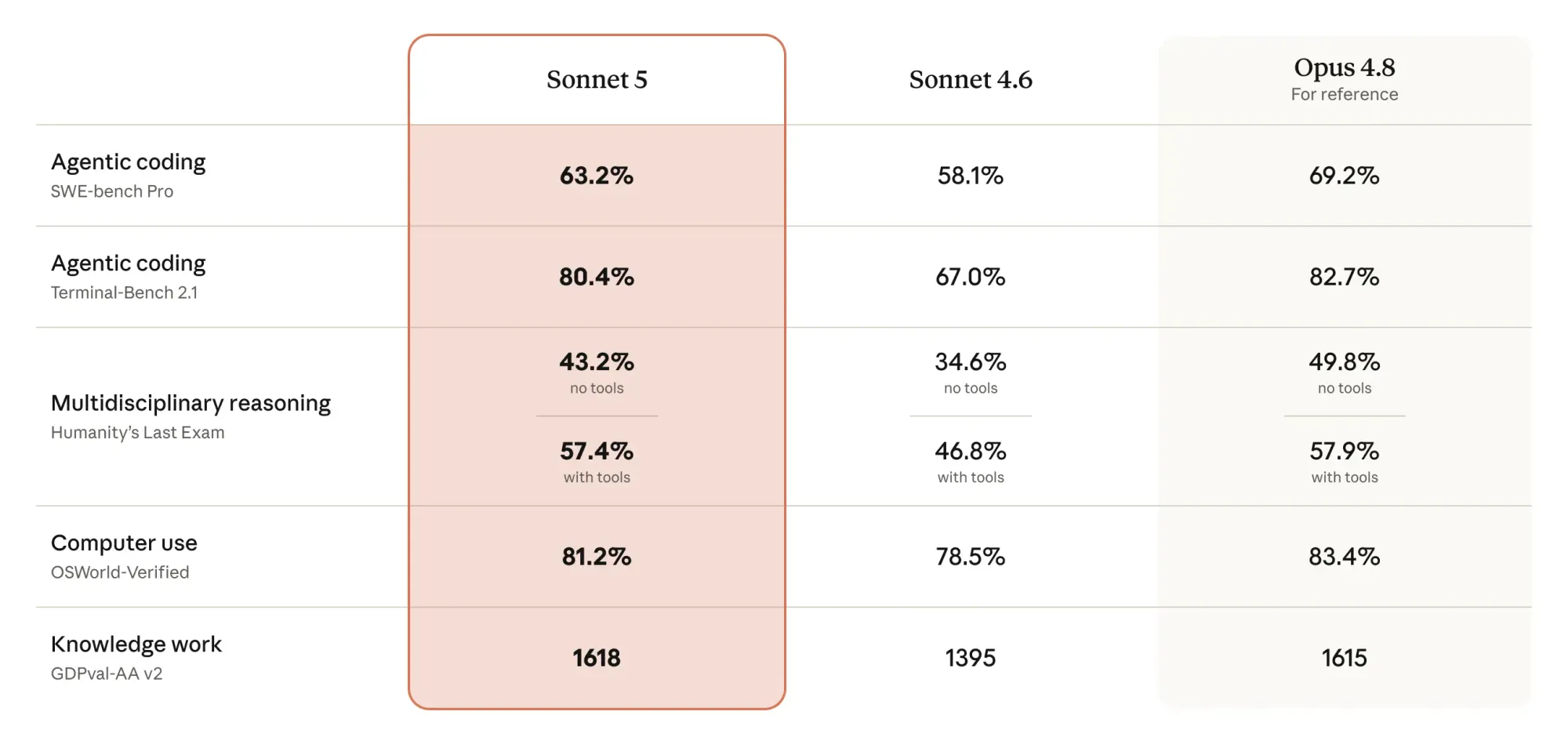
Benchmarking data show that Sonnet 5 is closing the performance gap with the higher-end Opus 4.8 model at a significantly lower cost, making it particularly attractive for organizations seeking a balance between price and advanced capabilities.
Anthropic, the company behind Claude Sonnet 5, has focused this release on improving safety and reliability, especially in agentic contexts. The model scored lower on undesirable behaviors compared to earlier Sonnet versions and is deployed with real-time cyber safeguards similar to those used in Opus models. The release reflects Anthropic's ongoing commitment to safer, more capable generative AI tools for a broad developer and enterprise audience.


