
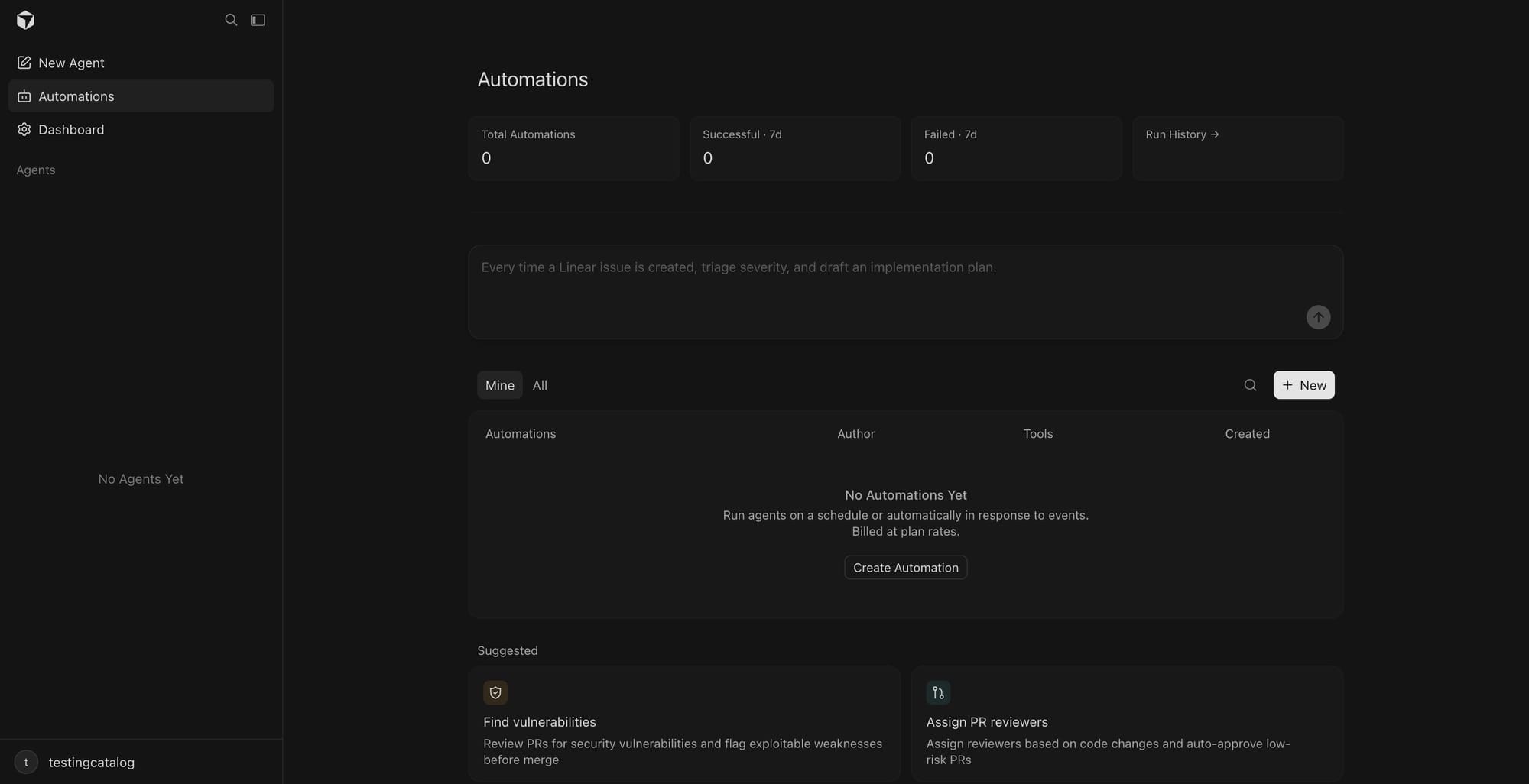
Cursor has launched Automations, a new system for building always-on coding agents that run on schedules or react to external events across the software pipeline. The product is aimed at engineering teams that are already using agentic coding heavily and now need help with the slower parts of development such as review, monitoring, incident handling, and maintenance. Automations can be triggered by Slack messages, newly created Linear issues, merged GitHub pull requests, PagerDuty incidents, or custom webhooks, turning Cursor from a coding assistant into a workflow layer that keeps operating after a developer steps away.
We're introducing Cursor Automations to build always-on agents. pic.twitter.com/uxgTbncJlM
— Cursor (@cursor_ai) March 5, 2026
The core setup is built around cloud sandboxes. When an automation fires, Cursor spins up an isolated environment, follows the user’s instructions, uses configured MCP tools and models, verifies its own work, and can draw on memory from prior runs. This gives teams a way to build agents that do repeated operational work instead of one-off chat tasks. Cursor says the system has already been used internally for several weeks, which suggests this is not being framed as a research preview but as a production-facing rollout for real engineering workflows.
The examples Cursor shared show where the company sees the first wave of demand:
- One automation runs security review on every push to main, looking for vulnerabilities without blocking pull requests and sending high-risk findings to Slack.
- Another acts like agentic codeowners, scoring PR risk by blast radius, complexity, and infrastructure impact, then auto-approving lower-risk changes or assigning reviewers for higher-risk ones.
- A third is built for incident response, using Datadog context and recent code changes to investigate outages, message on-call engineers, and even draft a proposed fix in a PR.
Cursor is also pushing Automations beyond review into routine engineering chores. Teams can set up weekly repository digests, automatic test coverage passes on newly merged code, and bug-report triage flows that check for duplicates, create Linear tickets, investigate root cause, attempt a fix, and answer back in the original Slack thread. This places the product directly in the race to make coding agents useful not just for writing code, but for operating an entire software organization.
The company also highlighted early outside usage from Rippling, where engineers are using cron-based and Slack-triggered agents to collect notes, PRs, Jira issues, mentions, and discussion threads into dashboards and summaries. This matters because it shows Automations is being positioned for both individual operators and larger teams that want reusable internal workflows.
Behind the launch is Anysphere, the company building Cursor, which has been expanding from editor features into a broader agent platform. Recent releases around cloud agents, Bugbot autofix, MCP apps, and team marketplaces show a clear pattern: Cursor is trying to own not just code generation, but the infrastructure layer around agent-driven software work. Automations is the clearest sign yet of that shift.


